ThotChat AI built its audience as an adult-oriented (18+) AI companion platform: a place to chat with a customizable character, run roleplay scenarios, and hold an ongoing conversational thread. It leans visual and uncensored, with character creation, image generation, and voice messages gated behind a paid tier. That formula works for casual use, but a recurring set of frustrations pushes people to look elsewhere.
The common reasons are familiar across this category.
Character depth can feel thin once a conversation moves past the surface.
Memory is inconsistent: several user reports describe characters losing track of names and scenario details after roughly twenty messages.
Pricing, along with credit or gem limits, adds friction, and the free tier is closer to a short trial than a usable mode. Content and moderation settings do not suit everyone.
And anyone who wants finer control over personality, tone, or long-form storytelling runs into a ceiling quickly.
Reliability has been a question too, with reports of service disruption around early 2026, so continuity is a fair concern. Publicly confirmed information about the platform's current status and exact pricing was not available at the time of writing.
The alternatives below are not interchangeable. Some are safe, filtered companion apps. Some are flexible roleplay platforms. Some are story-first writing tools. And some are build-it-yourself setups for people who want to own every setting. Matching the tool to your goal matters more than chasing whichever name is most popular.
A high-level view of how the eight alternatives compare across the factors that tend to drive the decision.
| Platform | Best for | Character depth | Memory | Customization | Safety level | Pricing model |
| Character.AI | Safe roleplay and storytelling | High | Medium | Medium | High | Free + Premium |
| Replika | AI companion chat | Medium | High | Low to Medium | High | Freemium |
| Janitor AI | Flexible roleplay chat | High | Medium | High | Medium | API-based |
| Crushon AI | Deep character interaction | High | High | High | Medium | Subscription |
| SillyTavern (setup) | Advanced customization | Very High | Very High | Very High | User-controlled | Free (self-hosted) |
| NovelAI (story mode) | Story-driven AI chat | High | High | Medium | Medium | Paid |
| Chai AI | Casual AI chatting | Medium | Medium | Low to Medium | Medium | Freemium |
| Pygmalion-style bots | Open roleplay models | High | Medium | High | User-controlled | Varies |
These are the factors used to weigh each platform. They matter because the same tool can be excellent for one goal and frustrating for another.
| Factor | Meaning in AI chat tools |
| Character depth | How realistic and consistent characters feel over a conversation |
| Memory handling | Ability to remember past conversation context across messages and sessions |
| Customization | Control over personality, tone, scenario, and behavior |
| Safety filters | How strict (or user-controlled) content moderation is |
| Response quality | Naturalness and emotional flow of replies |
| Roleplay flexibility | Ability to handle scenarios, branching, and storytelling |
| Pricing clarity | Transparency of credits, gems, or subscription costs |
| Ease of use | Beginner-friendly versus advanced setup |
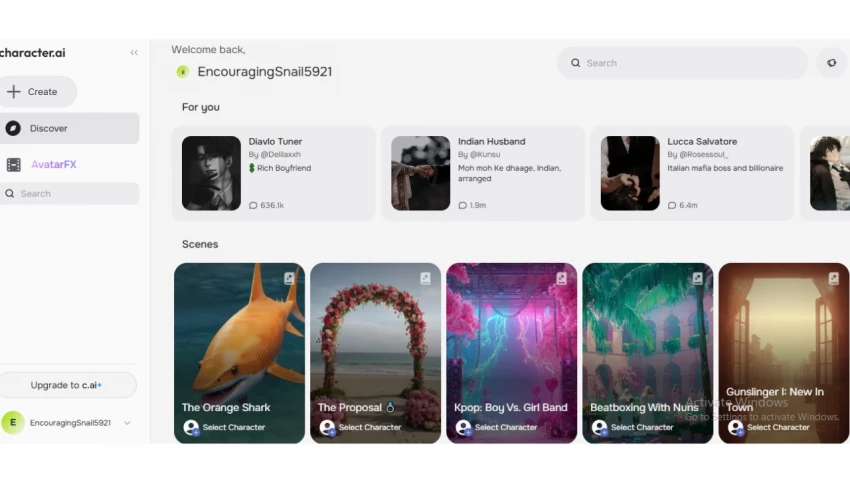
Character.AI is the most recognizable name in AI character chat, with a huge library of community-made characters and a polished app across web, iOS, and Android. Conversation quality is strong and the character system is well structured, which makes it an easy entry point for newcomers.
The tradeoffs are memory and moderation. Long-term memory is limited, so characters can lose earlier context, and the content filter is strict: explicit and many mature scenarios are blocked, and the platform has tightened rules over time, including restricting open-ended chat for under-18 users. A paid tier (around $9.99 a month) adds faster replies and priority access.
Best for: safe storytelling and beginner roleplay users.
Limitation: restrictive filters for adult or unfiltered scenarios, based on the platform's stated policies.
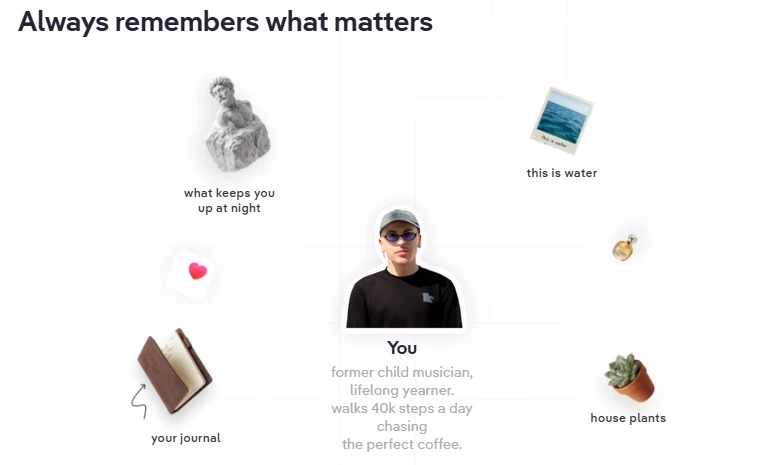
Replika is built around a single, persistent companion rather than a library of characters. Its strength is continuity: it is oriented toward long-term memory and a personal, relationship-style chat that develops over time, with an avatar, voice, and wellness-leaning features. That focus is also its limit for this use case.
Replika is non-explicit for accounts created after its 2023 policy change, and it is not designed for freeform character roleplay or branching scenarios. Pricing is freemium, with a Pro plan around $19.99 a month (less on annual billing).
Best for: an emotional AI companion experience.
Limitation: less creative storytelling and roleplay depth than dedicated roleplay tools.
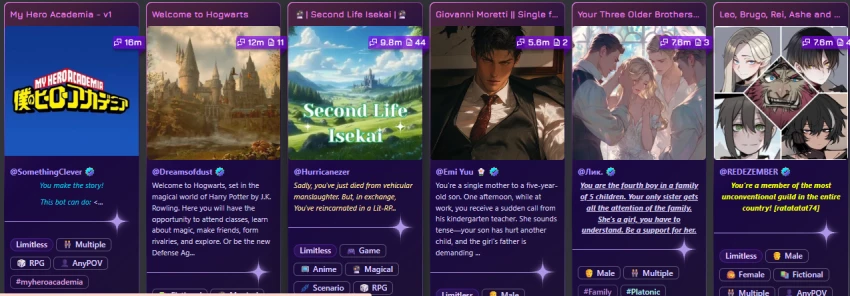
Janitor AI is a flexible, web-based roleplay platform with a very large library of community character cards, plus lorebooks and persona tools. Its defining trait is control: you can connect your own model through an external API, or use its built-in option, which appeals to users who want to steer chat behavior. That flexibility comes with setup friction.
Connecting an external model can take some configuration, uptime has been inconsistent, and moderation varies. The core platform is free, with costs coming only from any third-party model you choose to use.
Best for: flexible character roleplay setups.
Limitation: external configuration and model setup can be a hurdle for beginners.
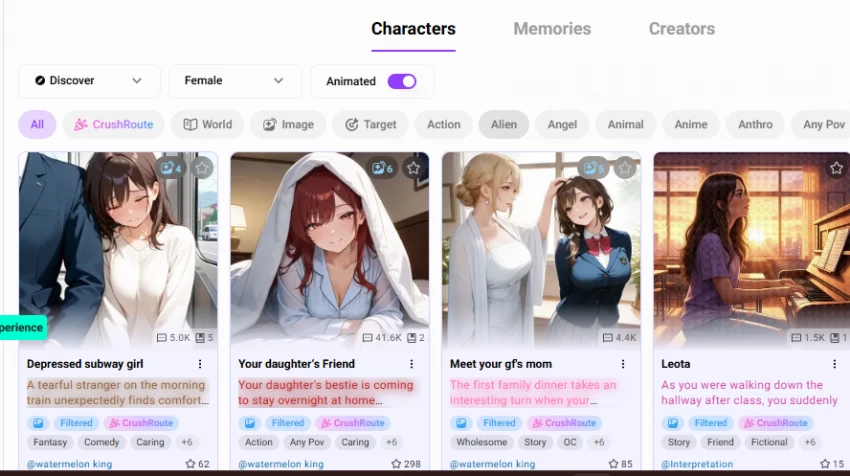
Crushon AI focuses on deep, character-driven interaction with a large catalog (10,000-plus characters), a detailed character builder, multi-character group chats, and a filtered-or-unfiltered toggle for adult users.
Memory scales with the subscription tier and was recently upgraded, which helps narrative continuity, though cross-session memory can still reset unexpectedly. It runs a freemium model: a free tier (around 100 messages, with limits), a Standard plan near $5.99 a month, Premium around $14.99, and a higher Deluxe tier, with annual billing discounted.
Best for: immersive character conversations.
Limitation: full access and deeper memory sit behind paid tiers.

SillyTaver offers the deepest customization in this list, with character cards, lorebooks, group chats, prompt control, extensions, and full data control if you run a model locally. The cost of that power is setup. You install it (Node.js is required), connect a backend before chats will generate, and manage updates yourself, so it is not a one-tap experience. The frontend itself is free; you pay only for whatever model or API you connect.
Best for: advanced users and power roleplayers.
Limitation: not beginner-friendly, since it requires installation and a connected model.
NovelAI is a story-first platform from Anlatan, built around AI-assisted writing and anime image generation rather than social character chat. Its strengths are narrative tools: a large context window, the Lorebook for keyword-triggered memory, Text Adventure and Storyteller modes, and a strong privacy posture (encryption, and no training on user content).
It is subscription-only, with tiers at roughly $10 (Tablet), $15 (Scroll), and $25 (Opus) a month, plus a limited free trial. The common critique is that long-form stories can lose coherence and need manual editing.
Best for: story-first users and creative writers.
Limitation: less spontaneous character chat than chat-first tools, and long stories need hands-on editing.
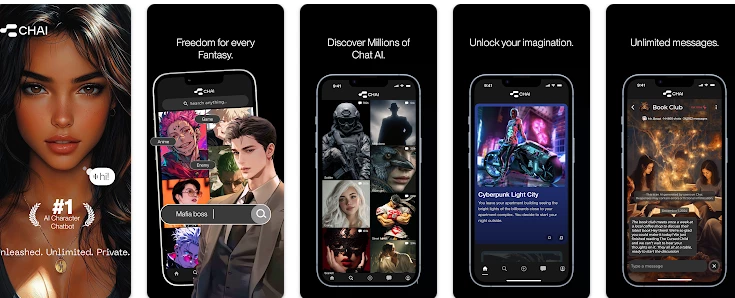
Chai AI is a mobile-first app (iOS and Android) with a large community library of user-made bots and a light, entertainment-focused feel. It is easy to start, allows mature content through a toggle, and is tuned for quick, casual conversation.
The weak points are depth and memory: bots commonly lose character context after twenty to forty messages, and quality varies a lot from one community bot to the next. Pricing is freemium, with a free tier (capped messages with ads), Premium around $13.99 a month, and a higher Ultra tier; some regions now require a subscription.
Best for: casual AI chatting on a phone.
Limitation: inconsistent character depth and short memory across longer sessions.
Pygmalion is not a single app but a family of open-source models trained specifically for roleplay and character dialogue. They are most often used as the engine behind a frontend like SillyTavern or KoboldAI, giving technical users uncensored, user-controlled chat that can run locally for full privacy. The appeal is freedom and zero software cost; the catch is that you supply the setup and hardware, and memory and quality depend on the model and configuration you choose.
Best for: open roleplay on a self-managed, private setup.
Limitation: requires technical setup, and results depend on the model you run.
If you are switching from ThotChat AI for a specific reason, this maps the most common motivations to the closest-fitting alternative.
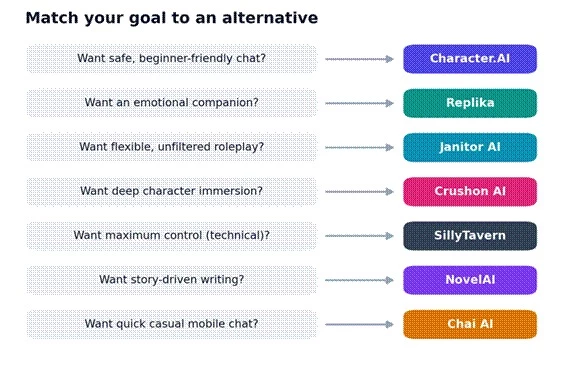
A quick map from what you want to the alternative that fits.
| User need | Best alternative |
| Simple AI chat experience | Character.AI |
| Emotional companion chat | Replika |
| High-customization roleplay | Janitor AI or SillyTavern |
| Deep character immersion | Crushon AI |
| Story-based experience | NovelAI |
| Casual mobile chat | Chai AI |
• Avoid sharing personal or sensitive data in chats, since most of these platforms store conversation history.
• Do not base characters on real, private individuals without their consent.
• Moderation rules vary widely: some platforms are strictly filtered, while others are entirely user-controlled.
• Adult content policies differ by platform and by region, and adult-oriented tools require users to be 18 or older.
• Read each platform's privacy policy before relying on it, especially regarding how chat logs are stored, used, or used for training.
• Treat AI companionship as entertainment, not a substitute for professional support or human relationships.
| Mistake | Issue | Better approach |
| Choosing a tool without testing | Poor experience | Test two or three platforms first |
| Ignoring moderation rules | Unexpected chat restrictions | Check content policies up front |
| Expecting perfect memory | Broken continuity | Pick tools with stronger context handling |
| Over-customizing too early | Confusing setup | Start simple, then adjust |
| Using the wrong platform type | Mismatched experience | Match the tool to your goal |
A second cut of the same idea, organized by who you are rather than what you want.
| User type | Recommended tool |
| Beginner AI chat user | Character.AI |
| Emotional companion seeker | Replika |
| Advanced roleplayer | Janitor AI or SillyTavern |
| Story writer | NovelAI |
| Casual mobile user | Chai AI |
| Deep character immersion | Crushon AI |
• Anyone expecting fully realistic human intelligence from an AI character.
• Anyone needing a replacement for professional therapy or emotional support.
• Anyone unwilling to read platform rules and privacy policies.
• Anyone expecting unlimited memory and perfect continuity across long sessions.
• Anyone needing strict privacy guarantees without first checking how each platform handles data.
There is no single best AI chat tool here, and that is the point. The right choice comes down to a tradeoff between control and simplicity. If you want to open an app and start talking, a hosted platform like Character.AI, Replika, or Chai AI fits. If you want to shape every setting, SillyTavern or a Pygmalion-style setup rewards the effort. Memory, customization, and safety vary widely from one tool to the next, so the experience a platform gives you matters more than how popular it is. Test two or three before committing, and let your actual intent, whether that is safe roleplay, companionship, storytelling, or deep customization, guide the decision.
Share your thoughts about this article.
Be the first to post a comment!
Logging into most apps takes thirty seconds. Astra AI took me closer to five min...
Sakshi Dhingra7 hours ago
Blackbox AI and Cursor are two of the most talked about AI coding assistants of...
Deepak Mehra1 day ago
Why students go looking for something elseNobody searches for alternatives to a...
Harpreet Singh1 day ago
The Real Problem Behind AI Visual CreationHere is a frustration almost everyone...
Sakshi Dhingra2 days ago
Students using Unstuck AI typically rely on it for lecture transcription, automa...
Harpreet Singh2 days ago
Traditional animation is brutal on time, skill and budget. A single minute of po...
Sakshi Dhingra3 days ago