I don’t usually write for AI reviews, but DreamPress felt like a tool that required a more personal angle.
Too many online opinions are either biased hype or aggressively negative, and neither is helpful.
So for this review, I treated DreamPress AI like any regular user would:
I tested every major feature, ran multiple story sessions, tried the iOS app, checked real user complaints, watched design showcases, and compared the tool with others in the same category.
The result?
DreamPress is a tool with charm, flaws, moments of brilliance, and occasional chaos, all wrapped into one.
Below is the expanded, more detailed, and more conclusive version of my experience.
DreamPress AI makes a great first impression.
The moment you land on https://www.dreampress.ai/, you feel like you're stepping into a “creative sanctuary.” Soft visuals, clean menus, and smooth interactions, all good signs.
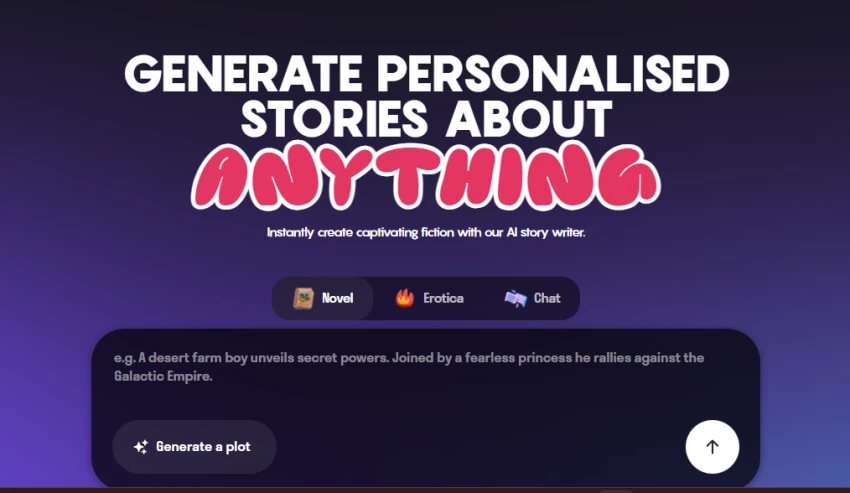
But once I actually started generating stories, it became obvious that the interface is smoother than the underlying model.
The UX promises precision; the AI delivers emotion… and inconsistency.
It’s like someone built a beautifully furnished room, but some of the furniture legs are shaky.
DreamPress has a very distinct storytelling voicem almost like a house style.
After dozens of prompts, here’s how I’d describe it:
It loads scenes with mood, atmosphere, and sensory language.
It tries to paint a picture before explaining the plot.
Even neutral prompts sometimes get unexpectedly emotional descriptions.
Smooth, easy-to-read prose but sometimes overly dramatic.
Characters speak more than they act.
For some users, this is exactly what they want.
For others, it quickly feels repetitive.
The key is understanding:
DreamPress AI writes like a storyteller, not like a plot architect.
This section expands the earlier review with more detail, so readers can form more precise expectations.
I tried multiple genres:
Regardless of the genre, the style remained passionately descriptive, almost cinematic.
The opening paragraphs were consistently strong, better than many AI tools in that specific domain.
But story control was limited.
If I tried to push a tightly structured story, DreamPress slipped into poetic flair again.
Good for: inspiration, scene openers, short fiction
Weak for: multi-threaded plots, logic-driven stories
If you give the tool:
…it will deliver a very atmospheric scene.
But when you feed it complex backstories or specific lore, it tends to ignore half of it.
This isn’t a bug; it’s simply optimized for emotion, not continuity.
I’ll be honest: this mode is addictive.
It feels close to Character.AI, but looser and less censored.
Your character responds quickly, sometimes with emotional depth.
But the unpredictability becomes clear after 10–15 messages:
It’s fun, but it doesn’t feel stable.
Plots felt like templates with different nouns swapped in.
Not useless, but not revolutionary.
I tested it on multiple inputs.
The narration is clean, but the content length is short and often ends abruptly.
It feels like a feature they added for marketing, not practicality.
Users reading your blog need clarity, so this section is expanded for depth.
Here’s what consistently stood out:
DreamPress often forgets:
This makes long-form storytelling nearly impossible.
Once you notice the patterns, you can predict the phrasing.
Tone inconsistency was a common theme.
Token rules aren’t transparent, echoing what users reported on Tenereteam.
Some prompts pass, others are blocked, some half-blocked.
Feels unclear and system-dependent.
Multiple Trustpilot reviews mention slow replies.
This section expands the positives further so readers have a fair picture.
Few AI tools start scenes with as much immediate emotional weight as DreamPress.
Anyone with zero writing skill can produce readable scenes.
Unlike NovelAI, which requires tuning, DreamPress works instantly.
Blog writers, fanfiction hobbyists, and roleplayers will enjoy the flavor.
It doesn’t over-censor or neutralize emotion.
NovelAI has superior continuity, memory, and prose consistency.
DreamPress is better for quick emotional scenes.
Sudowrite is for authors; DreamPress is for hobbyists.
Character AI simulates personalities more accurately.
DreamPress feels more “freeform.”
DreamPress leans suggestive but lacks consistency.
DreamPress works exceptionally well for:
It is not ideal for technical, complex, or structured writing.
You might struggle with DreamPress if you need:
DreamPress is emotional and expressive, not technical.
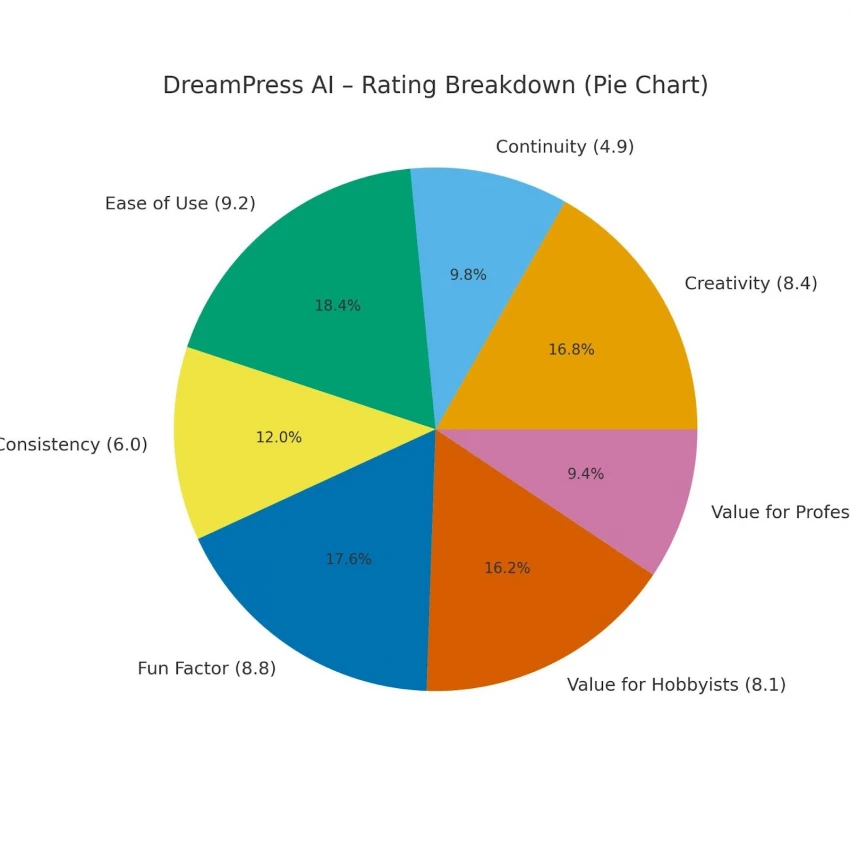
Here is the rating, with reasoning:
Emotionally rich scenes, strong imagery, but sometimes overly dramatic.
Loses context too fast for serious story work.
Extremely accessible for beginners.
Predictable patterns, occasional abrupt changes.
It’s genuinely enjoyable if you treat it like a creative playground.
Worth exploring for casual writers.
Not reliable enough for manuscripts or long-term projects.
A creative, expressive, entertaining AI tool with noticeable limitations, best suited for short, emotionally rich storytelling rather than structured or professional writing.
Be the first to post comment!

Why I looked into Leeco AI in the first placeOver the past few years, I have not...
Sakshi Dhingra13 hours ago

When I first came across Skipit, I approached it with a bit of skepticism. The A...
Sakshi Dhingra2 days ago
I didn’t start exploring Dzine AI because I was chasing the latest AI trend. I d...
Sakshi Dhingra3 days ago

The positioning of Promptchan within the AI ecosystem is often misunderstood. Wh...
Sakshi Dhingra1 week ago

A Personal Moment That Made Me Care About Online Coupons AgainA few months ago,...
Parveen Verma1 week ago

Choosing the right software used to be straightforward. You compared features, c...
Suraj Malik2 weeks ago