I didn’t begin this comparison as a “review project.” It started the way most podcasts do, with curiosity. I’ve always liked long-form conversations, storytelling formats, and the idea of building something people could listen to while commuting, working, or just thinking. But I didn’t want to record my voice every day. That’s where AI voice tools came in.
At first, I thought any decent text-to-speech tool would work. I was wrong.
The moment I started turning 2,000-word scripts into 15–20 minute episodes, everything changed. Voices that sounded impressive in demos started breaking down. Some became robotic. Others lost tone halfway through. A few felt completely unusable after five minutes.
That’s when I decided to properly test two of the most talked-about tools in this space, ElevenLabs and Play.ht, not as a casual user, but as someone trying to actually build a podcast.
Most comparisons online treat AI voice tools like they’re meant for short clips, ads, or explainer videos. But podcasting is a different challenge entirely. It’s not about sounding good for 30 seconds. It’s about holding attention for 20 minutes without making the listener feel like they’re hearing a machine.
So I wrote full-length scripts, converted them into audio on both platforms, listened end-to-end, and paid attention to things that don’t show up on feature lists, fatigue, rhythm, emotional consistency, and whether I would personally keep listening.
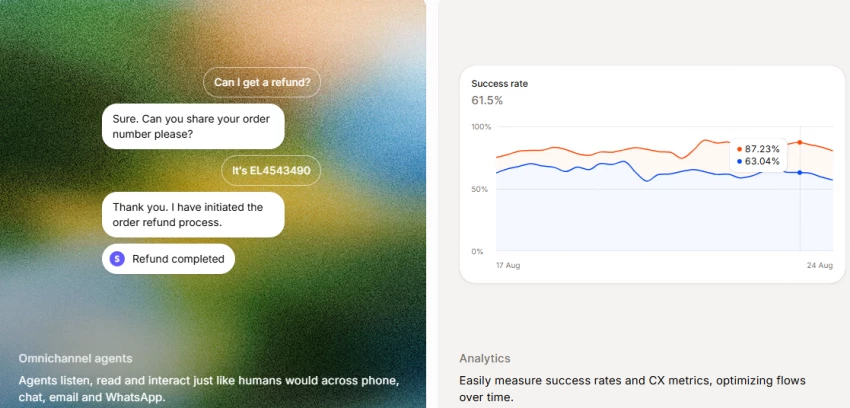
The first time I generated a long-form narration with ElevenLabs, I noticed something unusual. The voice didn’t just read the script, it interpreted it. There was pacing where it needed to slow down, emphasis where sentences mattered, and subtle pauses that felt intentional rather than mechanical.
As I kept listening, the biggest difference became clear: the voice stayed consistent. It didn’t drift into monotony. It didn’t suddenly flatten. It didn’t break immersion.
That consistency is what makes or breaks a podcast.
There were moments, especially in storytelling sections, where the voice didn’t feel like a tool anymore. It felt like a narrator. That’s a small distinction, but in audio content, it changes everything.
The more I used it, the more it started feeling less like “text-to-speech” and more like a creative layer. I wasn’t just generating audio, I was shaping how the content sounded.
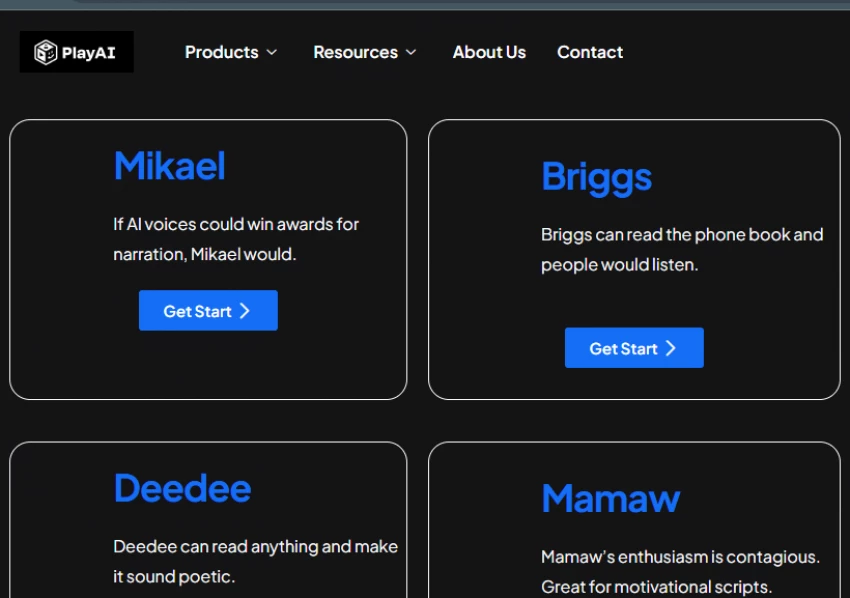
When I moved to Play.ht, the experience shifted.
The first thing I noticed was scale. There are more voices, more accents, more variations. If your goal is to produce different types of audio content across formats or languages, that flexibility is immediately useful.
But once I started testing long podcast scripts, the experience became more mixed.
The output was good, sometimes very good, but not always consistent. Certain voices sounded excellent in the beginning, but over longer durations, small issues appeared. The tone would flatten slightly. Some sentences felt less naturally connected. Occasionally, phrasing felt a bit mechanical.
None of this made the output unusable. But it did make it less immersive.
What stood out to me is that Play.ht is optimized for getting audio produced efficiently. It’s reliable for output, but it doesn’t always reach the same level of emotional depth or narrative smoothness that I experienced with ElevenLabs.
After testing both tools beyond short demos, the real difference only became clear during long listening sessions. Over 15–20 minutes, small imperfections start to matter. With ElevenLabs, the narration stayed smooth, consistent, and engaging throughout — it felt natural enough that I could focus entirely on the content. With Play.ht, the voice was good initially, but over time I became more aware of it, which slightly broke immersion. In podcasting, that distinction is critical because the best narration should disappear into the story, not distract from it.
| Aspect | ElevenLabs | Play.ht |
| Long-form consistency | Very stable, no drift | Slight tone inconsistency over time |
| Listener engagement | High, immersive | Moderate, noticeable voice presence |
| Voice fatigue | Minimal | Slight fatigue after long listening |
| Natural flow | Smooth and conversational | Occasionally mechanical |
| Overall podcast feel | Publish-ready | Usable but needs refinement |
One of the biggest turning points in my testing was voice cloning.
With ElevenLabs, the cloning felt like an extension of identity. It wasn’t just about copying a voice, it was about creating consistency. If I wanted to build a recognizable podcast presence without recording every episode, this made it possible.
The cloned voice carried tone, pacing, and personality in a way that felt usable for real content. It opened the door to scaling without losing identity.
Play.ht also offers voice cloning, but the output felt less refined. It worked, but it didn’t feel like something I would rely on for a branded podcast voice. It felt more functional than expressive.
For creators who care about building a recognizable audio brand, this difference matters more than any feature list.
After going through both pricing pages, the difference is simple:
For a typical podcast (8 episodes/month, ~100–120 minutes audio), ElevenLabs starts hitting its limits faster, while Play.ht stays more predictable.
| Metric | ElevenLabs | Play.ht |
|---|---|---|
| Pricing Model | Credit-based | Word / flat-based |
| Monthly Cost (creator level) | ~$22 (limited minutes) | ~$39–$99 (higher limits) |
| Cost Efficiency | Lower at scale | Higher at scale |
| Output Quality | Very high | Good but variable |
| Editing Time | Minimal | Moderate |
| Best For | Premium podcasts | Bulk content production |
ElevenLabs gives better ROI when quality, engagement, and listener experience matter. Play.ht gives better ROI when your goal is scale, consistency, and producing more content at a fixed cost.
In simple terms:
When I cross-checked platforms like G2 and Capterra, I noticed a pattern.
People consistently praise ElevenLabs for voice quality and realism. That aligns completely with what I experienced. But there are also mentions of pricing concerns and occasional support issues.
For Play.ht, reviews often highlight its versatility, voice library, and usefulness across different content types. That also matches my testing. But there are recurring mentions of inconsistency and support responsiveness.
The key thing most reviews don’t emphasize enough is how these tools perform in long-form content. That’s where the real difference shows up.
Both tools are strong, but they solve different problems. One focuses on quality and realism, while the other leans toward scale and flexibility. Here’s the difference in a simple, no-fluff format:
| Type | ElevenLabs | Play.ht |
| Pros | More natural and human-like voice, excellent for long podcasts, strong voice cloning | Huge voice library, supports many languages, better for bulk content |
| Cons | Can get expensive with heavy usage, fewer voice options | Less consistent in long-form audio, slightly robotic over time |
| Category | ElevenLabs | Play.ht |
| Voice Realism | 9.5/10 | 7.5/10 |
| Long-Form Listening Experience | 9/10 | 7/10 |
| Voice Cloning | 9.5/10 | 7/10 |
| Creative Control | 9/10 | 7.5/10 |
| Voice Variety | 8.5/10 | 9/10 |
| Cost Predictability | 7/10 | 8.5/10 |
| Podcast Readiness | 9.5/10 | 7.5/10 |
By the end of this, my perspective changed completely.
I stopped thinking in terms of “better tool” and started thinking in terms of “what kind of creator am I trying to be.”
If I wanted to build a podcast that people genuinely enjoy listening to, something with narrative depth and a consistent voice identity, I would choose ElevenLabs without hesitation.
If I wanted to produce large amounts of audio content, experiment with multiple voices, or scale across formats and languages with predictable costs, Play.ht would make more sense.
The biggest takeaway wasn’t about features or pricing.
It was this:
When people listen to a podcast, they’re not just consuming information. They’re spending time with a voice.
And in that context, sounding human isn’t a feature.
It’s the entire product.
That’s why, for me, ElevenLabs felt closer to building a real podcast, while Play.ht felt closer to running an efficient audio production system.
Both have their place. But they solve very different problems, and choosing the wrong one depends entirely on what you’re trying to build.
Share your thoughts about this article.
Be the first to post a comment!
The same tool can be a 4.7 on one site and a 3.9 on another. Here is what is rea...
Nitin1 month ago
Here is the number worth pinning above your budget: in Gartner Digital Markets r...
Deepak Mehra1 month ago

What Artlist AI is in 2026Artlist began as a royalty-free music library. By 2026...
Deepak Mehra1 month ago

Most AI tool failures do not announce themselves. There is no crash, no angry em...
Nitin1 month ago

The best AI image generator in 2026 is Nano Banana 2 for speed, FLUX.2 for photo...
Parveen Verma1 month ago
“Useful” is a slippery word for a coding assistant. A tool can be brilliant at o...
Sakshi Dhingra1 month ago