I didn’t start using FakeYou AI because I needed voiceovers for work.
I started using it out of curiosity, the same way most people do.
I wanted to hear a familiar voice say something unexpected. That curiosity turned into experimentation, then into occasional use, and eventually into a pretty clear understanding of what FakeYou is good at and where it simply isn’t.
This isn’t a feature tour. It’s what using FakeYou actually feels like over time.
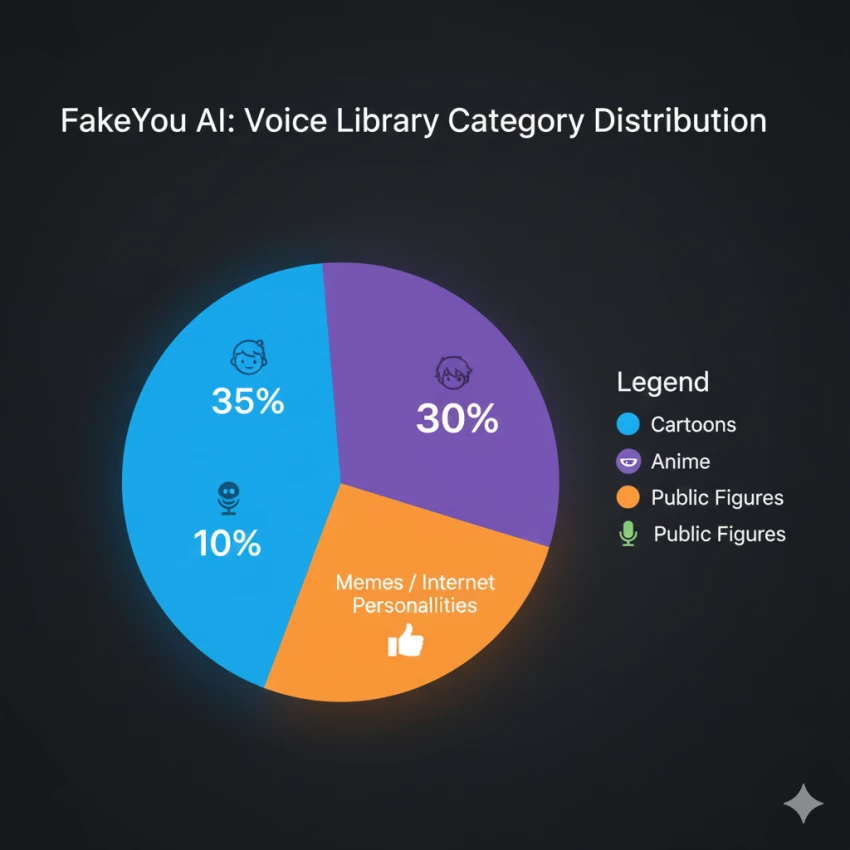
The first time I opened FakeYou, I spent more time browsing voices than generating audio.
Cartoon characters. Anime voices. Internet memes. Public figures.
It felt less like a tool and more like scrolling through pop culture.
When I finally generated my first clip, the accuracy caught me off guard, especially for short lines. It wasn’t perfect, but it was good enough to be entertaining, which is exactly what FakeYou seems designed for.
Using FakeYou on the free tier taught me patience.
Waiting several minutes for a clip forced me to:
At first, that felt restrictive. Later, I realized it was shaping behavior. FakeYou isn’t meant for rapid iteration on long scripts unless you’re paying for it.
Once I accepted that, the frustration eased.
FakeYou sounds best when it’s doing less.
For:
…the voice accuracy is often impressive.
But the longer the script, the more the illusion breaks. Pacing becomes unnatural, words blur together, and emotional range flattens. It’s not terrible, it’s just not built for storytelling.
Text-to-speech is FakeYou’s entry point.
Voice-to-voice is where it gets interesting.
Uploading my own voice and transforming it into another identity preserved:
The results felt more human and less robotic, especially for expressive lines. It still wasn’t perfect, but it made FakeYou feel like a creative experiment rather than a novelty.
I tried FakeYou’s lip-sync feature expecting more than it delivered.
It works well enough for:
But it’s not precise or cinematic. I treated it as a bonus, not a reason to use the platform.
FakeYou’s core strength is voice, not video.
The idea of creating or uploading your own voice sounds exciting, until you realize how sensitive the process is.
Results depended heavily on:
Bad input produced unusable output. There’s no shortcut here. This feature felt powerful, but definitely not casual.
It’s best suited for users willing to experiment repeatedly.
I never once thought, “I should use FakeYou for an audiobook.”
And that’s okay.
FakeYou doesn’t feel built for:
It feels built for:
Once I stopped expecting professional-grade realism, my experience improved dramatically.
Over time, FakeYou became something I used occasionally, not daily.
I open it when:
I don’t open it when:
That clarity made FakeYou enjoyable instead of frustrating.
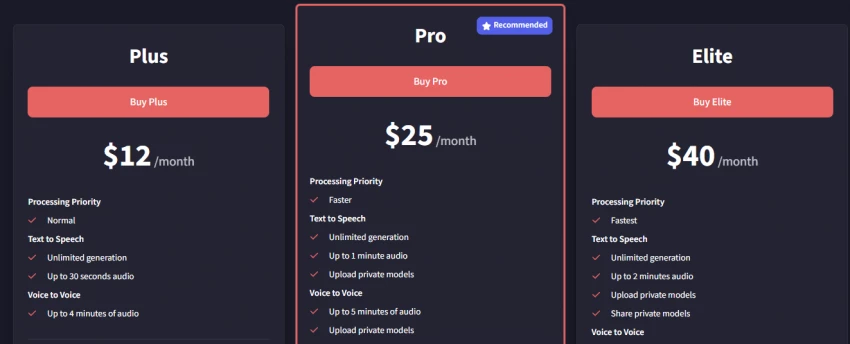
The paid tiers didn’t feel like upgrades for curiosity. They felt like upgrades for creators who already know they need FakeYou.
If you’re generating frequently, shorter queues and longer limits matter.
If you’re just experimenting, free is enough.
That pricing balance felt fair, even if the free queue can be painful.
After extended use, these strengths stood out:
FakeYou lowers the barrier to playing with voice identity.
Just as honestly, these issues never went away:
These aren’t bugs, they’re trade-offs.
From real usage, FakeYou works best for:
It’s less suitable for:
Knowing this upfront prevents disappointment.
Overall Rating: 4.0 / 5
Breakdown:
Voice Variety: ⭐⭐⭐⭐⭐ (5/5)
Short-Clip Accuracy: ⭐⭐⭐⭐☆ (4/5)
Long-Form Naturalness: ⭐⭐⭐☆ (3/5)
Ease of Use: ⭐⭐⭐⭐☆ (4/5)
Free-Tier Experience: ⭐⭐⭐☆ (3/5)
Creative Fun Factor: ⭐⭐⭐⭐⭐ (5/5)
Bottom Line
FakeYou AI isn’t the most realistic voice generator available.
But it might be the most approachable.
It makes voice experimentation fun, accessible, and community-driven, even if the results aren’t perfect. When used within its strengths, it delivers exactly what it promises.
Used outside that lane, it struggles.
Understanding that the boundary is the key to enjoying FakeYou instead of being disappointed by it.
Be the first to post comment!

There’s a very specific frustration that most developers go through at some poin...
Sakshi Dhingra1 week ago

At first, it doesn’t feel like a tool.It feels like a shortcut you weren’t suppo...
Sakshi Dhingra2 weeks ago
As a business leader or marketing professional, the constant challenge has alway...
Sakshi Dhingra2 weeks ago
AI avatar video tools have quickly become one of the fastest-growing categories...
Sakshi Dhingra2 weeks ago

As a content creator, managing a diverse range of video content is a daily chall...
Sakshi Dhingra3 weeks ago
The first time I realized something was wrong with my content was late at night...
Sakshi Dhingra3 weeks ago