MindLuster caught my attention for the same reason it probably catches most people's attention: free courses, a huge subject library, and certificates without the usual subscription fee.

That combination sounds unusually generous, so I wanted to look beyond the marketing and answer the questions that actually matter. Are the courses useful? Are the certificates really free? Is MindLuster legitimate? And, most importantly, does a MindLuster certificate have enough value to put on a resume?
After looking closely at MindLuster's current course catalog, certificate requirements, verification system, course pages, and its own explanation of how the platform works, my view is more nuanced than simply calling it good or bad.
My short answer: MindLuster can be genuinely useful for learning a skill without paying upfront, especially for beginners. Its certificates can document course completion, but I would not treat a MindLuster certificate as equivalent to an externally accredited university credential or a major vendor certification.
That distinction matters.
I originally approached MindLuster as another free online learning platform. Once you open the site, the scale of the catalog is immediately noticeable.
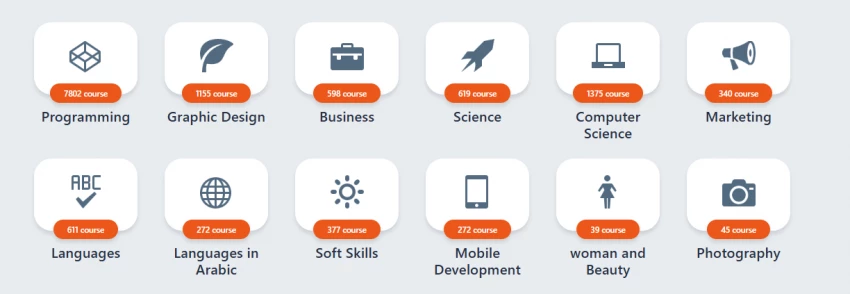
Programming, business, graphic design, computer science, languages, artificial intelligence, medical subjects, marketing, engineering and dozens of other areas are represented. MindLuster currently lists thousands of courses within individual categories; for example, its free-course directory shows thousands of programming courses alongside hundreds or thousands in several other categories.
But while researching the platform more closely, I discovered something much more important than the catalog size.
MindLuster describes itself as essentially a search engine that gathers courses from the internet, with its team reviewing some courses and converting eligible ones into accredited courses on its platform. It also says that not every course receives accreditation.
That changed the way I evaluated it.
I don't think MindLuster should be judged exactly like a traditional online academy. It makes more sense to judge it as a large learning-discovery platform where the quality can depend heavily on the individual course you choose.
That also explains some of the differences I noticed between courses.
MindLuster keeps the basic learning process straightforward.
You can search for a subject, open a course, view the number of lessons and move through the videos without encountering the subscription structure associated with many large learning platforms.
Its current popular-course directory, for example, lists a 94-lesson MS Excel course, a 15-lesson Python programming course, a seven-lesson Web Design for Beginners course, a 31-lesson Power BI course and many other options with very different lengths.
This variety is both one of MindLuster's strengths and one of its weaknesses.
A beginner may find a short course that answers exactly one question, while another learner may prefer a much larger learning series. But the presence of hundreds of courses does not automatically mean every course has the same depth, teaching style or instructional quality.
And that brings me to one of the most important things I learned while reviewing MindLuster:
On MindLuster, choosing the right course matters more than simply choosing the right category.
The current MindLuster catalog contains everything from very short introductory courses to programs with dozens or even hundreds of individual lessons.
The MS Excel course appearing in its popular listings currently contains 94 lessons, while Python programming is listed with 15 lessons. Other subjects vary dramatically in length.
That variation makes sense once you understand the way MindLuster operates.
Because the platform aggregates learning material and works with content from different instructors and sources, I would not expect every course to feel like part of one standardized curriculum. MindLuster's own About page explains that it gathers courses from the internet and then reviews courses for inclusion in its accredited catalog.
I found this particularly important when evaluating technical subjects.
One current Computer Organization and Architecture course contains 19 lessons and covers topics such as Von Neumann architecture, RISC and CISC, memory interfacing, registers and bus architecture. The course page shows a 4.4 rating based on 735 platform reviews at the time checked.
A Web Design for Beginners page, meanwhile, displayed a 4.5 rating from 774 platform reviews.
Those ratings are useful signals, but I wouldn't choose a course from the star rating alone. I would check the lesson titles, total lesson count, instructor or content source, publication relevance and whether the course teaches something I can actually practise.
A free course is only valuable when the knowledge survives after the certificate is downloaded.
That is the standard I would use with MindLuster.

This part deserves clarification because descriptions of MindLuster's certificate process online can become confusing.
Current certified course pages state that learners need an account, need to watch all lessons, and need to watch at least 50% of the duration of the lessons before obtaining the free certificate. MindLuster also allows learners to follow their course progress through their profile.
So I would not describe the requirement simply as “complete 50% of the course.”
The more accurate explanation is that the platform tracks lesson participation and its certified-course pages currently instruct learners to go through all lessons while reaching the required viewing duration.
Once a qualifying course has been completed, MindLuster says the certificate-request button in the learner's profile becomes available and the certificate can then be generated.
MindLuster also operates an online certificate checker where a certificate number can be entered for verification.
That verification feature is useful.
But it leads directly to the biggest question.
There are really two separate questions here:
Those are not the same thing.
MindLuster provides a certificate verification system, and its course pages advertise certificates after successful course completion. It also currently distinguishes between a free certificate and a verified certificate option.
That establishes that MindLuster has its own system for issuing and checking certificates.
However:
A certificate being verifiable does not automatically make it an externally accredited professional qualification.
That is probably the single most important distinction for anyone searching for “MindLuster certificate value.”
MindLuster itself states that not all courses on the platform are accredited. It says its team reviews courses and converts selected courses into MindLuster-accredited courses.
The platform also markets a separate paid or verified certificate and says its paid certificates include additional validation features such as a unique registration number.
Because of that, I would check the exact certificate attached to a particular course instead of assuming that every MindLuster course produces the same type of credential.
I would also separate MindLuster certificates from certifications issued directly by organizations such as Microsoft, AWS, Google, Cisco or accredited universities.
Those credentials are tied to specific organizations, examinations or formal programs. A MindLuster completion certificate primarily tells someone that you completed learning material on MindLuster.
That can still have value, it simply has a different kind of value.
Yes, in the right situation.
If I were a student, fresher or career changer with limited experience, I would have no problem including a relevant MindLuster course under a section such as Courses, Professional Development or Additional Training.
But I wouldn't make the certificate itself the centrepiece of the resume.
For example, imagine two candidates who both completed a Python course.
One writes:
“MindLuster Python Certificate.”
The other writes:
“Completed introductory Python training and built a small data-cleaning project using Pandas.”
I would expect the second statement to be more persuasive because it connects learning with demonstrated ability.
That leads to my practical view of MindLuster certificate value:
Use the certificate to prove that you studied. Use projects, portfolios and results to prove that you learned.
The second part is normally much more important.
There is an interesting inconsistency across MindLuster's own public pages.
Its About page currently promotes “600K+ Free Courses,” while elsewhere on the same page its FAQ refers to more than 12,000 courses and 160,000 lessons, and another answer refers to more than 25,000 courses.
Meanwhile, the free-course directory provides separate category counts rather than one clearly reconciled catalog total.
I therefore wouldn't choose MindLuster because of a headline course-count number.
The exact number doesn't change the practical decision.
There are clearly a lot of courses available. What matters is whether the specific course you want is current, coherent, useful and eligible for the certificate you expect.
This is also why I would inspect a course page before registering rather than relying only on the homepage.
The strongest reason to consider MindLuster is still accessibility.
There is an enormous amount of material available across technical, business, language, creative and academic subjects, and many certified course pages explicitly advertise free registration and free certificates.
I also like the low-risk nature of the platform. If I am curious about Power BI, Python, Excel, web design or digital marketing but don't yet know whether I want to spend money on a full program, MindLuster gives me somewhere to start.
Certificate verification is another positive addition because it gives learners a way to reference a certificate number rather than relying only on a downloaded image or PDF.
Most importantly, there are enough course options that motivated learners can probably find useful material without paying simply to explore a subject.
The biggest weakness is consistency.
A very large catalog assembled from different instructors and learning sources naturally creates variation in course depth, lesson sequencing, presentation style and freshness.
The second weakness is credential ambiguity.
Words such as “certificate,” “certified,” “verified” and “accredited” can sound similar when they actually describe different things. MindLuster itself separates free and verified certificate options and states that not every course is accredited.
This means learners need to pay attention to the exact course and certificate rather than assuming every credential has identical status.
Finally, MindLuster works better for self-directed learners than for someone who expects a highly structured cohort, extensive instructor interaction, formal examinations or a universally standardized curriculum.
Would I use MindLuster?
Yes, but I would use it for the right reason.
I think MindLuster is most useful when the objective is to learn something without making a financial commitment first.
Want to understand Excel formulas before paying for advanced Excel training? It makes sense.
Want to explore Python and see whether programming interests you? It makes sense.
Want to improve basic web design, communication or digital-marketing knowledge? Again, it can make sense.
Where I would be more careful is using MindLuster specifically because I expect one certificate to dramatically change my employment prospects.
MindLuster is stronger as a learning platform than as a shortcut to professional credibility.
That isn't necessarily a criticism. Free education can be useful even when the credential itself isn't the main reward.
If a course teaches me something I can demonstrate in an interview, project, portfolio or workplace, the time may have been worthwhile regardless of how famous the certificate is.
After looking more closely at the platform, I would describe MindLuster as a low-cost—or often no-cost—entry point into online learning rather than a replacement for formal professional certification.
Its biggest advantage is access. There are courses across a huge range of subjects, and certified courses can provide completion certificates without requiring the sort of subscription found on many learning platforms.
Its biggest limitation is that the value varies by course.
That is why I would use a simple rule before enrolling:
Judge MindLuster course by course, not platform by platform.
Check the instructor or source. Look through the lesson titles. Check the age and depth of the material. Confirm whether the course offers a certificate. Understand whether that certificate is free or verified. Then ask whether you'll be able to demonstrate the skill afterward.
For learners willing to do that, MindLuster can be genuinely useful.
For someone primarily chasing a prestigious credential, it probably isn't the first place I would look.
And that is ultimately where I think the MindLuster certificate fits best:
The certificate can document your learning, but the skill you can demonstrate is what gives that learning career value.

The short version, for anyone who does not want to read 5,000 wordsCopper is a C...
Sakshi Dhingra1 week ago
If you've spent any time around tax professionals in the United States, you've h...
Harpreet Singh2 weeks ago
The short versionQuicken sells two entirely separate things. Quicken Classic is...
Harpreet Singh3 weeks ago
Here is a small confession most security writers avoid making: you probably do n...
Deepak Mehra3 weeks ago
The photo editing software market has been shaken harder in the past eighteen mo...
Sakshi Dhingra3 weeks ago
A code kata is a small exercise you repeat until the technique becomes instinct....
Harpreet Singh3 weeks ago