When I first noticed Muke AI trending across various AI tool directories and niche review platforms, I wasn’t sure whether it was just another experimental tool or something genuinely useful. But as someone who works closely with AI systems, privacy frameworks, and digital ethics, I knew I had to test it firsthand before forming any conclusions.
The experience turned out to be revealing, and in many ways, concerning.
Why I Felt Compelled to Personally Test Muke AI
Before using any AI tool that handles human images, I ask myself:
Is the platform legitimate?
Does it provide enough safety information?
Is the data-processing pipeline transparent?
Are there visible signs of ethical boundaries?
With Muke AI, almost all of these questions were unanswered. The gaps were significant enough that I decided to thoroughly explore the tool, not as a casual experiment but as a full evaluation.
My Initial Interaction: Simple Interface With Unclear Intentions
The homepage feels intentionally straightforward. Uploading an image is quick. Rendering is fast. The results look AI-generated, although not on par with industry-leading models.
But what struck me immediately were the types of transformations offered, some innocent, others highly questionable. This is where my uncertainty turned into genuine concern.
Testing Muke AI’s Feature Set: What Actually Happened
While testing Muke AI, the core functionality worked exactly as advertised on a surface level. Basic image edits processed quickly without noticeable lag, and artistic style transformations applied in a fairly predictable manner. Face-based effects rendered cleanly, and the interface itself required virtually no learning curve. The layout was intuitive, controls were straightforward, and even first-time users could navigate the tool without confusion. From a usability standpoint, the platform prioritizes speed and simplicity, which lowers the barrier to entry significantly.
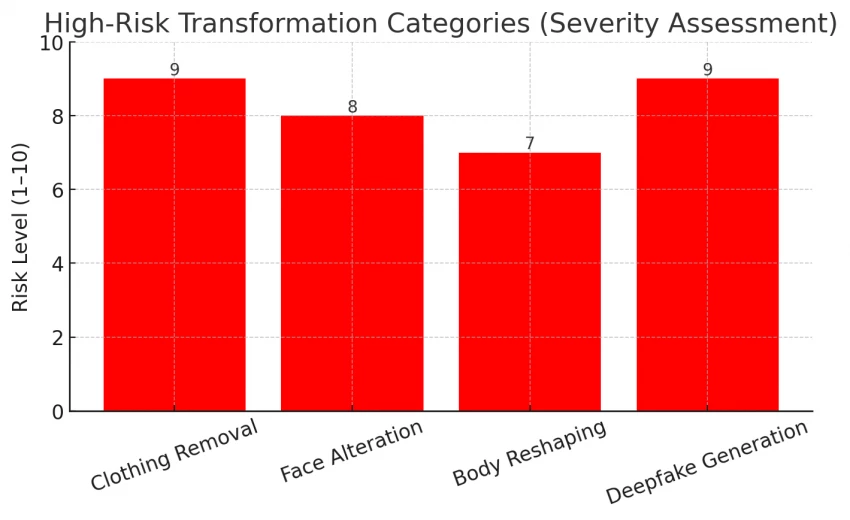
However, deeper experimentation revealed capabilities that raise important questions. Certain modes appeared to simulate clothing removal or significantly alter body proportions in ways that could easily cross ethical boundaries depending on user intent. Facial manipulation features, while technically impressive, carried similarities to deepfake-style transformations, enabling realistic alterations that may not always be used responsibly. Additionally, the absence of visible watermarking on generated outputs removes a layer of traceability that many AI image platforms implement as a safeguard. What stood out most was the apparent lack of built-in ethical guardrails or usage restrictions, which could make the tool vulnerable to misuse in sensitive contexts.
Experiencing these features firsthand shifted the evaluation from purely technical performance to broader considerations around responsibility and potential harm. While the tool demonstrates functional capability, its design choices inevitably invite discussion about intent, oversight, and how such technologies should be governed in real-world use cases.
Seeing these capabilities firsthand made me think more about intent, responsibility, and potential misuse.
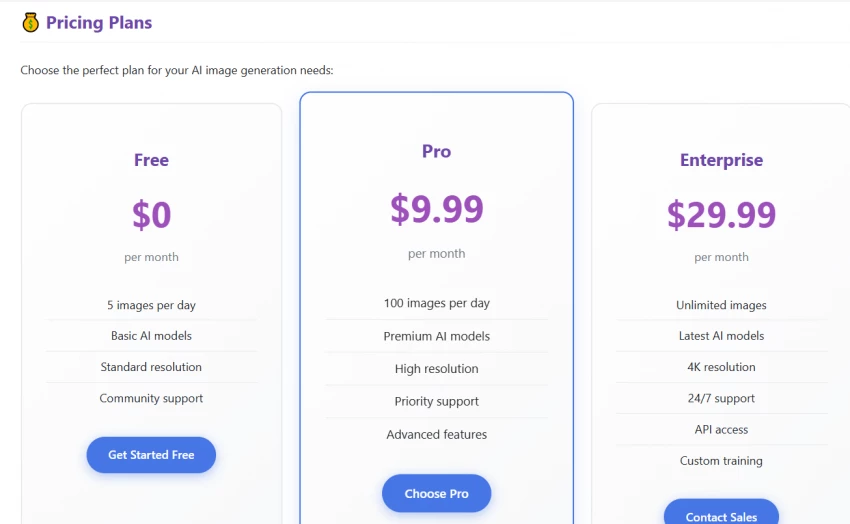
Pricing
At first, Muke AI’s pricing seems fairly competitive. But when I tried using the service, it was hard to find straightforward information about billing limits, how user data is handled, or what their refund policy covers. A lot of the key details felt unclear, hidden, or not explained at all.
That impression also lines up with what I found in online reviews while pricing is listed, the platform doesn’t do a great job of being transparent about the finer points.
Muke AI’s Legitimacy: My Investigation Into Ownership and Authenticity
Lack of Company Transparency
I searched everywhere, LinkedIn, company registries, WHOIS records, and found:
No company name
No founder information
No registered corporate identity
No physical office address
No customer support structure
Hidden WHOIS Information
Most reputable AI companies don’t hide their ownership. Muke AI does. Completely.
No Verifiable Leadership
Without knowing who operates the platform, there is no way to:
Assign accountability
Ensure compliance
Understand motivations
Trust the technology
This alone raises legitimacy concerns.
Is Muke AI Safe to Use? My Honest Assessment After Testing It
The Data Privacy Risk
The biggest issue I encountered is the complete lack of clarity around:
How user images are stored
Whether data is deleted or retained
Whether my uploads are used to train their models
Where servers are located
Whether third parties access the images
The privacy policy provides no concrete answers.
Given the sensitive nature of facial data, this is unacceptable.
Transparency Gaps That Make Muke AI Potentially Unsafe
As I continued reviewing, I realized Muke AI fails to provide:
A clear data-retention policy
Encryption details
AI training disclosures
Model documentation
Compliance certifications
Moderation safeguards
This is not just a lack of information, it's a transparency vacuum.
Real Deepfake Risks: What I Observed While Using the Tool
Because of the features available, I could see how easily someone could:
Create non-consensual deepfake content
Target individuals with malicious edits
Generate sexualized or manipulated images
Spread harmful misinformation
The tool lacks:
Detection safeguards
Output watermarks
Ethical usage warnings
Restrictions on transformation types
This makes Muke AI extremely vulnerable to misuse.
Compliance & Legal Concerns: Does Muke AI Follow Any Standards?
From my assessment:
No GDPR compliance evidence
No CCPA compliance
No ISO certification
No documented security framework
No responsible AI statement
If a platform operates without legal or industry compliance, the risk falls entirely on users.
Comparing Muke AI to Legitimate AI Imaging Tools I Use Regularly
When I compare it to platforms like:
Midjourney
DALL·E 3
Adobe Firefly
Runway ML
The contrast is stark.
These reputable tools offer:
Clear data-handling protections
Transparent company ownership
Ethical-use statements
Moderation layers
Safety filters
Professional accountability
Muke AI offers none of these.
User Sentiment Across the Web: Do Others Feel the Same?
After completing my own testing, I looked at broader public feedback to see whether my concerns were isolated or widely shared. Across forums, review platforms, and informal discussions, a consistent pattern emerged. Users frequently reference low trust signals and flag the platform as high risk, particularly when it comes to image handling and output manipulation. Some express concern about potential data misuse, especially in the absence of clearly defined privacy safeguards. Others highlight fears surrounding NSFW misuse or the ability to generate misleading, altered outputs that could be used deceptively. The tone across these discussions is cautious rather than enthusiastic. What stood out most was that the broader sentiment closely mirrored my own experience: technically functional, but ethically and operationally questionable.
Why I Would Not Upload Personal Images to Muke AI
After evaluating both the tool’s capabilities and the wider user feedback, my position became clear. I would not upload any sensitive or personal images to Muke AI. The platform does not provide enough visible transparency or guardrails to justify that level of trust. When a tool enables significant facial or body manipulation without strong watermarking, accountability mechanisms, or clear content moderation standards, the potential risks begin to outweigh the convenience. For casual experimentation with non-sensitive visuals, the technical features may function as advertised. But for anything involving personal identity, professional use, or private content, I do not consider the platform trustworthy enough to recommend.
If Someone Still Chooses to Try It: Practical Safety Considerations
If someone decides to experiment with Muke AI despite the concerns, the approach should be extremely cautious. Only use non-human, non-sensitive images that carry no personal connection or identity risk. Avoid uploading your own face or anyone else’s image under any circumstances. Do not use the platform for content tied to professional reputation, branding, or identifiable individuals. It is also wise to avoid linking the tool to primary email accounts or personal social profiles. In practical terms, the safest mindset is to treat the platform as unverified and potentially unsafe, limiting usage to disposable, non-identifiable material. That is the minimum threshold for reducing exposure.
Final Verdict
After spending time testing Muke AI and reviewing broader user feedback, my conclusion is fairly straightforward.
From a purely functional standpoint, the platform works. The interface is simple, edits process quickly, and the AI effects render without much friction. If you approach it only as a technical tool, it appears capable of doing what it claims.
But functionality is not the same as trustworthiness.
What ultimately shaped my view were the ethical gaps and the absence of visible safeguards. Features that enable realistic facial alterations, body reshaping, and implied clothing removal cross into sensitive territory, especially when there are no strong watermarking systems, transparent moderation policies, or clearly defined data protection standards. Combined with low trust signals and public concern around misuse, the risk profile becomes difficult to ignore.
Personally, I would not upload personal photos, sensitive images, or anything tied to my identity. The potential downside simply outweighs the convenience of quick AI-generated edits.
That doesn’t mean every user will have the same threshold for risk. Some may experiment casually with non-sensitive material and feel comfortable doing so. But for private, professional, or identity-based content, I would advise caution.
In short, Muke AI may be technically functional, but trust is earned through transparency, safeguards, and accountability. Based on what I observed, that trust has not yet been fully established.
Commonly Asked Questions About Muke AI
Q: Is Muke AI a legitimate platform? A: Muke AI lacks clear ownership, making it difficult to trust as a legitimate service. I found no verifiable company information.
Q: Is it safe to use Muke AI? A: Due to its opaque data policies and potential for misuse (e.g., deepfakes), I would advise against using it, especially for uploading sensitive images.
Q: How does Muke AI compare to other AI tools? A: Platforms like Midjourney, DALL·E 3, and Runway ML are far more transparent, safe, and ethical in their data handling practices.
Post Comment
Recent Comments
L
Liam Mitchell
Mar 17, 2026
I tried Muke AI, but I’m really disappointed with the lack of controls on some features. The ability to alter faces and bodies so realistically is just asking for trouble, and with no visible watermark, there’s nothing stopping people from misusing it.


Liam Mitchell
Mar 17, 2026I tried Muke AI, but I’m really disappointed with the lack of controls on some features. The ability to alter faces and bodies so realistically is just asking for trouble, and with no visible watermark, there’s nothing stopping people from misusing it.