I didn’t come across Influencers Gone Wild through recommendation or advertising. I encountered it the same way many people do, indirectly. The phrase kept appearing across search results, social posts, reposted links, and discussion threads. That repetition raised a simple question for me: what exactly is this, and what kind of environment does it represent?
After going through multiple websites using the name, reading privacy policies, scanning commentary articles, reviewing public discussions, and checking how the term is framed across platforms, I don’t see Influencers Gone Wild as a single site or product. I see it as an ecosystem label, and that distinction matters for any honest review.
The first thing that stood out was fragmentation. There isn’t one definitive Influencers Gone Wild destination. Instead, there are:
Some sites publish privacy policies; others don’t. Some frame the term as cultural commentary, others use it as a traffic-driven label. That inconsistency makes it difficult to evaluate the ecosystem as a unified platform, because it isn’t one.
From a user perspective, this immediately introduces credibility uncertainty.
What I noticed consistently is that Influencers Gone Wild is rarely presented as original reporting or authored work. Most of the material I saw falls into one of these categories:
That doesn’t automatically make the content false, but it does mean context is often lost. Original captions, audience controls, monetization intent, and platform rules are usually absent. As a reader, I’m left interpreting fragments without the framing that existed when the content was first shared.
This is where my assessment becomes more critical.
Influencers typically share content on platforms where:
In the Influencers Gone Wild ecosystem, that structure often disappears. Content may be:
Even when content was originally public, redistribution raises ethical concerns. From what I could observe, consent and attribution are inconsistent at best across the ecosystem.
Some sites associated with the term publish privacy policies that outline data usage, cookies, and third-party advertising. Others provide little to no disclosure.
As a user, that matters. Fragmented ecosystems tend to rely on:
There’s no single standard being enforced. That means risk varies depending on which site a user lands on, and that variability isn’t always obvious upfront.
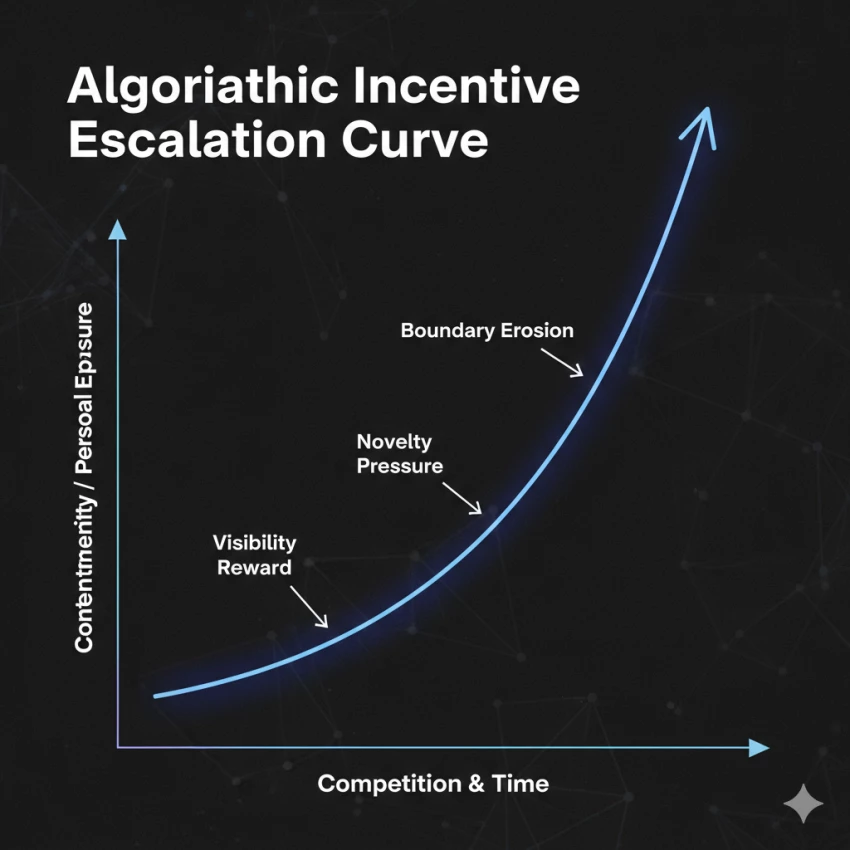
What changed my perspective was realizing that Influencers Gone Wild isn’t just about content, it’s about incentives.
Influencers operate in systems where:
visibility is algorithmically rewarded,
novelty outperforms consistency
and personal exposure often drives engagement.
Many essays and discussions frame the phenomenon as a byproduct of that pressure. I agree with that interpretation. What gets labeled as “gone wild” is often content that crosses a perceived boundary in pursuit of attention, not necessarily because creators lost control, but because the system rewards escalation.
When I looked beyond aggregator sites and into forums, Q&A platforms, and long-form articles, the tone shifted noticeably.
Instead of spectacle, the discussion often centers on:
In those spaces, Influencers Gone Wild is less a destination and more a case study in digital labor, attention economics, and platform design.
From what I reviewed, risks exist on multiple sides:
None of this is unique to this ecosystem, but the lack of centralized ownership or governance amplifies every risk.
Since Influencers Gone Wild isn’t a single service, I’m rating it as a user-facing content ecosystem, not a product.
Transparency: ★★☆☆☆ (2/5)
Content Context & Attribution: ★★☆☆☆ (2/5)
User Safety & Clarity: ★★☆☆☆ (2/5)
Cultural Insight Value: ★★★☆☆ (3/5)
Overall Trustworthiness: ★★☆☆☆ (2.2/5)
I don’t view Influencers Gone Wild as a place to go, I view it as a signal phrase that reflects deeper problems in the attention economy.
As a user, I found:
As an observer, I found it useful only when treated as a lens for understanding influencer culture, not as a reliable content source in itself.
My takeaway is simple: the term tells you more about how digital visibility works than about the people it labels. Any interaction with this ecosystem requires caution, context awareness, and a clear understanding that what’s visible is rarely the full story.
Be the first to post comment!

Growth marketing today relies on a combination of experimentation, analytics, au...
Sakshi Dhingra5 days ago

Online reviews are often framed as a decision-making tool for buyers. But behind...
Suraj Malik1 week ago
What Is Marketing Automation?Marketing automation is the use of software to...
Cheshta Upmanyu1 month ago
Magento stands out as one of the most robust solutions for growing brands that w...
Mighva Verma1 month ago
Paid survey apps are everywhere now, but most people are unsure which ones actua...
Sakshi Dhingra4 months ago

Emoji Kitchen, Google’s experimental yet wildly popular mash-up tool built into...
Sakshi Dhingra4 months ago