
At first, it doesn’t feel like a tool.
It feels like a shortcut you weren’t supposed to discover.
You drop in a screenshot of a conversation that’s clearly going nowhere, hit generate, and within seconds, you get a reply that’s smoother than anything you would’ve typed. Not dramatic, not over-the-top, just slightly better in tone, slightly more confident, slightly more engaging.
And that “slightly better” is exactly why it works.
Because in texting, the gap between a dead conversation and a flowing one is rarely huge. It’s small adjustments, tone, timing, and phrasing. Rizz AI sits exactly in that gap.
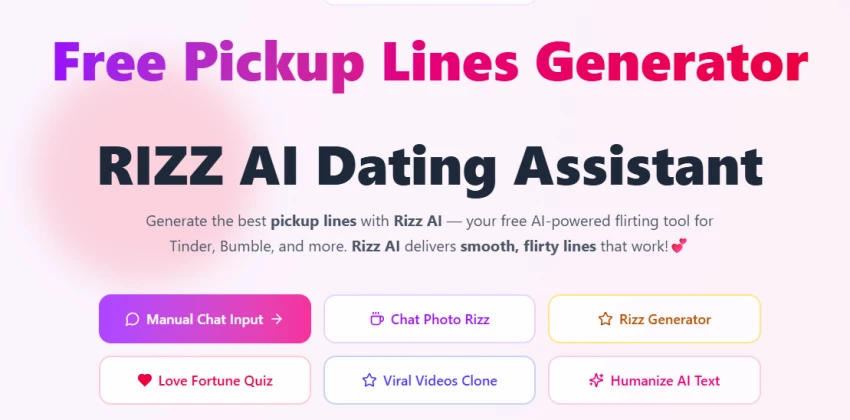
But the real story of this product only starts after you’ve used it repeatedly.
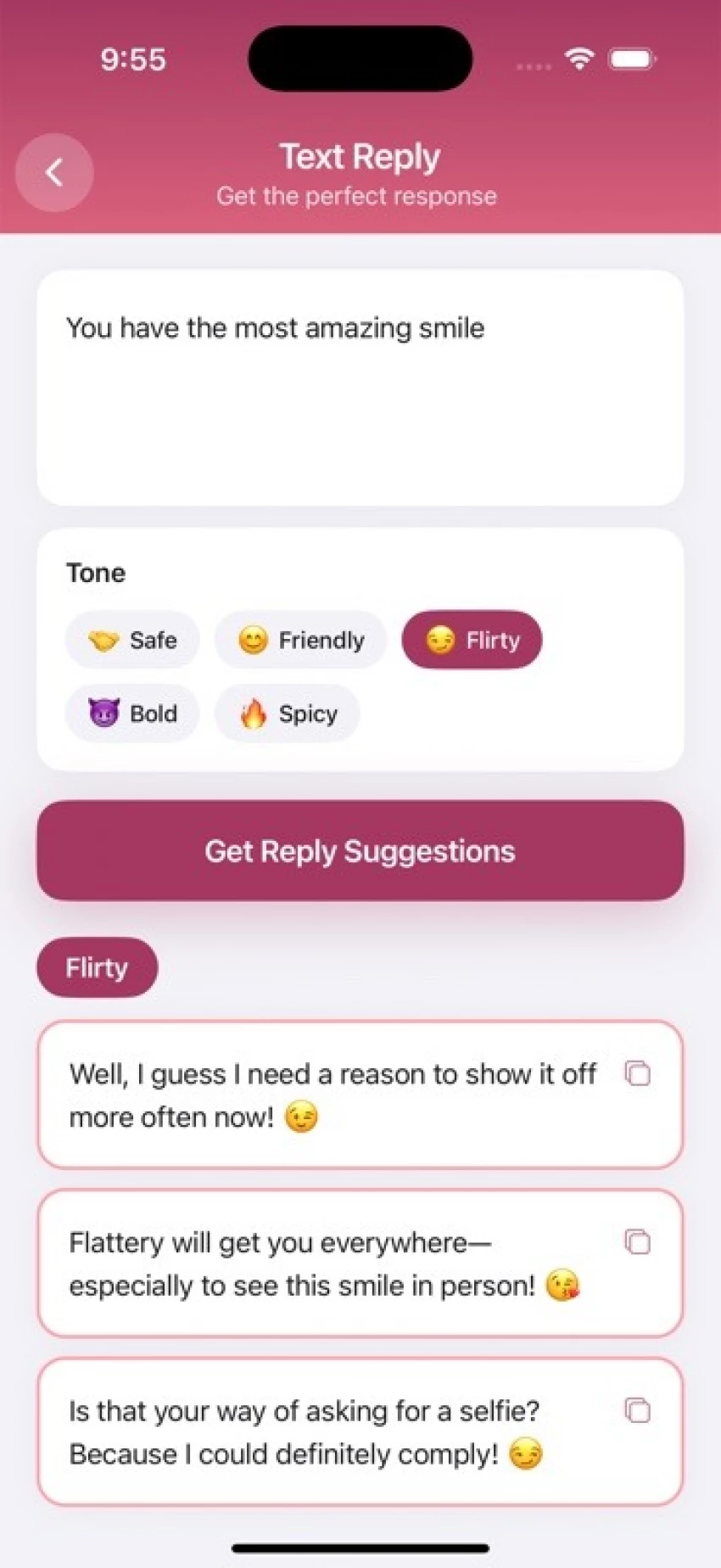
What becomes obvious very quickly is that Rizz AI doesn’t try to be brilliant, it tries to be safe and effective. And that’s a smart choice.
When I used it across different conversations, especially the ones that were already fading, the replies almost always did one thing right: they kept the conversation alive. They avoided dryness, avoided awkward escalation, and didn’t feel try-hard.
That alone explains why people report higher response rates. When your replies stop killing the conversation, things naturally improve.
There’s also a timing advantage that’s hard to ignore. Normally, you pause, think, delete, rewrite. Here, you just paste and send. That compression of effort changes your behavior more than the AI itself.
You start replying faster, with more confidence, and without second-guessing every word.
This is the feature I ended up using the most. Whenever I didn’t feel like thinking too much about a reply, I would just drop the chat in and let it generate something. Most of the time, the suggestions were good enough to send without editing. What stood out was that they didn’t feel forced, they were simple, slightly engaging, and just enough to keep the conversation moving.
I didn’t notice this immediately, but after a few uses, I realized the replies were adjusting based on how the conversation felt. If the chat was light, the responses stayed playful. If it felt a bit dry, the tone became more neutral. It wasn’t always perfect, but it did help me avoid sending replies that felt out of place.
This part felt less direct but still noticeable over time. The suggestions started reflecting a certain pattern, shorter messages, better pacing, and less over-explaining. I wouldn’t say it completely changed how I text, but it definitely made me more aware of how I structure replies.
Once I moved beyond just generating replies, this section felt like the most grounded part of the platform. The pickup line generator, Tinder bio creator, and conversation starters are not trying to be overly creative, and that’s actually why they work.
The outputs feel controlled. They don’t push you into awkward territory, and they don’t try too hard to sound clever. Instead, they sit in that safe middle zone where most real conversations actually succeed. It feels less like the tool is trying to impress someone, and more like it’s helping you avoid saying something that ruins the flow.
Over time, this becomes more useful than expected. Not because it creates perfect lines, but because it removes hesitation.
The bio tools don’t give you something completely new, and that’s noticeable immediately. But after using them a few times, the purpose becomes clearer.
They are not meant to invent personality. They are meant to structure it.
When I tested different outputs, what stood out was how they cleaned up wording and made profiles sound slightly more confident and readable. It’s subtle, but it makes a difference. Instead of staring at a blank bio section, you get something that already feels presentable.
It doesn’t replace your input, but it reduces the effort needed to express it.
This is one of those features you don’t think you need, until you use it in the right moment.
Whenever a new match appears or a conversation resets, the hardest part is not continuing — it’s starting. That initial message carries more weight than people expect.
Using the conversation starter tool repeatedly, I noticed it consistently avoided low-effort openings. It gives direction without sounding scripted. And that’s important, because overly polished openers can feel artificial very quickly.
It doesn’t guarantee a reply, but it ensures you’re not starting at a disadvantage.
At first glance, features like Shakespearean translators or Old English converters feel out of place. They don’t directly contribute to better dating conversations.
But after testing them, their role becomes clearer. These tools are less about utility and more about interaction. They add a layer of experimentation, something you can use occasionally to make conversations feel different.
In practice, they won’t be used daily. But they contribute to keeping the platform from feeling repetitive.
These tools sit in an interesting position. They are not essential, but they quietly improve how messages feel.
When I tested the emoji suggestions and short “rizz lines,” they didn’t drastically change conversations. But they did make replies feel slightly more expressive and complete.
It’s not about adding something new, it’s about enhancing what’s already there without overdoing it.
After using it enough times, you realize the intelligence is not deep — it’s directional.
It reads tone fairly well. Not perfectly, but enough to avoid obvious mistakes. It understands when a conversation is light, when it needs humor, and when it should not push too hard.
That’s why the replies feel “on point.”
Not because they are uniquely creative, but because they stay within a narrow band of socially acceptable, low-risk responses. In texting, that band is where most successful interactions already happen.
So instead of impressing, it stabilizes.
And that’s a very different kind of value.
This is where the experience changes.
Not immediately, but after enough repetition.
The replies start feeling familiar. The rhythm becomes predictable. The humor starts sounding like variations of the same idea.
Nothing is wrong individually. But collectively, it starts feeling like the same voice is being reused across different conversations.
And that creates a subtle disconnect.
You’re still sending good messages, but you begin to notice that they are not entirely yours. They sound like you, just a slightly polished version that always plays it safe.
At first, that feels like an upgrade. Over time, it starts feeling like a limitation.
Because real conversations are not always smooth. Sometimes the awkwardness, the randomness, even the imperfect replies are what make them feel human.
Rizz AI removes most of that.
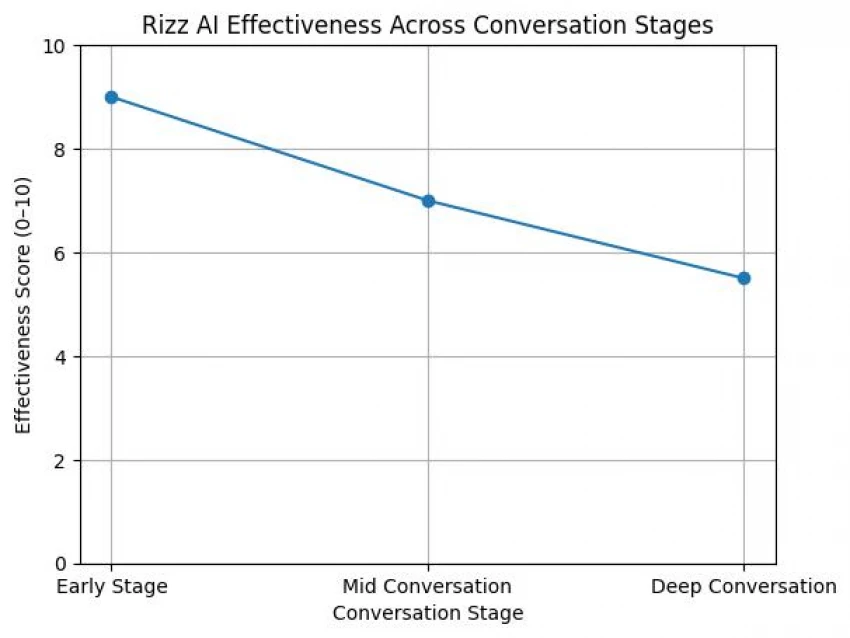
After using it across multiple types of conversations, a very clear pattern emerges.
In the early stage, it’s genuinely useful. When the conversation is still forming, when you’re trying to build initial interest, it consistently improves your chances of getting a reply. The tone is balanced, the pacing is right, and nothing feels off.
In the middle stage, it becomes more of a stabilizer. It keeps things going, but doesn’t really elevate the interaction. You’re not making mistakes, but you’re also not creating anything particularly memorable.
In deeper conversations, it starts falling behind. The replies remain technically correct, but they miss nuance. Emotional context, subtle humor, or personal depth, these are areas where it feels slightly disconnected.
And that gap is small, but noticeable.
After a few days of using it regularly, I stopped using it for a while just to see the difference.
What changed wasn’t my ability to reply, it was my confidence in replying.
I found myself pausing more. Not because I didn’t know what to say, but because I had seen better versions of what I could say.
That’s the subtle shift this product creates.
It doesn’t just help you write better replies. It makes your natural replies feel slightly less satisfying in comparison.
And that’s how dependency builds, not through necessity, but through comparison.
This part doesn’t hit immediately.
At first, uploading screenshots feels normal. It’s quick, convenient, and part of the workflow.
But after repeated use, you start realizing what you’re actually doing.
You’re sharing private conversations, personal context, and real interactions with a system that processes them to generate responses.
Even if nothing goes wrong, the behavior itself changes your comfort level with privacy.
And for many people, that becomes a quiet but important concern.
After all the initial excitement fades, Rizz AI settles into a very specific role.
It becomes something you open when you’re stuck.
Not when you’re confident. Not when the conversation is flowing naturally. But when you hesitate.
It’s less of a daily tool and more of a fallback.
And in that role, it works well.
But outside of that, its value starts to flatten.
If I remove the first impression effect and focus only on sustained use, this is how it realistically stands:
It is excellent at improving first replies and maintaining basic conversation flow. It is extremely easy to use, and the speed makes it addictive in short bursts. But over time, the lack of variation, limited emotional depth, and growing sense of dependency reduce its long-term value.
If I had to compress everything into a number, it sits at:
7.4 / 10
Not because it fails, but because it doesn’t evolve beyond its core strength.
Rizz AI does one thing very well.
It prevents you from sending bad replies.
And in a world where most conversations fail because of small mistakes, that’s enough to make it feel powerful.
But the longer you use it, the clearer it becomes:
It helps you start conversations better than you normally would.
It does not help you become someone worth continuing a conversation with.
And that difference is everything.
Be the first to post comment!
As a business leader or marketing professional, the constant challenge has alway...
Sakshi Dhingra1 day ago
AI avatar video tools have quickly become one of the fastest-growing categories...
Sakshi Dhingra3 days ago

As a content creator, managing a diverse range of video content is a daily chall...
Sakshi Dhingra6 days ago
The first time I realized something was wrong with my content was late at night...
Sakshi Dhingra1 week ago

Vheer AI is interesting not just because of what it does, but because of what it...
Parveen Verma1 week ago

Why I looked into Leeco AI in the first placeOver the past few years, I have not...
Sakshi Dhingra1 week ago