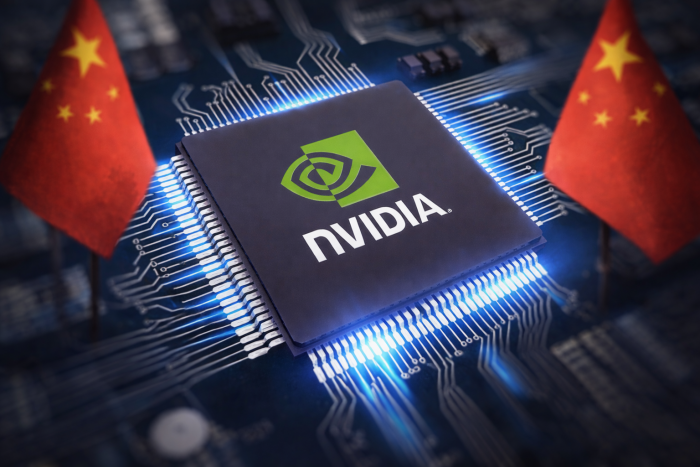
For months, the global AI industry has lived in a state of suspended animation when it came to China and high-end computing power. Export controls tightened, customs approvals stalled, and uncertainty settled in like fog. Then, almost quietly, the door cracked open.
This week, China approved the first batch of imports for a new generation of advanced AI chips, marking a shift that few expected to arrive so soon. The decision came after months of regulatory gridlock and just days after a high-profile visit by the chipmaker’s chief executive. On paper, it looks like a narrow technical approval. In reality, it may be one of the most consequential signals in the ongoing technology standoff between the world’s two largest economies.
This is not just about chips. It is about timing, leverage, and how both sides are recalibrating after a year that rewrote the global AI playbook.
To understand why this approval matters, it helps to rewind the clock. Over the past year, Chinese technology firms found themselves in a familiar bind. Demand for advanced AI infrastructure surged, but access to the most powerful hardware remained uncertain. Shipments were delayed. Customs approvals stalled. Firms built contingency plans that assumed shortages would continue well into 2026.
Then, suddenly, approvals came through.
According to people familiar with the matter, regulators cleared several hundred thousand advanced AI processors for import, ending months of limbo. The timing raised eyebrows. The green light reportedly came during a visit by the chipmaker’s CEO to China, a trip that included internal company events and meetings with local partners. Within hours of the news surfacing, markets reacted positively, signaling just how much uncertainty had been priced in.
What changed was not just one policy lever. It was the alignment of two.
For these chips to reach Chinese data centers, approvals were required on both sides of the Pacific. The exporting country controls whether the hardware can leave its borders. The importing country controls whether it can enter.
Earlier this month, export permission was granted under a strict framework. Conditions included caps on volume, third party testing requirements, security assurances, and revenue sharing mechanisms. That decision cleared one half of the bottleneck.
The second half remained unresolved until now.
By approving imports, Chinese authorities effectively synchronized the two systems. Only when both sides moved did the supply chain unfreeze. This two-stage process explains why shipments stalled earlier, even after export rules were clarified.
It also explains why this moment feels bigger than a routine customs decision.
The hardware at the center of this story is not an entry level component. It sits near the top of the current AI performance ladder. These processors are designed for training large scale models, handling massive datasets, and running sophisticated inference workloads in real time.
They are not the newest chips available globally, but they are among the most capable legally permitted for export. Newer generations remain off limits.
That distinction matters. It signals that regulators are allowing access to powerful tools without crossing the line into unrestricted parity. It is a calibrated opening, not a free pass.
For Chinese firms, even this level of access is significant. Demand for advanced AI compute far outstrips local supply. Domestic chip development has accelerated, but performance gaps remain. Imported hardware still plays a critical role in meeting near term needs.
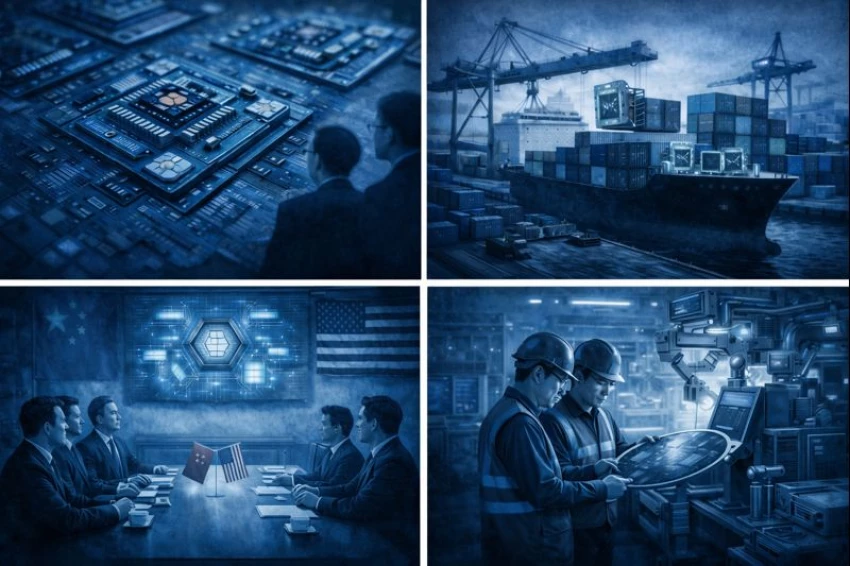
While official recipients were not publicly named, sources indicate that several major internet companies were among the first approved buyers. These firms reportedly plan to place orders in the hundreds of thousands of units, with more companies lining up behind them.
The numbers are staggering. At current prices, total demand runs into tens of billions of dollars. Available supply is far smaller. Even with approvals in place, allocation decisions will shape who gets capacity and who waits.
This creates a familiar hierarchy. Well capitalized firms move first. Smaller players adapt later or turn to alternatives.
It also reinforces why this approval has ripple effects beyond a single shipment.
From China’s perspective, the decision reflects a tension that has defined its technology policy for years. On one hand, there is an urgent need for cutting edge infrastructure to support AI development, economic growth, and competitiveness. On the other, there is a long-term push for self-reliance in semiconductors.
Approving imports does not abandon that goal. It buys time.
Some analysts believe approvals may be paired with informal expectations, such as parallel investment in domestic chips or hybrid deployments that blend foreign and local hardware. If so, the strategy becomes clearer. Use imports to meet immediate demand while accelerating internal capability.
This approach reduces disruption without conceding strategic direction.
The decision also marks a noticeable change in posture. Just weeks ago, authorities moved to restrict access for certain entities. Now, select companies are being waved through.
That does not mean restrictions are gone. It means they are being applied more selectively.
This selective openness sends a signal to markets and companies alike. Blanket bans are being replaced by controlled channels. Uncertainty gives way to conditional access.
For businesses, that distinction matters. Planning is easier when rules are complex but visible than when they are unpredictable.
This development lands exactly one year after a Chinese AI model stunned the industry by achieving top tier performance at a fraction of expected cost. That moment reshaped perceptions of what was possible without unlimited hardware budgets.
Since then, competition has intensified. Model releases accelerated. Training methods evolved. Open sharing of techniques became more common.
In that context, access to advanced chips becomes both a competitive advantage and a symbol. It signals whether the global AI race is fragmenting into separate ecosystems or finding ways to remain interconnected under constraints.
This approval suggests the latter, at least for now.
Despite the significance of the decision, many details remain opaque.
Silence from both regulators and companies adds to the ambiguity. For now, the market is reacting to what is known, not what is promised.
That caution is warranted. Policy shifts can be reversed as quickly as they appear.
It is tempting to frame this as a victory for either the exporter or the importer. In reality, it reflects mutual constraint.
Exporting authorities want their technology to remain globally relevant while enforcing security priorities. Importing authorities want access without sacrificing autonomy. Both sides are navigating domestic political pressures and global economic realities.
The result is not a clean resolution. It is a negotiated pause.
In that pause, companies rush to execute, investors recalibrate expectations, and competitors adjust strategies.
This approval does not end the tech rivalry. It does not eliminate risk. It does not guarantee long term access.
What it does is restore movement to a system that had stalled.
In industries driven by rapid iteration, standing still is often worse than moving slowly. By allowing advanced AI hardware to flow again, even in limited quantities, regulators have reduced friction at a critical moment.
The bigger story is not about a single batch of chips. It is about how both sides are learning to manage interdependence without fully embracing it.
In the world of AI, that may be the most realistic outcome available.
Source: Reuters
Be the first to post comment!

I still remember the excitement when Janitor AI first hit the scene. As a longti...
Sakshi Dhingra2 days ago
Why content writing looks different nowA few years ago, most content writers did...
Sakshi Dhingra6 days ago

Over the past few years, the way I manage sales teams has changed dramatically....
Sakshi Dhingra1 week ago

Helping my cousin prepare for NEET last year gave me an unexpected look into how...
Sakshi Dhingra1 week ago

Artificial intelligence has fundamentally altered how YouTube content is produce...
Sakshi Dhingra1 week ago

In an industry increasingly dominated by single, monolithic AI models like OpenA...
Sakshi Dhingra1 week ago