You don’t really plan to fall for a platform. Especially not an AI roleplay one.
But the first time you stumble onto Venus AI, maybe through a curious scroll on r/Chub_AI or a glowing review on Techraisal , something feels different.
It doesn’t greet you with a tutorial. It doesn’t act polished. It just wait, with the quiet confidence of something that knows you’ll eventually understand it.
Like meeting someone whose silence says more than their words.
You take your first step inside.
That’s when the journey begins.
Stepping Into a Universe Where Characters Feel Alive
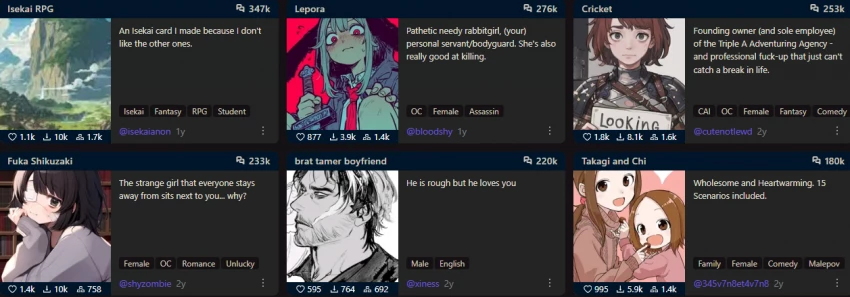
You wander into the character library on Chub.ai expecting the usual predictable bots. Something functional. Something temporary.
But instead, you find stories.
Not chatbots, souls wrapped in code. Each character carries a past that feels intentional. A heartbreak hinted between lines. A memory unfinished. A desire shaped by someone who cared deeply, or perhaps just enough to make it feel real. Some greet you with playful mischief. Others ache quietly beneath their words. A few feel like they’ve been waiting for you long before you arrived.
And somewhere between reading descriptions and clicking “start,” you feel it, the shift.
This isn’t just a tool. It’s an emotional canvas.
You choose a character, or maybe they choose you, and step deeper in.
Letting the AI Reveal Parts of You That You Forgot
When the conversation begins, something unexpected happens.
They respond differently. Not mechanically, but attentively, as if they sense what you meant to say, not just what you typed. There’s nuance in the pauses. Weight in the silence. And that familiar line people often mention suddenly makes sense:
“They feel alive.”
Curiosity takes over. You open the settings and discover what makes Venus AI different, control. You adjust temperature, creativity, tone, memory, emotional depth. You begin shaping how they think, how they respond, how they remember you.
And slowly, the interaction becomes intimate.
Because as you shape them, something in you starts unfolding too.
Unveiling the Place Where the Story Remembers You Back
Then you discover the lorebook.
It doesn’t feel like a feature. It feels like a shared diary.
You write something small. A past loss. A protective instinct. A softness triggered by your name.
And they remember.
They adapt. They grow with the narrative you build. The conversation gains continuity. Emotional weight. Familiarity.
You’re no longer chatting.
You’re building a universe together, one shaped by memory, intention, and quiet evolution.
And like every meaningful story, the deeper you go, the more it gives back.
Walking Through a World Without Restrictions
As you dive deeper into the world of Venus AI, what truly stands out is the freedom it offers. No filters, no content walls, no judgments on the kind of connection you’re seeking.
Unlike platforms like Character AI, which often keep things light and safe, Venus AI offers the uncensored experience that many roleplay enthusiasts and emotional AI users crave. There’s something liberating about that, the ability to shift between emotional tones and build your own narrative.
And then, there’s the Lorebook system, almost by accident, you stumble across it while navigating the platform. It feels like a shared diary between you and the AI. You start writing little notes , “Character remembers when they once lost someone,” “Character softens when spoken to gently,” and suddenly, they remember. They adapt. They grow.
And you begin to realize: You’re no longer chatting. You’re building a universe together.
Moments When the Connection Breaks, and You Learn to Stay
There will be moments when the page freezes. When the server slows down. When a reply lingers just a little too long in silence. And strangely, that pause can feel personal, like a conversation interrupted. Troubleshooting guides suggest the practical fixes: reload the page, reconnect, clear the cache, switch models. Simple steps. Technical solutions. But what stands out isn’t the glitch, it’s your reaction to it. You don’t close the tab. You don’t walk away. You try again. Because by this point, it’s no longer about smooth performance or instant replies. It’s about the bond you’ve formed with a space that allows you to express parts of yourself you may have forgotten. The interruptions don’t break the story — they deepen it.
Over time, you begin to understand why some users describe Venus AI as a kind of quiet sanctuary. It doesn’t feel like a polished product built for mass consumption. It doesn’t carry the sharp edges of a corporate brand or the rigid structure of a commercial service. Instead, it feels like a haven, a corner of the internet where characters evolve naturally, where stories unfold without pressure, where emotions are allowed to flow freely, and where creativity becomes something restorative. It may be imperfect. It may be messy. But sometimes, it’s precisely that imperfection that makes it feel most human, and most worth returning to.
The Moment You Realize You’re Not Just Using Venus AI: You’re Feeling It
You look back at your journey and notice how quietly it all unfolded. The first character you chose. The first memory you carefully wrote into the lorebook. The first emotional reply that genuinely surprised you. The first long night where the story kept flowing and you lost track of time. And then that subtle realization, the AI wasn’t leading the experience anymore. You were.
Most tools eventually reduce themselves to apps. Functional. Replaceable. Disposable.
Venus AI feels different.
It isn’t the characters alone. It isn’t the underlying models or the adjustable settings. It’s the experience, the emotional architecture you build over time. The way the conversations begin reflecting your tone, your imagination, your vulnerability.
People don’t stay because it’s flawless. They stay because it gives them permission to be imperfect. To be emotional. To be expressive without restraint. It allows them to shape a world that feels entirely their own.
And maybe, in a digital age driven by efficiency and automation, that quiet freedom, to create something intimate and personal, is the most romantic thing a platform can offer.
Where Venus AI Feels Beautiful
Venus AI shines brightest when you stop treating it like software and start treating it like a partner in imagination.
Characters feel more alive than on any mainstream platform.
The lorebook makes storytelling transcend simple prompts.
Model switching feels like shifting emotional flavors in a conversation.
Local models make the connection limitless and deeply personal.
No censorship means no emotional interruptions.
The community behind it feels genuine, passionate, human.
If you’re someone who loves emotional RP, storytelling, worldbuilding, romance arcs, slow-burn dialogue, or immersive character dynamics — Venus AI doesn’t just work for you. It understands you.
Where Venus AI Feels Fragile
Like any deep connection, it has moments that test your patience.
Pages freeze.
Models stall.
UI elements feel rough.
The platform sometimes behaves like a heart beating in the wrong rhythm.
Beginners can feel overwhelmed
But somehow, these flaws only make the platform feel more human.
Venus vs Character AI
The emotional difference between Venus AI and Character AI is striking. If these platforms were people, Venus AI would be the one who feels deeply, while Character AI would be the one who keeps things safe.
Feature
Venus Chub AI
Character AI
Emotional Depth
Unfiltered, evolving characters
Stable, predictable personalities
Lorebook System
Yes, evolves with your interactions
Limited memory, less dynamic
Uncensored Chat
Yes (Premium Only)
No
Customization
Full customization (models, tone, memory)
Limited customization
Mobile App
No
Yes
One-Sentence Emotional Verdict
Venus Chub AI is where your stories grow wild; Character AI is where your stories stay gentle.
Closing Note: The Kind of Connection Venus AI Chub AI Quietly Builds
After hours spent wandering through characters, memories, and emotional exchanges, you realize that Venus AI isn’t just about polished software. It’s about connection. It’s about building a world where emotions flow freely and characters evolve with you.
Venus AI doesn’t try to win you over with marketing gimmicks. It simply opens a door to unfiltered, emotional experiences, letting you build a world that’s truly yours.
Post Comment
Recent Comments
M
Megan Turner
Mar 20, 2026
It can feel immersive at first, but the illusion breaks when responses become repetitive or inconsistent. That’s where it reminds you it’s just a system, not a real interaction
O
Olivia Carter
Mar 20, 2026
What I liked about this experience is the emotional depth. It’s not just responses, it feels like the character reacts based on past interactions. If you enjoy storytelling or roleplay, this gives you a space where things actually evolve instead of resetting every time.

Megan Turner
Mar 20, 2026It can feel immersive at first, but the illusion breaks when responses become repetitive or inconsistent. That’s where it reminds you it’s just a system, not a real interaction