Technology
9 min read
Try Hard Guides Wordle Solver and Crossword Tools: A Practical Overview
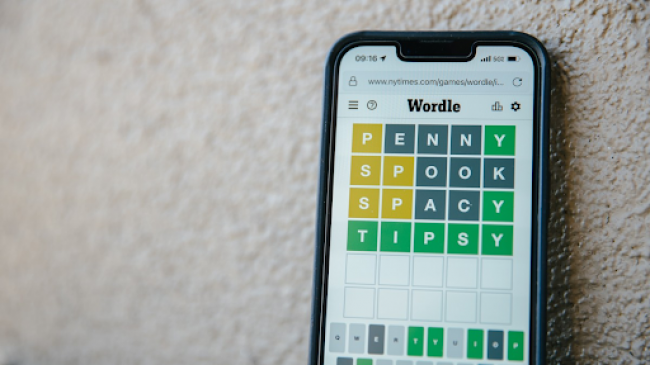
Word puzzles have always lived in that interesting space between entertainment and mental exercise. From newspaper crosswords to the now-ubiquitous Wordle, they reward pattern recognition, vocabulary depth, and strategic thinking.
But in the last few years, a new layer has entered the ecosystem: solver tools.
Platforms like Try Hard Guides provide Wordle solvers and crossword assistance utilities designed to narrow down answers using structured letter filtering. The question isn’t just what these tools do. It’s whether they enhance puzzle play, or quietly replace it.
Let’s take a closer look.
Wordle, originally created by Josh Wardle and later acquired by The New York Times, is deceptively simple. You have six attempts to guess a five-letter word. After each guess, letter feedback appears in green, yellow, or gray, indicating placement accuracy.
At a glance, it’s straightforward.
In practice, it becomes a probability puzzle.
A solver exists because the human brain struggles to simultaneously:
Crossword solvers operate similarly, but instead of narrowing unknown word lists based on feedback colors, they match clue patterns, letter positions, and dictionary datasets to generate viable answers.
The tool does not “know” the answer in advance. It reduces possibilities.
That distinction matters.
The Try Hard Guides Wordle Solver revolves around three pieces of information from your previous guesses:
Correct letters are characters already confirmed in their exact positions.
Misplaced letters are letters known to exist in the answer but currently positioned incorrectly.
Incorrect letters are characters that should be excluded from subsequent possibilities.
Once those details are entered, the tool displays potential matching words.
The current interface goes a little further than a basic filter.
It includes sections for Potential Answers, Recommended Guesses, and Common Letters. Try Hard Guides explains that Recommended Guesses are selected around common letters remaining among the available possibilities, while Common Letters shows how frequently individual letters appear in the remaining words.
That is arguably the more useful part of the tool.
A weak solver merely says, “Here are 18 possible answers.”
A more useful helper can make that list actionable by showing which next guess could reveal the most information.
Imagine that your Wordle board tells you:
_ A _ _ E
You know that A belongs in the second position and E belongs in the fifth. You also know from previous guesses that several common letters are unavailable.
Instead of trying to recall every five-letter English word matching that structure, you can enter those known positions and excluded letters into the solver.
As additional information is added, the possible-word list becomes smaller.
That is the core value of a Wordle solver: not necessarily revealing the answer immediately, but reducing the search space.
This question appears in many top-ranking blogs, and user opinion is consistent.
Try Hard Guides’ Wordle Solver is best described as:
Players who want a full spoiler can still find the daily answer elsewhere on the site, but the solver itself doesn’t force it.
This is where the debate becomes philosophical.
Wordle was designed as a shared daily experience. Everyone solves the same word. The satisfaction comes from deduction.
Using a solver removes the friction of that deduction.
But context matters.
Many players use solvers:
Used this way, a solver becomes a training tool.
Used from guess one, it becomes autopilot.
The difference is intention.
Try Hard Guides is not only a Wordle website.
Its homepage currently gives substantial visibility to crossword content, including NYT Crossword, NYT Mini, NYT Midi, and LA Times Crossword sections alongside other word-game resources.
The crossword experience differs from the Wordle Solver because users are usually looking for one particular clue.
A typical search may look something like:
“Highly enthusiastic crossword clue 5 letters”
or:
“NYT crossword [specific clue] answer.”
The goal is immediate retrieval.
For that reason, crossword clue pages generally need to be much more direct than ordinary editorial articles.
Users do not want a thousand-word history of crosswords before discovering whether the answer they need is five or seven letters long.
Try Hard Guides largely follows that search pattern by organizing individual clue-answer content around the solution itself.
Compared to other crossword sites:
Answers are published quickly after puzzles go live
Outdated clues are archived cleanly
Pages avoid unnecessary filler
That’s why Try Hard Guides often outranks larger sites for specific clue searches.
The platform offers searchable lists of words sorted by:
These lists are not tied to one specific game and can be used for Wordle alternatives, word jumbles, or any other vocabulary-based activity.
For scrambled word games, the Jumble Solver lets users input mixed letters. The tool provides a list of valid English words that can be formed from those characters. Results are based on standard dictionary word lists.
_1745578055.png)
The website does not require registration or login. Tools are categorized under clear sections such as:
Users can search directly using the search bar or select categories from the menu. The structure is designed to help users find tools or answers based on puzzle type or game.
Compared to similar platforms:
This reliability is a key reason it continues to rank well.
The breadth of content can also work against the site.
Someone arriving purely for Wordle may find considerably more gaming content than they need. Try Hard Guides covers Roblox codes, game guides, reviews, word games, crosswords, and other categories from the same website.
The Wordle Solver itself is reasonably straightforward, but first-time users still need to understand the distinction between Correct Letters, Misplaced Letters, and Incorrect Letters before producing meaningful results.
More importantly, users should understand what a solver result represents.
A suggested word is not automatically proof that it is the day's official answer. It is a candidate generated from the restrictions entered into the tool.
Bad inputs can therefore produce bad or incomplete suggestions.
If you accidentally mark a yellow letter as gray, for example, you may exclude the actual answer yourself.
That limitation applies to almost every constraint-based Wordle helper.
Try Hard Guides is an established gaming and puzzle publication with an active website containing regularly updated word-game, crossword, gaming-code, guide, and review content. Its Wordle and NYT Crossword pages were active and carrying current August 2026 material when this article was updated.
For the basic Wordle Solver, the publicly visible workflow is simply entering puzzle letters into the page and reviewing the resulting candidates.
That does not mean users should ignore normal web-safety habits. Avoid entering sensitive personal information into puzzle websites, distinguish advertisements from site navigation, and verify the domain before interacting with unfamiliar links.
There is also no practical reason to provide confidential information to a Wordle solver. The puzzle inputs are simply letters.
Try Hard Guides makes the most sense for someone who regularly plays more than one type of word game.
A Wordle-only player may use the solver for a few minutes and leave.
A player who also solves NYT crosswords, Mini crosswords, alternative word games, and other daily puzzles has more reason to move between the site's different sections.
It is also useful for players who dislike binary choices between “solve it yourself” and “reveal the answer.”
The filtering approach creates a useful middle ground.
You can ask for enough help to keep moving without necessarily exposing the solution.
While Try Hard Guides offers a range of word tools, here are three other popular options with different approaches:
| Tool | Best For |
|---|---|
| The Word Finder | Variable word lengths beyond Wordle |
| WordTips Solver | Letter-frequency and probability analysis |
| YourDictionary Solver | Educational context and definitions |
Each serves a narrower purpose than Try Hard Guides but may appeal to specific solving styles.
Based on hands-on usage patterns, accuracy of updates, and overall usability, here’s a numeric breakdown of how Try Hard Guides performs across key areas:
| Feature Area | Score (Out of 10) | Reasoning |
|---|---|---|
| Wordle Solver | 8.5 / 10 | Logical filtering is accurate and helpful without fully spoiling gameplay |
| Crossword Clue Explanations | 9.2 / 10 | Timely updates and reliable answers for NYT and LA Times puzzles |
| Word Lists & Jumble Tools | 8.3 / 10 | Flexible and broadly useful, though mostly dictionary-driven |
| Game Code Pages | 9.5 / 10 | Frequently updated, well-organized, and dependable for active codes |
| Ease of Navigation | 9.0 / 10 | No login barriers, clear categories, fast access |
| Safety & Legitimacy | 9.7 / 10 | No data collection, no downloads, low-risk browsing experience |
Verdict:
Try Hard Guides functions best as a support and reference platform, not a shortcut engine. It adds value for users who want structured assistance, confirmation, or code tracking without sacrificing control over gameplay or personal data. For puzzle solvers and gamers alike, it remains a dependable, low-friction utility hub.
Try Hard Guides offers more than a simple “today's Wordle answer” page.
Its Wordle Solver accepts known, misplaced, and excluded letters, generates matching possibilities, identifies common remaining letters, and provides recommended guesses. The site then extends beyond Wordle into daily answer histories, word-pattern lists, NYT Crossword archives, Mini and Midi crossword coverage, LA Times answers, and other word-game resources.
That makes it particularly useful for people who regularly move between different puzzles.
Its strongest use case is not replacing puzzle solving altogether.
It is reducing frustration when you are almost there.
If you are one guess away from losing a Wordle streak, staring at a crossword clue that refuses to click, or simply trying to understand which letters still make sense, Try Hard Guides gives you several levels of help rather than forcing you straight to the spoiler.
And for most puzzle players, that is probably the right balance.
Share your thoughts about this article.
I noticed that after using the solver a few times, I started depending on it. Instead of thinking through the puzzle, I just checked the tool, which kind of defeats the purpose of playing.
Login to replyI use Try Hard Guides mainly for crossword clues, and it saves a lot of time. Instead of searching randomly, you just type the clue and get the answer quickly. It’s especially useful when you’re stuck on one last word.
Login to reply
Here is the exact moment most people end up asking this question. You have final...
Nitin6 days ago

Two Android phones can have the same amount of RAM, similar storage capacity, an...
Deepak Mehra1 week ago

A stolen password does not always look suspicious to a login system. If the user...
Deepak Mehra2 weeks ago

The short versionA Claude API key is created in the Claude Console at platform.c...
Harpreet Singh2 weeks ago

ChatGPT is owned by OpenAI, a San Francisco-based artificial intelligence compan...
Harpreet Singh3 weeks ago

Most teams already have the video. What they do not have is a way to search it....
Mighva Verma2 months ago