Valant (available atValant.io) is a cloud-based Electronic Health Record (EHR) and practice management platform specifically designed for behavioral health professionals including psychiatrists, psychologists, therapists, and counselors. It combines clinical documentation, billing, telehealth, scheduling, and patient engagement in one integrated solution.
What is Valant EHR?
Valant is a behavioral health EHR designed to streamline clinical, administrative, and financial workflows within mental health practices. Its core capabilities include specialty clinical documentation templates tailored specifically for behavioral health providers, along with integrated billing and revenue cycle management tools that support automated claims processing and eligibility verification. The platform also includes telehealth functionality and the secure MYIO patient portal, enabling online appointments, digital forms, secure messaging, and payment processing. In addition, Valant offers scheduling and appointment management features, outcome measurement and reporting tools to track both patient progress and overall practice performance, and integrated ePrescribing capabilities while maintaining compliance with HIPAA and HITRUST standards. As a cloud-based system accessible through web and mobile applications, Valant provides flexibility and remote access suited to modern behavioral health practices.
Key Features
Valant offers a suite of features highly rated by users. The chart below visualizes feature popularity based on real user reviews: Alt Text: Horizontal bar chart showing Valant EHR feature popularity. Clinical Documentation is the most popular, followed by Billing & RCM, Scheduling, Telehealth, Patient Portal, and Reporting.
Feature Highlights:
Clinical Documentation: Most praised for behavioral health workflows
Billing & RCM: Streamlines insurance claims and payments
Telehealth & Scheduling: Simplifies appointments for providers and patients
Patient Portal: Improves patient engagement and accessibility
Reporting & Analytics: Enables outcome tracking and performance insights
Pricing Overview
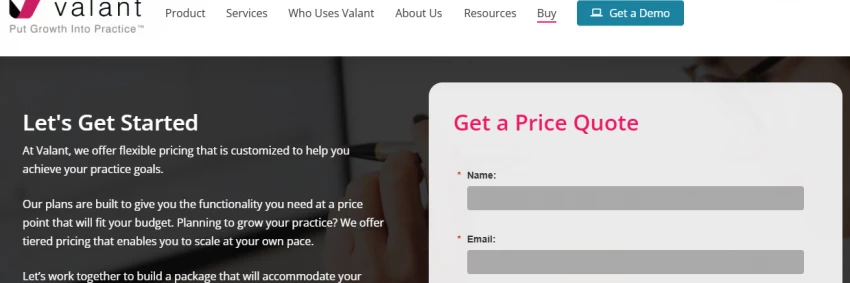
Valant does not publicly disclose pricing and offers custom quotes depending on practice size and features:
Smaller practices: $135–$150 per user/month (estimated)
Large clinics: Several thousand dollars/month + implementation fees starting around $5,000+
No free trial; demos available
⚠ Pricing transparency is a common concern among users.
User Reviews and Sentiment
Reviews from G2 (Verified Users)
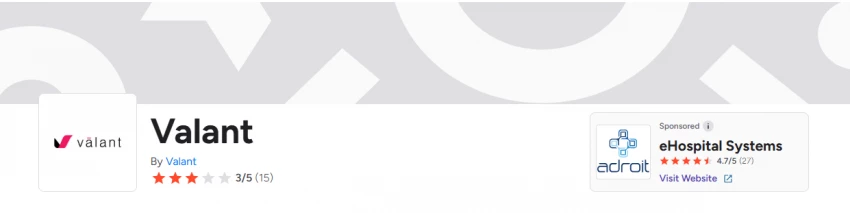
G2’s compilation of verified feedback (~15 reviews) reports a mixed overall score of ~3.0/5 with:
On the positive side, users frequently mention that the appointment scheduling tools and behavioral health–specific documentation templates are practical and aligned with clinical workflows. The cloud-based accessibility is also appreciated, particularly for practices that operate across multiple locations or support remote access. Additionally, outcome measurement tools and structured documentation features are often cited as helpful for tracking patient progress and maintaining compliance standards.
However, several recurring concerns appear in the feedback. Many reviewers describe a steep learning curve and navigation challenges, especially during onboarding. Customer support is another commonly criticized area, with some users reporting slow response times and difficulty resolving issues efficiently. Billing and reporting inconsistencies have also been noted, along with complaints about telehealth reliability and unexpected additional charges. In one example, a reviewer described frequent platform crashes, unhelpful support interactions, and a resolution time of approximately two days after submitting a support ticket, highlighting concerns around operational stability and responsiveness.
Reviews from Software Advice & Capterra
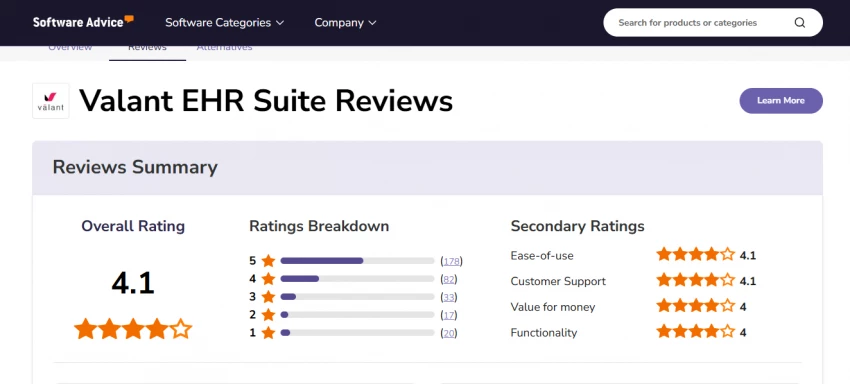
Reviews from Software Advice and Capterra reflect a somewhat more favorable overall impression of Valant, with average ratings hovering around 4.1 out of 5. Many reviewers highlight the platform’s ability to streamline billing and clinical documentation workflows, particularly within behavioral health settings where specialty templates and integrated revenue cycle management are critical. Some users also report positive experiences with customer support, describing assistance as responsive and helpful when available. The breadth of features tailored specifically for mental health practices is frequently cited as a strong advantage over more generalized EHR systems.
That said, criticisms remain consistent in certain areas. Users occasionally report downtime or performance slowdowns, particularly during high-volume usage periods. Some reviewers express frustration with system responsiveness when multiple workflows are active simultaneously. There are also mentions of broader security concerns tied to operating within a large cloud-based ecosystem, though not necessarily specific breaches. Additionally, at least one Capterra review describes Valant as feeling relatively expensive and somewhat outdated in comparison to lighter, more modern alternatives that may better suit solo practitioners or smaller practices.
Reddit & Social Sentiment
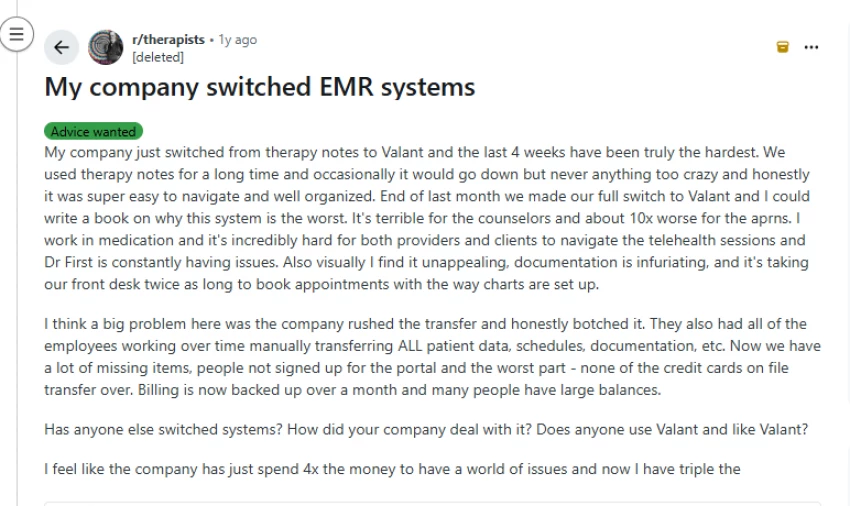
Independent discussions on Reddit present a noticeably more critical tone, particularly from users describing real-world implementation in active behavioral health practices. Several recurring complaints focus on what users describe as a clunky, non-intuitive interface that feels outdated and difficult to navigate during busy clinic hours. Customer service is another frequent concern, with some users alleging long wait times, voicemail-only support channels, and slow follow-up on technical issues. Cost concerns and pricing opacity are also highlighted, especially where practices felt the total monthly expense was higher than initially expected.
Additional frustrations include complex onboarding processes and data migration challenges when switching from another EHR system. Telehealth functionality has also drawn criticism, with some users reporting patient complaints about portal usability or connection reliability. In one discussion, a user described transitioning to Valant as “the worst,” citing telehealth workflow inefficiencies, extensive training burdens, and high monthly fees. Another thread characterized the system as “ugly,” slow, and expensive to maintain, reflecting dissatisfaction among certain segments of the user base. While Reddit discussions represent anecdotal experiences rather than formal review scores, they provide insight into practical pain points reported by clinicians in day-to-day use.
Key Insights:
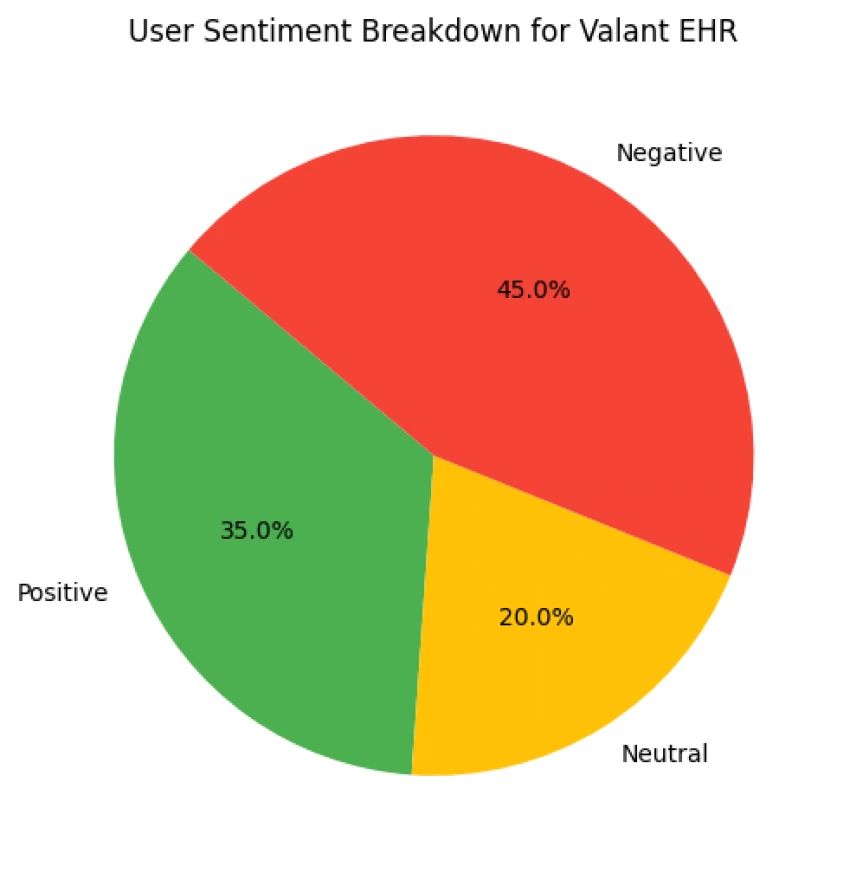
Positive: 35% – praised for templates, telehealth, and integrated workflows
Neutral: 20% – mixed user experiences
Negative: 45% – common complaints about usability, support, and pricing
Pros and Cons
Pros
1. Comprehensive Behavioral Health Feature Set
Valant includes extensive tools for clinical documentation, billing, scheduling, telehealth, and outcome tracking all geared toward behavioral health practices rather than generic medical clinics.
Strong support for measurement‑based care with built‑in rating scales and automation tools that help clinicians track progress.
Over 100 clinical templates catering to different therapeutic modalities.
Why it matters: Many general EHRs lack features specific to therapists or psychiatrists, making Valant valuable for practices seeking industry‑specific workflows.
2. Cloud‑Based Access and Cross‑Device Compatibility
Valant’s cloud infrastructure allows practices to access the system from desktops, laptops, and mobile devices.
Users appreciate being able to log in remotely and manage schedules, notes, and billing from anywhere.
Why it matters: Cloud accessibility supports hybrid work setups and remote clinicians.
3. Integrated Practice Management
Valant combines multiple functions into one system, reducing the need to juggle separate platforms for scheduling, billing, and documentation.
Integrated billing and patient portal functionalities simplify workflows for many practices.
Why it matters: A unified platform can save time and reduce data fragmentation across different systems.
4. Training & Onboarding Support
Many users report that Valant provides structured training, onboarding resources, and knowledge bases that help teams learn the system faster.
Dedicated trainers and helpful onboarding resources are frequently noted as beneficial by some users.
Why it matters: Good onboarding can significantly reduce the learning curve for complex software.
5. Customization Options
Although mixed, some users appreciate the ability to customize macros, templates, and workflows particularly for documentation and intake forms.
Why it matters: Practices have unique documentation needs, and customization helps tailor the system.
Cons
1. Steep Learning Curve and Complex Interface
Multiple reviews highlight that Valant can be difficult for new users to navigate, especially without prior EHR experience:
The system can feel non‑intuitive, with many menus and clicks for common tasks.
Several users report that finding and completing tasks (like notes or scheduling) takes longer than expected.
Impact: This increases training time and reduces productivity, especially in smaller practices without dedicated IT support.
2. Pricing Opacity and Cost Concerns
Valant does not publicly list pricing and requires prospects to contact sales for custom quotes.
Practices find this hinders budget planning and makes feature‑to‑cost comparisons with competitors difficult.
Hidden or add‑on fees for features like reminders or signatures are reported by some users.
Impact: High total cost of ownership and billing complexity can deter smaller or solo practices.
3. Customer Support Issues
Customer service experiences vary significantly:
Some users praise responsive assistance and helpful trainers.
Others report long wait times, voicemail‑only support, or unresolved tickets.
Impact: Inconsistent support can frustrate practices relying on timely help for critical issues.
4. Reliability & Performance Problems
Some users report bugs, performance lags, and even system outages that interrupt workflows:
Frequent crashes, slow remote performance, and update‑related glitches are mentioned in various reviews.
In extreme cases, outages have prevented access to schedules, patient data, or prescriptions.
Impact: Unreliable performance risks patient care continuity and clinic operations.
5. Billing, Data Migration, and Export Difficulties
Billing workflows and data handling receive mixed feedback:
Some users find the billing integration useful.
Others struggle with external billing systems, manual migration, or exporting patient data.
Impact: Difficulties here can mean more manual work for administrative staff and slower workflows.
Alternatives to Valant
Here’s a comparison of Valant with other behavioral health EHRs:
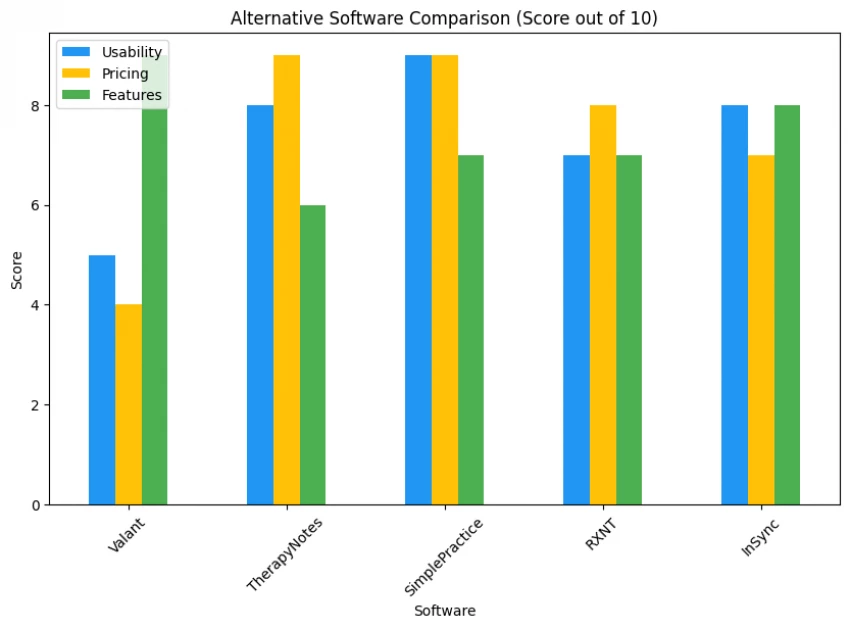
Bar chart comparing Valant with TherapyNotes, SimplePractice, RXNT, and InSync across Usability, Pricing, and Features.
Transparent pricing, easy setup, ideal for small practices
RXNT
Affordable and relatively user-friendly
InSync by Qualifacts
Strong support and usability for large clinics
Valant
Advanced features for complex, enterprise-level behavioral practices
While Valant is feature-rich, competitors often score better on ease of use and pricing transparency.
FAQs
Q1: What is Valant EHR used for? A: It is a behavioral health EHR that manages clinical documentation, billing, scheduling, telehealth, and patient engagement.
Q2: How much does Valant cost? A: Pricing is customized; smaller practices start around $135–$150 per user/month, while larger practices may pay thousands monthly.
Q3: What are the top alternatives to Valant? A: TherapyNotes, SimplePractice, RXNT, and InSync by Qualifacts are strong alternatives depending on your practice size and needs.
Q4: Is Valant good for small practices? A: It can work, but some users report a steep learning curve and high costs. Smaller clinics might prefer TherapyNotes or SimplePractice.
Final Verdict
Valant stands out as a robust, behavioral health–focused EHR built for practices that need more than basic charting and scheduling. Its strength lies in offering an end-to-end system that connects clinical documentation, billing and revenue cycle management, telehealth, patient engagement, and outcome tracking into a single workflow. For mid-to-large behavioral health groups that manage complex caseloads, multiple providers, and detailed reporting requirements, Valant’s specialization can be a meaningful advantage over more generalized EHR platforms.
However, that depth comes with trade-offs. The interface and onboarding experience can feel complex, especially for smaller teams without dedicated administrative support. Pricing transparency remains limited, making it harder to forecast total costs without a formal quote. User experiences with customer support also vary, which may be an important factor if your practice relies heavily on real-time system reliability.
Personalized Verdict: If your practice is scaling, requires advanced behavioral health workflows, and values integrated billing plus outcome measurement in one ecosystem, Valant can justify its investment. But if you are a solo practitioner or small clinic prioritizing simplicity, ease of use, and predictable pricing, lighter alternatives may provide a smoother and more cost-effective experience.
The best next step is practical: request a live demo, ask detailed pricing questions, evaluate onboarding support, and compare at least two alternatives before committing. Matching the software to your practice size, staffing structure, and workflow complexity will matter more than feature count alone.