
In today’s business world, customer expectations have shifted dramatically. People want rapid responses, personalized support, and consistently accurate information. To meet these demands, companies are increasingly turning to intelligent digital assistants in their support teams' tools that behave like human agents but leverage advanced automation to streamline service delivery.
This article explores what an AI call center agent is, how it functions, its benefits, common use cases, and what businesses should consider when adopting this technology.
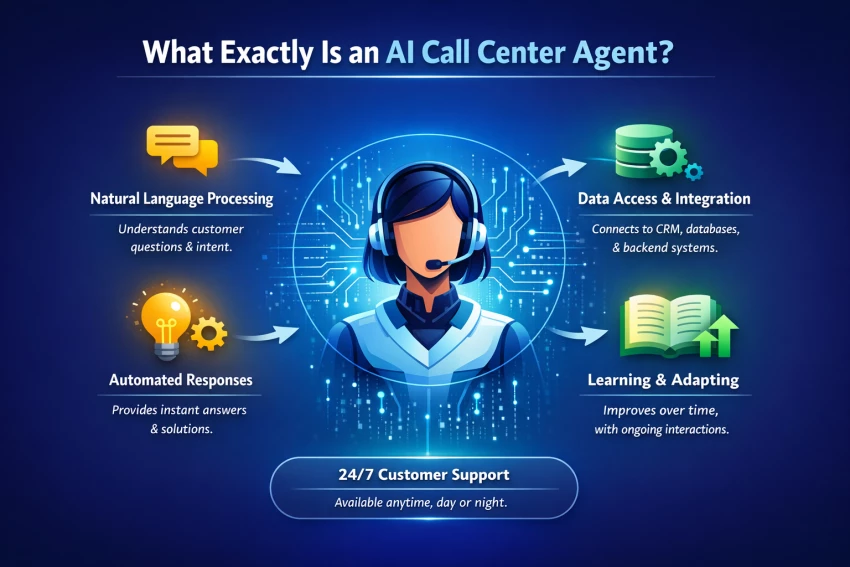
An AI call center agent is a software-based support assistant designed to handle customer interactions through voice, text, or chat. Unlike traditional chatbots that follow rigid scripts, modern intelligent agents use natural language understanding, machine learning, and conversational models to interpret and respond to customer requests in real time.
These systems can engage with customers over phone calls, web chat, email, or messaging platforms. They automate routine tasks, answer frequently asked questions, and even escalate complex issues to human representatives when appropriate.
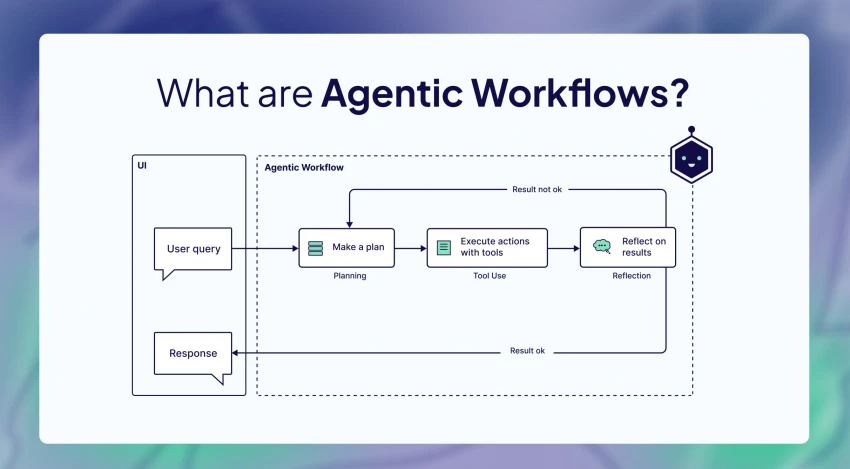
At a high level, intelligent agents operate by combining several technologies:
The system analyzes what the customer says or types using language-processing tools. It recognizes intent, key phrases, and context to determine the right response.
Once the intent is understood, the agent selects or constructs an appropriate reply. This can involve retrieving answers from a knowledge database or following pre-set operational rules.
These agents connect with customer databases, CRM tools, ticketing systems, and order management platforms. This lets them pull customer records, update support cases, and provide status updates without manual intervention.
Each interaction helps the system improve. Over time, it becomes better at recognizing patterns, anticipating customer needs, and handling diverse queries more accurately.
Today’s smart call agents can support a wide array of customer service functions. Here are some of the most common:
Automate Routine Interactions
They can handle basic questions about billing, account status, opening hours, and shipping information. This reduces workload on human staff and speeds up resolution times.
Route Complex Requests
If a customer’s issue requires nuanced judgment or specialized support, the intelligent agent can identify this and transfer the conversation, along with a summary, to a human colleague.
Enable Self-Service
Customers increasingly prefer to solve their own problems. These agents power self-service portals, suggesting relevant articles and guides without involving a live agent.
Follow Context Across Channels
Whether a customer starts a conversation on chat and switches to phone support later, modern systems can maintain context, improving continuity and reducing frustration.
Here are some key advantages that drive companies to implement these systems:
Customers no longer wait in long queues. Intelligent agents respond instantly.
Automating repetitive tasks frees up human agents for complex or sensitive interactions.
Unlike human teams, these systems can operate around the clock without breaks.
Reducing dependence on large support teams cuts labor costs and improves scalability during peak demand.
Quick, accurate responses lead to higher satisfaction scores and stronger loyalty.
While intelligent call center agents offer many benefits, companies should be aware of the following considerations:
Accuracy Depends on Quality of Data
These systems only perform as well as the information and training they receive. Poor data can lead to incorrect responses.
Some Issues Still Need Human Judgment
Complex emotional situations, dispute resolution, and empathy are areas where humans currently excel.
Integration Complexity
Connecting the agent with legacy systems requires careful planning and technical expertise.
Ongoing Training Required
Business needs and customer language evolve. Regular updates are essential to maintain performance.
To maximize effectiveness, organizations should follow practical steps:
Intelligent call center agents are finding applications across various industries:
As these technologies continue to mature, they are poised to shift from simple automation tools to deeply embedded support partners. The most successful implementations blend intelligent automation with skilled human teams, creating a seamless support experience that feels both efficient and personable.
In the landscape of customer service, hybrid systems where human expertise and machine assistance complement each other are becoming the gold standard.
Intelligent call center agents represent a practical and powerful tool for modern customer support. When designed and implemented thoughtfully, they can enhance user experience, improve operational efficiency, and help businesses stay competitive in an era where convenience and responsiveness matter more than ever.
Be the first to post comment!

Artificial intelligence has fundamentally altered how YouTube content is produce...
Sakshi Dhingra1 day ago

In an industry increasingly dominated by single, monolithic AI models like OpenA...
Sakshi Dhingra1 day ago

Instagram Reels have become one of the most powerful organic discovery engines o...
Sakshi Dhingra4 days ago
I don’t judge an AI image generator by “one pretty output.” I judge it by what h...
Sakshi Dhingra5 days ago
AI music generation has matured quickly over the last few years, but the reality...
Sakshi Dhingra6 days ago

AI study tools are everywhere right now. Some feel overhyped. Some feel confusin...
Sakshi Dhingra6 days ago