Anthropic’s Olah Calls for AI Oversight
by Michael Hicklen - 3 months ago - 5 min read
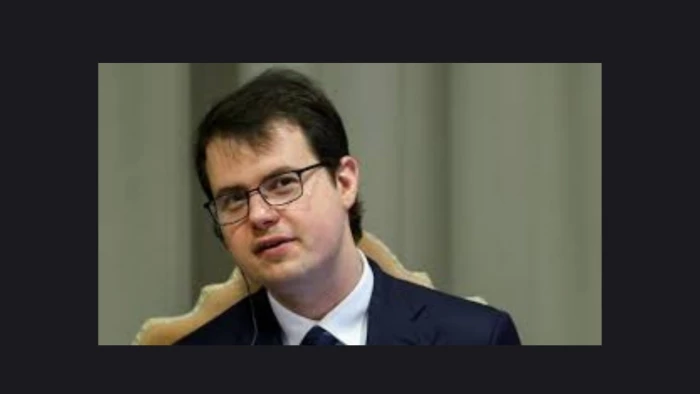
Anthropic cofounder Chris Olah has warned that the future of artificial intelligence should not be shaped only by the companies building the most powerful systems. Speaking at the Vatican during the presentation of Pope Leo’s first encyclical on artificial intelligence, Olah said AI development needs guidance from religious leaders, governments, civil society, and other institutions outside the technology industry.
The message is notable because it came from inside one of the frontier AI labs itself. Anthropic, the company behind Claude, has long positioned itself around AI safety and responsible deployment. But Olah’s remarks acknowledged a harder reality: even companies that say they care about safety operate inside commercial, competitive, and investor-driven pressures that may not always align with broader public interest.
A Safety Warning From Inside the AI Industry
Olah said there is “a real possibility” that AI could displace human labor at very large scale, making it morally necessary to support people affected by automation. He also argued that frontier AI labs operate under incentives and constraints that can conflict with doing the right thing, which is why outside scrutiny is essential.
That statement cuts to the center of the AI governance debate. The companies building advanced models are also racing to win enterprise customers, developer adoption, cloud partnerships, government contracts, and consumer usage. The result is a system where safety commitments often exist alongside intense pressure to release faster, scale bigger, and capture market share before rivals do.
The Vatican Becomes an AI Governance Stage
The setting made the remarks even more unusual. Pope Leo’s AI-focused encyclical, Magnifica Humanitas, called for stronger ethical, legal, and democratic oversight of AI and warned against allowing a small number of technology companies to concentrate too much power over society’s digital future.
The Vatican’s involvement reflects how AI has moved beyond technical policy circles. Labor displacement, autonomous weapons, surveillance, inequality, and machine decision-making are now moral and social questions as much as software issues. Olah’s presence as the sole tech-industry representative at the event also showed Anthropic’s attempt to place itself inside a wider conversation about AI responsibility, not just product competition.
Big Tech’s AI Race Creates a Trust Problem
Olah’s warning lands at a moment when the AI market is increasingly dominated by a small group of powerful companies. OpenAI, Google DeepMind, Anthropic, Meta, Microsoft, Amazon, and xAI are competing to build larger models, more capable agents, and deeper integrations across work, search, coding, education, and consumer devices.
That concentration creates a governance challenge. These companies have the talent, infrastructure, and capital to push AI forward, but they also have commercial reasons to keep users, developers, and enterprise customers inside their platforms. External oversight is therefore not only about preventing catastrophic misuse; it is also about making sure AI’s economic benefits, risks, and decision-making power are not captured by a narrow set of corporate actors.
Anthropic’s Own Position Is Complicated
Anthropic has built its brand around safety, constitutional AI, and responsible scaling, but it is still part of the same high-stakes AI economy. The company competes directly with OpenAI, Google, Meta, and others for enterprise customers and developer adoption. Its Claude models are increasingly used in coding, writing, research, customer support, and business workflows.
That makes Olah’s comments both credible and complicated. They are credible because he is speaking from inside the industry’s technical frontier. They are complicated because Anthropic itself benefits from the rapid expansion of AI into work and society. The broader implication is that self-regulation alone is unlikely to be enough, even when a company has stronger safety branding than many of its rivals.
The Business Impact of Outside Oversight
For AI companies, stronger external governance could mean slower releases, more transparency demands, safety audits, worker-impact assessments, copyright scrutiny, and tighter rules around high-risk use cases. That may frustrate companies trying to move quickly, but it could also help build the trust needed for long-term enterprise and public-sector adoption.
For governments and civil society, the challenge is speed. AI systems are advancing faster than most regulatory institutions can respond. If oversight arrives too late or remains too abstract, companies will continue defining the practical rules through product design, usage policies, and platform control.
The Next AI Fight Is About Who Gets a Voice
Olah’s remarks suggest that the next stage of AI governance will not be only about model benchmarks or safety tests. It will be about who gets to influence the direction of the technology before it becomes embedded in labor markets, education, healthcare, government, warfare, and daily communication.
His warning is ultimately a call to widen the room. Big Tech may build the systems, but the consequences will be carried by workers, communities, governments, schools, creators, and institutions far outside Silicon Valley. If AI is going to reshape society at the scale its builders predict, then the rules cannot be written only by the people racing to deploy it.