Clawdmeter Turns AI Usage Into Desktop Hardware
by Michael Hicklen - 4 months ago - 4 min read
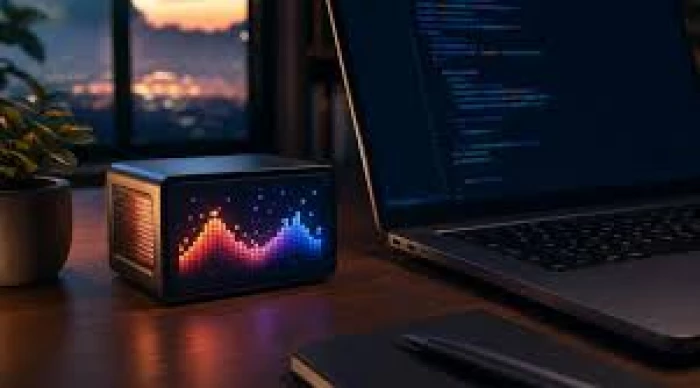
A new open-source project called Clawdmeter is turning AI coding usage into something developers can physically place on their desks, complete with pixel-art animations, real-time token tracking, and a tiny AMOLED display that reacts as Claude Code usage increases.
Built by Reykjavik-based developer Hermann Haraldsson, Clawdmeter connects to Anthropic’s Claude Code environment and displays live utilization data on a compact ESP32-S3-powered hardware device. Instead of checking browser dashboards or terminal logs, developers can glance at the small screen to monitor session usage, weekly token consumption, and reset timers in real time.
The project has rapidly gained attention inside the AI developer community, partly because it reflects a growing culture around measuring and optimizing AI coding workflows.
AI Coding Culture Now Has Its Own Hardware
Clawdmeter is built around the Waveshare ESP32-S3-Touch-AMOLED-2.16 board, a small microcontroller platform with a circular 480×480 AMOLED touchscreen. The device pairs with a laptop over Bluetooth and continuously pulls Claude Code usage statistics using the user’s existing OAuth credentials.
Once connected, the device displays animated “Clawd” pixel-art characters that become more energetic as token usage climbs. Developers can switch between animated views, detailed utilization charts, and Bluetooth configuration screens using touchscreen controls and hardware buttons.
The side buttons can also trigger Claude Code shortcuts like voice mode and mode switching, effectively turning the gadget into both a monitoring display and lightweight hardware controller.
The Project Reflects the Rise of “Tokenmaxxing”
The popularity of Clawdmeter is tied closely to a growing trend in AI development circles often referred to as “tokenmaxxing.”
The term describes developers trying to maximize their usage of AI coding tools like Claude Code, GitHub Copilot, and Codex, either to justify expensive subscriptions, increase productivity, or simply measure AI adoption inside engineering teams.
What started as an internet joke has increasingly become a real metric inside parts of the software industry. Companies now monitor AI tool usage across teams as a proxy for workflow integration and experimentation with AI-assisted development.
Clawdmeter effectively turns that invisible usage into a physical desktop signal.
The device may look playful, but it reflects how deeply AI coding assistants are becoming embedded into everyday engineering workflows.
Claude Code Is Becoming a Platform Ecosystem
The emergence of projects like Clawdmeter also highlights how quickly Anthropic’s Claude Code ecosystem is expanding.
Claude Code has evolved beyond a basic coding autocomplete tool into a broader AI agent platform capable of editing files, executing terminal commands, interacting with external services, and handling multi-step software engineering tasks.
That growth has created a wave of third-party tools, dashboards, analytics layers, and developer utilities built around Claude Code workflows.
Some developers now treat AI coding assistants almost like cloud infrastructure, something that requires monitoring, optimization, visibility, and workflow management.
Clawdmeter fits directly into that trend by giving developers a persistent ambient display for AI consumption rather than forcing them to open dashboards repeatedly.
Open Source Hardware Is Quietly Benefiting From the AI Boom
Another interesting aspect of the project is how accessible the hardware stack remains.
Clawdmeter relies mostly on off-the-shelf components and open-source firmware rather than custom manufacturing. The project uses technologies like LVGL for its interface system and NimBLE for Bluetooth communication.
Haraldsson reportedly said Claude Code itself helped accelerate development of the project, allowing him to build much of the system rapidly despite not specializing in embedded hardware engineering.
That dynamic increasingly reflects a broader trend where AI coding systems are lowering barriers for solo developers and hobbyists building both software and hardware projects.
Tiny AI Dashboards May Become More Common
Clawdmeter is still a niche enthusiast project, but its popularity points toward something larger happening in developer culture.
As AI systems become more deeply integrated into coding workflows, developers increasingly want persistent visibility into how those systems are operating, including token consumption, costs, automation activity, and agent performance.
That could eventually create an entirely new category of lightweight AI monitoring tools, ambient dashboards, and productivity hardware built specifically for AI-assisted work.
For now, Clawdmeter remains mostly a fun open-source side project.
But it also captures an unusual moment in tech culture where AI usage itself is becoming something developers want to visualize, optimize, and sometimes even proudly display on their desks.