Figma Launches Major Update with AI Tools, Animations & Code Layers
by Michael Hicklen - 3 months ago - 3 min read
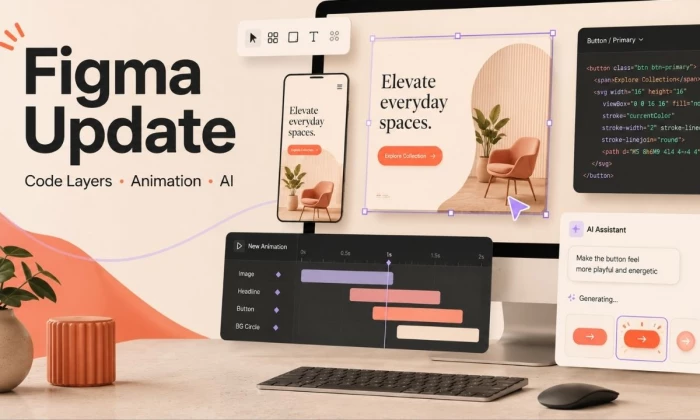
Figma has rolled out a major update that pushes the platform further beyond traditional interface design. The new release focuses on bringing design, code, animation, and AI into a more unified workflow, reducing the gap between designers and developers while making the tool more intelligent and production-ready.
A Shift Toward Design That Feels Like Production
The biggest change in this update is the introduction of code layers, a feature that allows structured code elements to live directly inside design files. Instead of treating design as a separate stage from development, Figma is moving toward a system where both coexist in the same environment.
This makes collaboration more practical. Developers can better understand how components are structured, while designers get a clearer sense of how their work translates into real interfaces. The result is a smoother transition from design mockups to working products, with fewer inconsistencies along the way.
Animations That Go Beyond Static Prototypes
Alongside code layers, Figma has expanded its animation and motion capabilities. Designers can now create more realistic interactions without relying on external tools or complex workarounds.
Instead of static screens, teams can build prototypes that behave more like real applications. Transitions, micro-interactions, and motion flows can now be tested directly inside the design environment, which makes feedback cycles faster and more accurate during product development.
AI Becomes a Core Part of the Workflow
The update also strengthens Figma’s AI layer, which is increasingly being positioned as a creative assistant rather than just an add-on feature. The AI can suggest layout improvements, help generate UI variations, and assist with writing interface text.
More importantly, it reduces repetitive work. Tasks like adjusting spacing, refining structure, or generating placeholder content can now be partially automated, allowing designers to focus more on decisions that affect user experience rather than manual adjustments.
Why This Update Matters
This release reflects a broader shift happening across the design industry: tools are no longer just about drawing interfaces. They are becoming systems that understand structure, logic, and even intent.
For teams, this means faster product cycles and fewer disconnects between design and engineering. For individual designers, it means working in an environment that is gradually becoming more intelligent and less manual.
At the same time, it also signals a future where design tools will expect users to adapt to more integrated, AI-assisted workflows.
Final Thoughts
With code layers, improved animations, and deeper AI integration, Figma is clearly evolving into something closer to a full product-building platform rather than just a design tool. The update doesn’t just add features, it reshapes how design work flows from idea to implementation.
If this direction continues, the line between designer and developer will keep getting thinner, replaced by a more unified, AI-assisted creative process.