Firmus Signs Nvidia Deal For 170,000-GPU AI Campus
by Deepak Mehra - 3 months ago - 5 min read
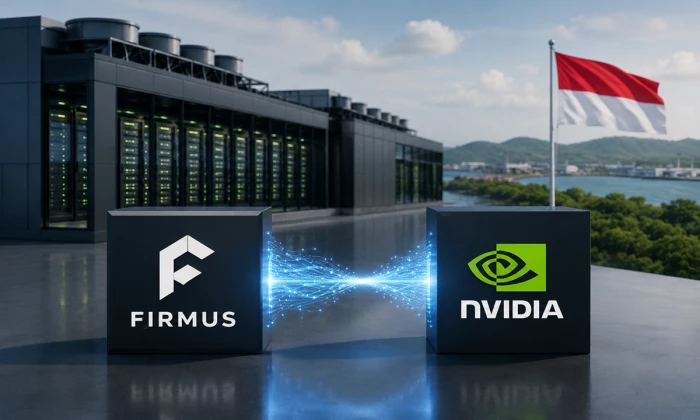
Australian AI infrastructure company Firmus Technologies has signed a major strategic compute partnership with Nvidia, giving the company access to up to 170,000 Nvidia AI accelerators for a new AI factory campus in Batam, Indonesia.
The deal is designed to give fast-growing AI companies cheaper and more flexible access to high-performance computing power, at a time when demand for AI chips and cloud infrastructure remains extremely high.
Firmus said the partnership will run through 2034 and will be anchored by a dedicated 360-megawatt Nvidia DSX AI Factory campus in Batam. The company described the project as one of the largest AI infrastructure developments in the Asia-Pacific region.
Firmus Targets Global AI-Native Companies
The main focus of the deal is on “AI-native” companies, enterprises and independent software vendors that need large-scale AI computing power but may not have the same financial strength as big cloud giants.
Under the agreement, Firmus will buy Nvidia infrastructure and sell Nvidia-powered cloud services to customers. Nvidia will earn normal product revenue as well as a share of cloud revenue from the supported capacity.
This makes the agreement more than a simple chip supply deal. Nvidia is not only selling hardware but also gaining a recurring revenue link to the cloud services built on top of its technology.
Firmus co-chief executive Tim Rosenfield told Reuters that the aim is to reduce the gap between large companies that can access cheaper compute because of stronger credit ratings and smaller AI firms that are still growing.
170,000 AI Accelerators Planned
Firmus said the agreement covers up to 170,000 Nvidia AI accelerators across Grace-Blackwell, Vera-Rubin and Vera platforms. These accelerators are expected to be deployed through 2027 and 2028.
Reuters reported that deliveries are expected from the first quarter of 2027 to the start of 2028, with the GPU capacity located in Batam, Indonesia.
Key deal points include:
- Up to 170,000 Nvidia AI accelerators
- Dedicated 360 MW AI factory campus
- Location: Batam, Indonesia
- Partnership runs through 2034
- Deployment expected across 2027 and 2028
- Expected offtake revenue of US$25 billion to US$30 billion in the first six years
- Customers include AI-native firms, enterprises and software companies
Firmus said it expects to receive between US$25 billion and US$30 billion from committed offtake agreements during the first six years of the partnership.
Batam Becomes A Strategic AI Infrastructure Hub
The Batam campus is being developed with DayOne, a Singapore-headquartered digital infrastructure platform. Its location is important because Batam sits close to Singapore, one of Asia’s major data centre and cloud connectivity hubs.
For AI companies, location matters because large-scale AI training and inference require reliable power, cooling, networking and data centre capacity. By placing the campus in Batam, Firmus is positioning the project as a regional AI compute hub for Asia-Pacific customers.
Firmus said the campus will combine Nvidia DSX with its own HyperCube platform, a liquid-cooled AI factory architecture developed in Australia and designed around Nvidia DSX blueprints.
Nvidia DSX Sits At Centre Of Deal
Nvidia’s DSX platform is built for AI factories rather than traditional data centres. Nvidia says DSX brings together design, simulation and operations to help builders optimize AI factories for performance, energy use and lower token cost.
This matters because AI infrastructure is becoming more complex. Companies are no longer just buying servers and GPUs. They need complete systems that connect chips, networking, power, cooling, software and operations.
Firmus said DSX will help bring capacity online faster, improve tokens per watt and strengthen resilience at scale.
Deal Builds On Firmus’ Rapid Expansion
The Nvidia agreement comes after a period of fast fundraising and expansion for Firmus. Reuters reported that Firmus had raised US$1.35 billion over the previous six months, giving it a US$5.5 billion post-money valuation. Nvidia has also participated in previous Firmus capital raisings, according to the company.
Earlier in 2026, Firmus also finalized a US$10 billion debt funding package led by Blackstone and Coatue Management. That funding was aimed at expanding Project Southgate, Firmus’ Australian AI training and inference infrastructure program.
Project Southgate, developed with CDC Data Centres and Nvidia, is expected to reach up to 1.6 gigawatts of capacity over three years.
Australia’s AI Infrastructure Ambition Grows
Firmus has presented its AI factory strategy as part of a wider push to make Australia and the Asia-Pacific region more important in the global AI infrastructure race.
The company’s Project Southgate plan is focused on sovereign AI capability, renewable-powered infrastructure and local digital innovation. Firmus has said the project could support thousands of direct and indirect jobs and help drive new renewable energy projects across Australia.
The Batam deal expands that ambition beyond Australia. Instead of only serving local infrastructure needs, Firmus is now trying to become a major regional provider of AI compute for global customers.
AI Compute Demand Remains Intense
The deal shows how quickly AI infrastructure is becoming one of the most competitive areas in technology. Startups and software companies need powerful GPUs to train models, run AI products and serve customers, but access to top-tier compute remains expensive and limited.
For Nvidia, the deal gives another route to sell advanced AI infrastructure while also sharing in future cloud revenue. For Firmus, the partnership strengthens its position as an AI infrastructure company with access to some of the world’s most important AI chips.
The bigger message is clear: AI growth is no longer only about models and apps. The next phase is also about who controls the factories, power systems and GPU capacity needed to run them.