Google Expands Free Personalized Image Creation in Gemini
by Deepak Mehra - 3 months ago - 6 min read
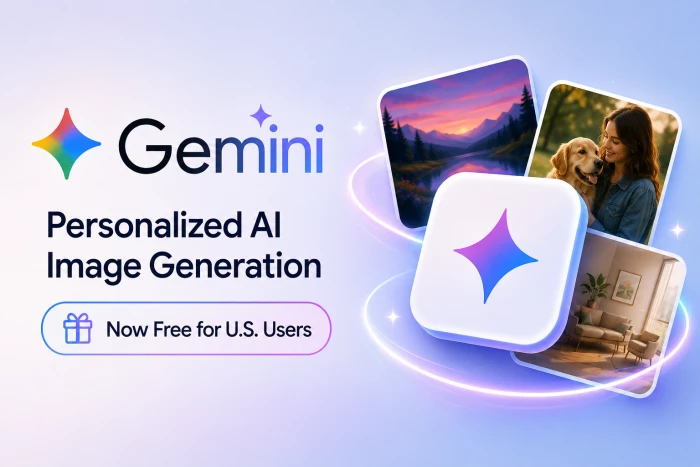
Google is opening one of Gemini’s more personal creative features to a much wider audience, making personalized AI image generation free for eligible users in the United States.
Google has made Gemini’s personalized AI image generation feature available for free to eligible U.S. users, expanding access beyond paid subscribers. The feature connects Gemini’s Personal Intelligence with Google Photos and Nano Banana, allowing users to create more personal images without writing long, detailed prompts.
What Changed
Until now, Gemini’s personalized image creation was mainly available to users on Google AI Plus, Pro, and Ultra plans. With the new rollout, Google says eligible users in the U.S. can now try the feature at no cost.
The biggest change is not just that image generation is free. It is that Gemini can now use personal context, with permission, to make image prompts easier. Instead of describing every small detail, users can ask for something simple like a personalized illustration, and Gemini can use connected Google apps to understand the user’s taste, interests, and visual context.
The Feature in Simple Terms
Gemini’s new personalized image tool is designed to make AI image generation feel less generic. A normal AI image generator needs a detailed prompt. Gemini’s version can use information from connected Google services to fill in some of the missing details.
For example, instead of writing a long prompt about your favorite things, your hobbies, your family, or your visual style, you may be able to give Gemini a shorter request and let it build a more relevant image from your connected context. Google says Personal Intelligence can use signals from tools like Gmail, Google Photos, YouTube, and Search when users choose to connect them.
Why Google Photos Matters Here
The most important part of this rollout is Google Photos integration. If a user connects Google Photos, Gemini can use actual images of the user or their loved ones as reference points. That means users do not always need to manually upload a selfie or a reference photo every time they want a personalized image.
This could make the feature useful for:
- Personalized avatars and profile images
- Family-style illustrations
- Lifestyle-based creative images
- Dream room or dream home concepts
- Social media visuals
- Personalized memes and fun edits
Google’s aim is to reduce the effort needed to get a result that feels specific to the person using Gemini.
Privacy Controls Are a Key Part of the Rollout
Because the feature can use personal Google account context, privacy will be a major concern for many users. Google says connecting Google apps to Gemini is opt-in, and users can adjust those connections in settings at any time.
Google has also said Gemini does not train its models on users’ private Google Photos libraries for this feature. The company is positioning the tool as personalized by permission, not personalized by default.
That distinction matters. AI image tools are becoming more powerful, but users are also becoming more cautious about where their photos, memories, and personal data go.
Who Can Use It
Google says the free rollout is for eligible users in the United States. Its Gemini help page also notes that image-generation availability depends on supported countries, languages, account type, and age requirements. Users must be signed in to Gemini Apps, and Google lists separate age rules for generating and editing images.
The same help page says users must be 18 or older to generate and edit images with a personal account, while basic image generation may be available from age 13 or the applicable minimum age in a user’s country. Work, school, and managed accounts may have different restrictions.
What Nano Banana Adds to Gemini
Nano Banana is Google’s image-generation and editing model inside Gemini. It is designed for fast image creation, image refinement, and natural-language editing. Google’s Gemini help page lists features such as character consistency, local edits, better text rendering, improved instruction following, and higher-quality image previews.
For regular users, this means Gemini can do more than generate a random image from a sentence. It can also help revise images, change styles, adjust parts of a photo, or create a new image based on multiple inputs.
Why This Move Matters
Google is making a clear push to turn Gemini into a more personal AI assistant, not just a chatbot. Personalized image generation fits into that strategy because it combines three things Google already has at scale: AI models, user-facing apps, and personal data connections.
The move may also increase pressure on standalone AI image-generation startups. Many smaller tools compete on speed, style, and ease of use, but Google has an advantage because Gemini can connect directly with services many people already use every day, especially Google Photos.
This is also a user-acquisition play. Free access lowers the barrier for casual users who may not pay for AI plans but still want to create profile pictures, social posts, family images, or personalized designs.
Safety and Transparency Still Matter
As AI image generation becomes more personal, questions around misuse, consent, deepfakes, and content authenticity become more important. Google has been adding image transparency tools to Gemini, including the ability to check whether an image was generated or edited using Google AI through SynthID watermark detection.
Google says Gemini-generated or edited images can include SynthID, an invisible watermarking technology used to identify AI-generated content. The company has also said it is working on broader transparency efforts, including support for C2PA metadata in more AI-generated images.
The Bigger Picture
Gemini’s free personalized image generation rollout shows how AI assistants are moving from general answers to personal creation. Instead of asking users to explain everything from scratch, the next stage of AI products may depend on how well they understand user context, preferences, photos, routines, and previous activity.
For Google, this is a natural advantage. Gemini sits inside a wider ecosystem of Search, Gmail, Photos, YouTube, Android, and Workspace. If users are comfortable connecting those services, Gemini can become more personal than many standalone AI tools.
The free U.S. rollout is therefore more than a small product update. It is a sign that Google wants personalized AI creation to become a mainstream Gemini feature, not just a paid experiment.