
Imagine 2,000 orders hitting your Shopify store on a Tuesday afternoon. Your warehouse team is ready, but a corrupted shipping manifest suddenly halts everything. Or perhaps a new wholesale partner needs a signed contract, but it is stuck in an uneditable format that nobody can fix. This is the Admin Drain. It is the silent killer of growth, where founders spend several hours on paperwork instead of several minutes. In 2026, the gap between profitable brands and struggling ones is about the systems behind the scenes.
This article provides a clear blueprint for founders to reclaim their time and fix their back-office friction once and for all. We want to show you how to move from chaos to automated workflows.
First, let`s discuss why, without the top tools for e-commerce, you lose your profit margins.
Early-stage startups usually rely on scrappy methods. You might use manual spreadsheets or basic email folders to track everything. That works when you have ten orders a week. However, it fails when you have ten orders an hour.
When your order volume spikes, basic online business tools often buckle under the pressure of new SKUs and multiple sales channels. Yes, growth brings more money, but it also exposes every weak link in your fulfillment chain. Moreover, growth can lead you to offline opportunities (pop-ups, showrooms, or markets). You might sell your last item in person while an online customer is checking out for the same product.
Repetitive admin work is expensive. Every time a team member manually enters a customer address or calculates a tax rate, the risk of error rises. One wrong digit in a shipping address leads to a failed delivery, a frustrated customer, and a costly reshipment fee. According to The Poirier Group, an error costs roughly $1 to verify at entry, $10 to clean up later, and upwards of $100 if it results in an incorrect financial report.
Disorganized documentation sends a bad signal to the people who help you grow. If a supplier asks for a specific customs form and you send a messy, blurry scan, you look like an amateur. Delayed responses or inconsistent workflows damage your credibility with wholesalers, logistics providers, and payment processors.
Choosing the right tech stack is about finding the right fit for a growing brand. We selected these e-commerce tools based on four specific requirements:
● Automation. Together, these solutions free the team from routine tasks by automating repetitive operations across departments, from marketing to document management.
● Integrations. They must talk to each other and your main store platform (Shopify, Wix, etc.).
● Documentation support. They have to handle the heavy paperwork involved in global trade.
● Scalability. The tool should work just as well for 50 orders as it does for 5,000.
Based on all these criteria, we found 6 tools for e-commerce that make your business easier.
So, below are the carefully selected best tools for e-commerce in 2026.
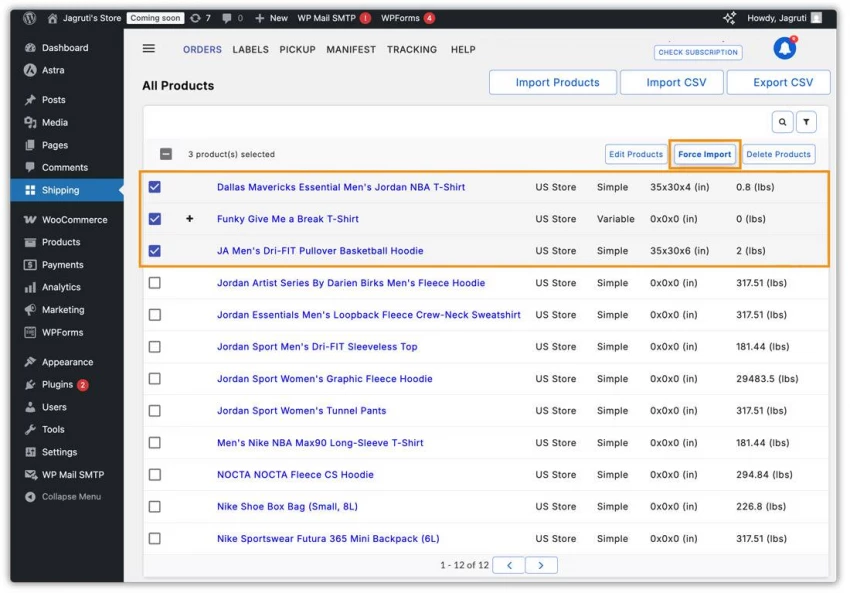
Shipping is the most physical part of an online store, which makes it the hardest to automate. PluginHive acts as a high-end bridge between your digital store and your physical carriers. It generates shipping labels, provides live rates at checkout, and automatically sends tracking updates to customers.
Instead of having your team manually log in to FedEx or UPS to create labels, PluginHive does it in the background. It solves the problem of fulfillment lag, where orders sit in the warehouse simply because the labels aren't ready.
Think about a flash sale. You can generate bulk shipping labels for 500+ orders in seconds. This ensures that the physical fulfillment matches the speed of the digital sale. You can find more about Shopify Apps, WooCommerce Plugins, or Magento Extensions by following the links.
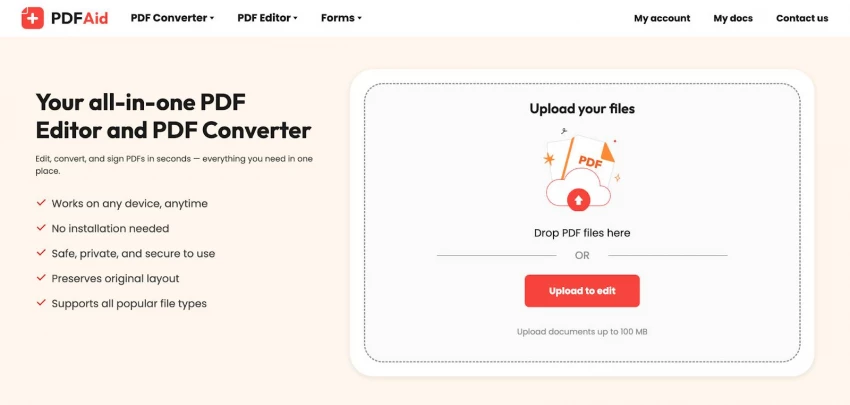
The back office of an e-commerce store is filled with PDFs. You have vendor agreements, tax forms, and customs declarations arriving daily. PDFAid is a versatile tool built for fast-paced environments where you cannot afford to wait for a designer to fix a document. It allows users to edit PDF text for instant corrections on invoices or contracts.
Sometimes you need to merge PDF receipts into one single file for an end-of-month audit. Other times, you need to convert PDF documents into Excel files for inventory management. And PDFAid helps with all that.
A highly practical use case of PDFAid is the Fillable Form feature, which gives your clients the easiest way to sign and return the documents, even on the go. It’s a smoother experience for them and a faster supply chain for you, helping you finalize deals without the usual delays.
Using PDFAid ensures that your paperwork looks as professional as your storefront.
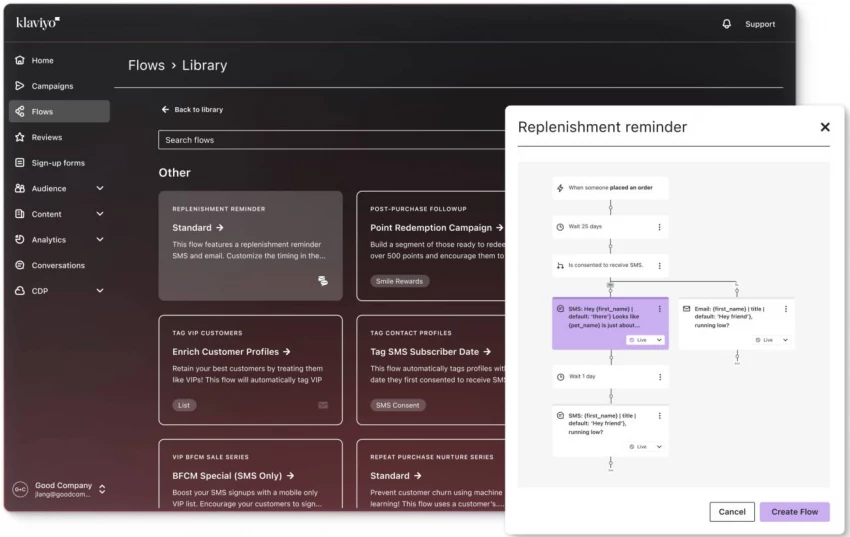
Marketing should not be a manual blast to every customer. Klaviyo is an e-commerce-first platform that automates communication based on actual behavior. If a customer leaves a pair of shoes in their cart, Klaviyo sends a reminder. If they haven't bought anything in 60 days, it sends a win-back coupon.
This tool ensures your store keeps making sales while you sleep. It pulls data directly from your store to see what people are buying and when they buy.
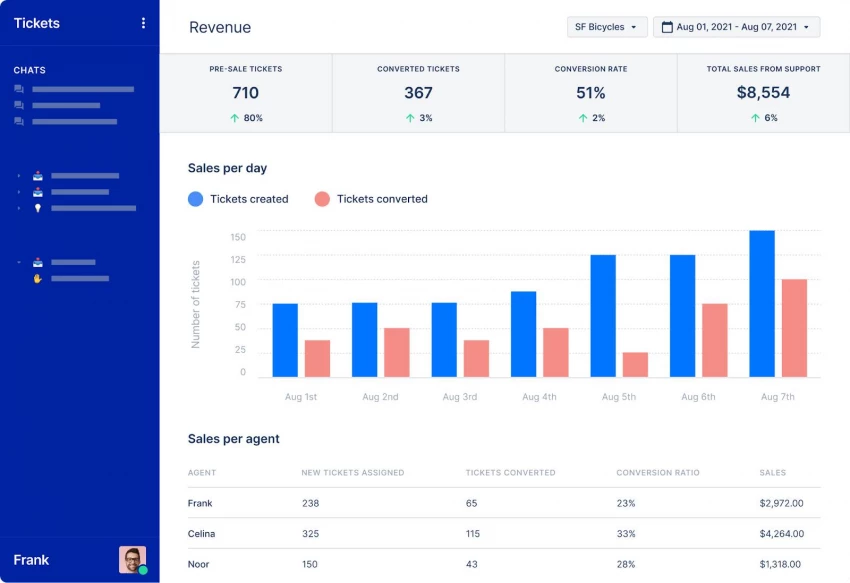
Customer service can quickly become a black hole for your time. Gorgias is a helpdesk that connects your store’s data to every customer ticket. Suppose someone emails asking, "Where is my order?" With Gorgias, your agent sees the order status, tracking number, and purchase history right next to the message.
This removes the need for agents to hunt through multiple tabs to find a simple order number. Faster resolutions mean happier customers and fewer chargebacks. It is about providing big brand support with a small team.
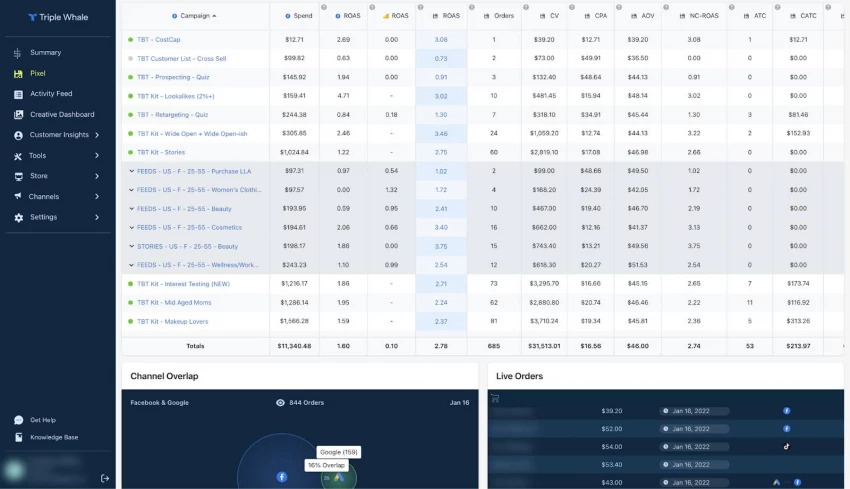
Profitability is harder to track than most founders admit. Between ad spend, shipping costs, and the cost of goods sold (COGS), your bank balance can be misleading. Triple Whale aggregates all this data into one dashboard to show your true profit.
Instead of checking five different apps to see how your Facebook ads are performing, you check one screen. This helps you make informed decisions about where to spend your next marketing dollar. All these are important for staying lean in the 2026 market.
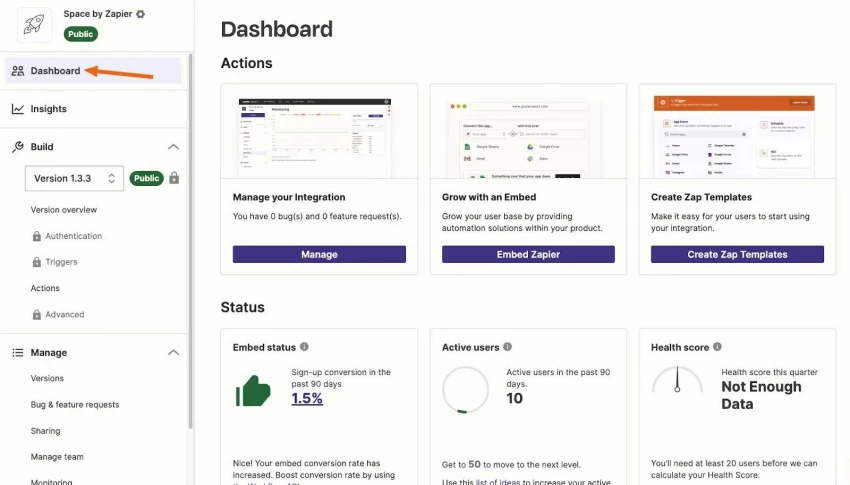
Zapier is a workflow automation tool that triggers actions across different platforms without any coding. For example, you can set it to automatically save an invoice PDF to a specific Google Drive folder the moment a new order is placed.
Zapier connects your e-commerce business tools so you don't have to manually move data. It can alert your Slack channel when a high-value order comes in or sync your customer list with a backup database. It is the secret to a hands-off operation.
Top tools for e-commerce are not always enough for big success. Here are the top 3 best practices we recommend you use.
A tool is only as good as the data it shares. When you add a new piece of software to your stack, ask if it has native integration with your current tools. If your shipping software cannot talk to your inventory manager, you will end up with ghost stock issues. Data should flow from the customer's click to your accounting software without a human ever touching it.
Use a dedicated tool to convert PDF files into standardized formats for your warehouse. If every packing slip looks the same, the warehouse team is less likely to miss an item. Consistency reduces the cognitive load on your staff. It also speeds up the entire fulfillment process.
Security is a major concern for 2026. You are handling customer addresses, phone numbers, and often supplier bank details. Ensure that your online business tools use two-factor authentication (2FA) and encrypted storage. High-quality tools often provide audit trails. They show exactly who accessed or edited a document.
All these are about compliance with global privacy laws such as GDPR and CCPA. You can read more about data privacy standards on the Official EU GDPR site.
The best tools for e-commerce are about managing the boring paperwork and logistics that keep a business alive. We advise you:
● Always use a dedicated PDF tool to ensure all business-facing documents are secure and branded;
● Convert PDF or merge PDF files when needed to keep your financial and supplier archives organized;
● Audit your e-commerce business tools stack quarterly to remove redundant subscriptions and maintain high ROI;
● Use a reliable solution to reduce receipt paperwork and improve accounting.
When you automate your shipping with PluginHive, you free up your brain for high-level growth. A professional brand is built on the back of reliable systems that don't break when things get busy.
Focus on tools that offer free tiers or pay-as-you-go models forever. Zapier and PDFAid are great starting points because they solve immediate problems without a massive upfront cost. Focus on automating the tasks that take you the most time each week.
Browser-based "Save as PDF" often creates large, unoptimized files. They can break formatting. A dedicated tool like PDFAid ensures that the layout remains professional and the file size is manageable for email. It also allows you to edit PDF content later, which a standard browser save usually prevents.
Supplier onboarding often requires tax forms (e.g., Form W-9 for U.S. vendors) plus shipping/customs documents when goods cross borders. Using professional tools with the Fillable Form feature allows you to quickly fill, sign, and send them.
Remote teams cannot hand physical papers to each other. A digital tool allows team members to merge PDF reports or update contract terms from different time zones. It creates a single source of truth for all business documents.
Share your thoughts about this article.
Be the first to post a comment!

Here’s my story.I never planned to build a faceless channel. It happened out of...
Parveen Verma1 month ago

Gone are the days of limited shopping choices. E-commerce has expanded into a va...
Parveen Verma9 months ago

Most WordPress hosting services promise speed and reliability, only to buckle wh...
Parveen Verma10 months ago

SEO in 2026 is no longer about simple keyword repetition or basic search engine...
Parveen Verma10 months ago

So, you’re a digital marketer. A brand strategist. Or a growth leader trying to...
Parveen Verma1 year ago