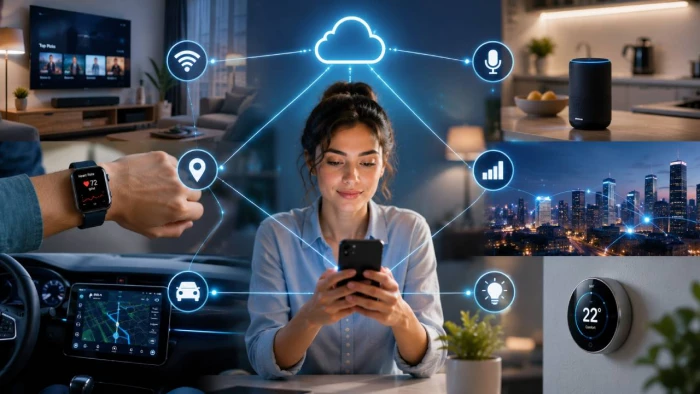
Connected technologies have quietly evolved from niche innovations into a core part of modern daily life. What once felt limited to GPS navigation and enterprise logistics now powers everything from smartphones and wearable devices to smart vehicles, delivery platforms, digital payments, connected homes, and real-time security systems.
Most people interact with connected systems constantly without actively noticing them. Smartphone notifications, smartwatch synchronization, app logins, QR-code payments, navigation apps, streaming recommendations, ride-sharing services, and live delivery tracking all rely on continuous communication between devices, networks, and cloud infrastructure.
The scale of this growth is enormous. Billions of connected devices now exchange data in real time across homes, businesses, transportation systems, and public infrastructure. As digital ecosystems continue expanding, businesses increasingly depend on connected technologies to improve efficiency, automate operations, personalize experiences, and strengthen security.
This shift is not happening because consumers specifically seek out “connected systems.” It is happening because these technologies now support convenience, speed, automation, and real-time decision-making across nearly every aspect of modern life.
The rise of connected systems closely mirrors the global expansion of smartphones.
Modern smartphones continuously communicate with GPS satellites, Wi-Fi networks, Bluetooth devices, mobile towers, cloud platforms, and app ecosystems. Together, these technologies create highly responsive digital environments capable of adapting to user behavior in real time.
Today, billions of users rely on connected services daily. Navigation apps provide live traffic updates, delivery platforms offer real-time order tracking, fitness applications monitor movement patterns, and banking apps instantly detect unusual activity across devices.
This transformed connected technology from specialized infrastructure into everyday consumer expectation.
Users now expect apps and services to synchronize instantly, personalize recommendations, recognize nearby locations, and provide seamless experiences across multiple devices. Behind the scenes, all of this depends on continuous device communication and large-scale data processing.
One of the biggest misconceptions about connected technologies is that they only involve smartphones or internet access.
Modern connected ecosystems combine multiple layers of infrastructure, including wearable devices, vehicle telemetry systems, smart-home products, traffic-monitoring platforms, retail analytics systems, industrial sensors, and cloud-based automation tools.
Vehicles now generate real-time diagnostics and route information. Smartwatches continuously track movement and health-related metrics. Home assistants communicate with connected appliances and security systems. Businesses monitor operations through live dashboards tied to sensor-driven infrastructure.
When combined, these systems create highly detailed streams of operational and behavioral data that organizations use to improve efficiency, reduce delays, strengthen automation, and enhance customer experiences.
This broader expansion is one reason connected technologies are becoming increasingly embedded across industries at such a rapid pace.
Consumer convenience is only one part of the story.
Enterprise adoption is one of the strongest reasons connected technologies continue expanding worldwide. Industries such as transportation, healthcare, retail, cybersecurity, logistics, manufacturing, and insurance increasingly rely on connected infrastructure to improve visibility and operational performance.
Fleet-management systems now monitor driver behavior, fuel usage, maintenance schedules, and route optimization in real time. Retailers analyze movement patterns to improve store layouts and customer flow. Warehouses track inventory continuously through connected scanning and sensor systems.
The legal industry has also become increasingly tied to connected data ecosystems. Traffic-camera systems, smartphone records, vehicle telemetry, navigation history, and connected-device activity can sometimes help professionals reconstruct timelines or better understand how specific incidents unfolded.
In accident-related cases, digital records may now complement traditional evidence such as witness statements, medical documentation, and insurance reports. Because of this shift, professionals such as a Joliet personal injury lawyer may review connected-device data and technology-generated records as part of broader case evaluations involving vehicle collisions, roadway incidents, or liability disputes.
This growing reliance on connected infrastructure reflects how deeply digital systems now influence everyday operations across both businesses and professional services.
The growth of connected devices is dramatically increasing the amount of measurable digital activity worldwide.
Smart TVs, wearable devices, connected vehicles, security cameras, industrial sensors, home assistants, and mobile applications continuously generate real-time streams of information. Entire environments are gradually becoming measurable, automated, and interconnected.
This matters because modern systems increasingly rely on live contextual information to improve responsiveness and operational accuracy.
Transportation platforms optimize routes dynamically. Streaming platforms personalize recommendations instantly. Financial systems monitor suspicious activity in real time. Security platforms analyze behavioral anomalies across connected environments.
For businesses, connected data improves operational visibility and supports faster decision-making across increasingly complex digital ecosystems.
The widespread adoption of connected technologies has also intensified discussions surrounding privacy and digital transparency.
Privacy researchers and cybersecurity experts frequently warn that modern systems can infer far more behavioral information than many users fully understand. Location histories, device interactions, wearable activity, and app permissions can collectively reveal detailed insights into routines, travel behavior, and daily activity patterns.
As connected ecosystems continue expanding, consumers increasingly expect stronger transparency and data-protection standards from both businesses and technology providers.
Governments and regulators worldwide are responding with stricter compliance requirements and privacy frameworks aimed at improving accountability around digital data collection and connected infrastructure.
This growing tension between convenience and privacy will likely shape the future evolution of connected technologies for years to come.
Despite growing concerns around privacy and regulation, the broader trend appears difficult to reverse.
Connected technologies now support critical infrastructure tied to transportation, logistics, healthcare, digital commerce, cybersecurity, financial systems, and smart-city development. Businesses increasingly rely on real-time data to improve efficiency, strengthen automation, reduce operational waste, and improve customer experiences.
For consumers, many of these systems feel less like “technology” and more like invisible convenience layers integrated into everyday life.
That normalization is exactly why adoption continues accelerating.
Connected devices and data systems are no longer emerging innovations. They are steadily becoming part of the foundational infrastructure powering modern digital experiences across industries, businesses, and everyday routines.
Share your thoughts about this article.
Be the first to post a comment!

If you've been asked to shore up your organization's threat detection this year,...
Parveen Verma1 week ago
Nobody searches for apps on page two.Think about the last time you downloaded so...
Parveen Verma1 month ago

Rising medical costs and increasing healthcare needs have made health insurance...
Parveen Verma1 month ago

Personal data circulates across hundreds of websites most people never knowingly...
Parveen Verma1 month ago

Posting on social media sounds simple until you are doing it live, every day, ac...
Parveen Verma2 months ago

You spent an hour writing the perfect cold email. The subject line is sharp. The...
Parveen Verma3 months ago