AI app builders are often described in terms of speed or automation, but those descriptions rarely explain what the full experience is actually like. For most people, the real question is not whether an app can be generated quickly, but whether the process feels usable from start to finish, and whether the result resembles something that could realistically be tested, iterated on, and extended.
That is where Famous.ai positions itself differently. The platform is built around end-to-end creation, starting with a plain-language prompt and continuing through to a functional application with real structure, logic, and interaction.
This review looks at what it is actually like to build apps with Famous.ai from beginning to end, focusing on the experience rather than marketing promises.
What Famous.ai Is Designed to Do
Famous.ai is an AI-powered application builder that turns natural-language ideas into complete applications.
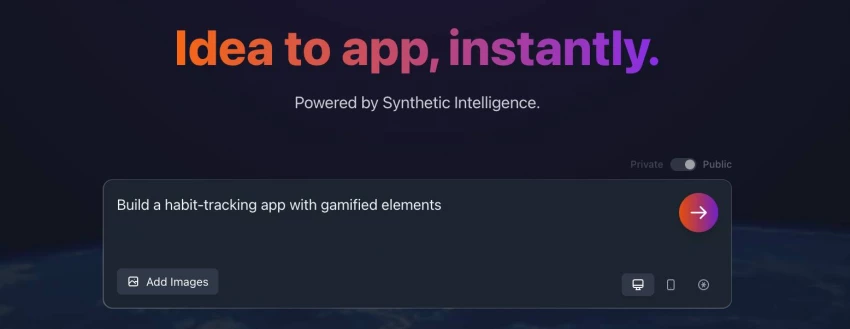
Instead of starting with templates, visual blocks, or predefined layouts, users begin by describing what they want to build in plain English. From that description, the platform generates an application that includes interface layout, core logic, data handling, and a usable structure.
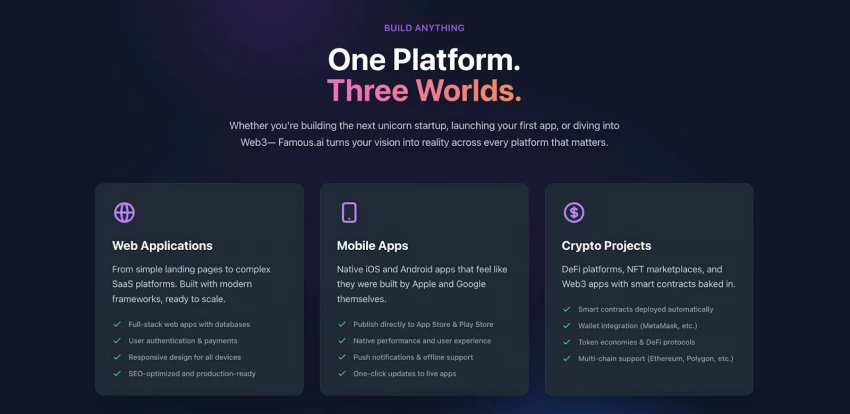
The platform positions itself as a single place where different types of applications can be created, including web apps, mobile-friendly experiences, and more experimental or technical projects. Rather than optimizing for a single narrow use case, Famous.ai aims to support a wide range of applications within a single workflow.
Starting the Build With a Prompt
The experience begins with a prompt.
Users explain the type of app they want to build, what it should do, and how it should behave. There is no setup process, no framework selection, and no environment configuration required before starting.
This first step sets the tone for the entire workflow. Instead of dealing with technical decisions upfront, users focus on describing outcomes and functionality. The prompt acts as the foundation for everything that follows, shaping how the application is structured and what features are included.
Watching the App Take Shape
Once the prompt is submitted, Famous.ai begins generating the application.
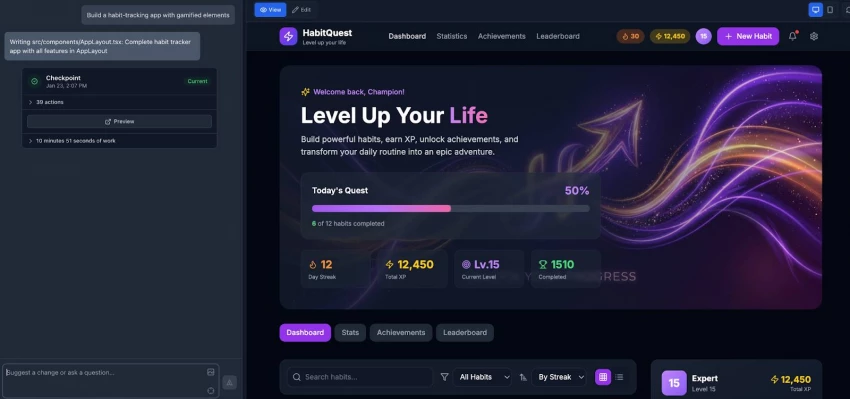
During this phase, the platform automatically assembles the frontend, backend logic, and internal structure. Progress is visible as the build moves forward, giving users a sense of how the system is interpreting the request.
Rather than producing disconnected components or partial outputs, the system works toward a complete application. This stage emphasizes that Famous.ai is designed around execution, not just idea generation or design assistance.
Pricing and Access
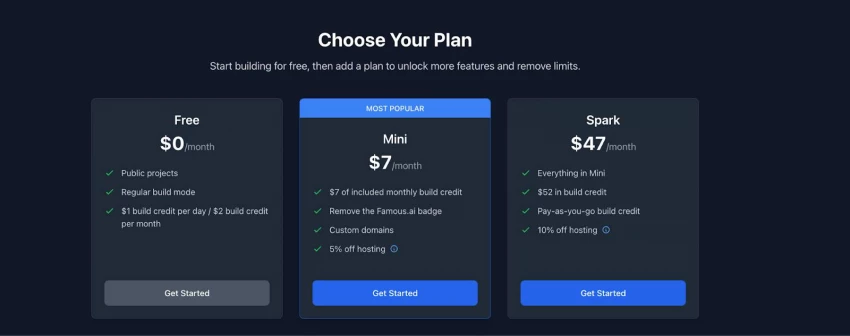
Famous.ai offers a tiered pricing model that supports both exploration and more advanced usage.
Users can start on a free plan to understand how the platform works and what kind of output it produces. As usage increases, paid plans unlock additional build capacity and features.
This structure allows users to experience the full workflow before committing, which is especially useful for those evaluating whether AI-driven app creation fits their needs.
Exploring the Generated Application
After the generation is complete, users are presented with a working application.
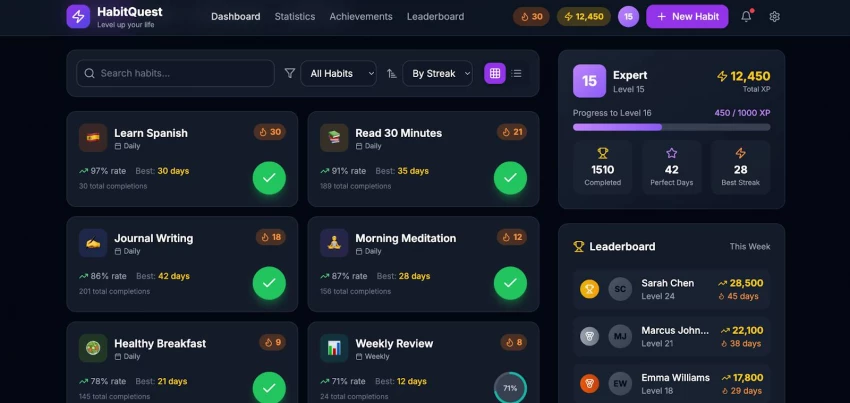
The output includes navigation, interactive elements, and data-driven views rather than static screens. At this stage, the result feels closer to an early product build than a prototype or mockup.
Users can explore flows, click through features, and evaluate whether the structure aligns with their original idea. This immediate usability is one of the defining aspects of the platform.
Building Across Devices
Famous.ai supports applications that work across devices.
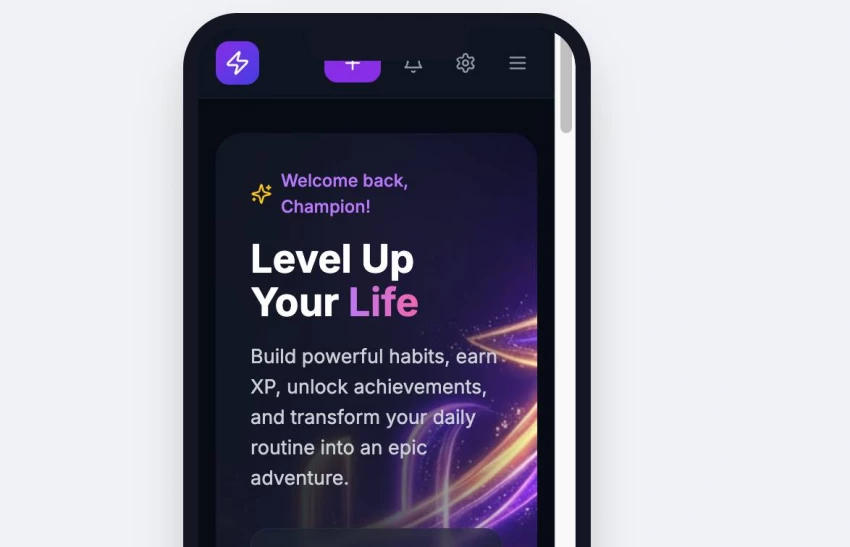
Generated apps can be viewed and interacted with in mobile layouts, making it possible to evaluate how the experience translates beyond desktop use.
For teams and individuals building consumer-facing products, this cross-device consistency is an important part of the overall experience. It allows early feedback on usability without requiring separate mobile development work.
Iteration and Ongoing Changes
The build process does not end once the app is generated.
Users can continue to refine features, adjust behavior, and evolve the application over time. Changes can be requested and tracked, allowing the app to develop gradually rather than being rebuilt from scratch.
This ongoing interaction makes the platform feel less like a one-time generator and more like an environment for continuous development and experimentation.
Who This Experience Works Best For
Famous.ai tends to work best for people who value momentum and clarity early in a project.
Founders use it to validate ideas and explore product direction. Developers use it to skip repetitive setup work and start from a working baseline. Creators and solo builders use it to experiment with app ideas without committing to long development cycles.
Because the workflow is flexible, the platform supports both business-driven projects and more personal or experimental applications.
What the End-to-End Experience Feels Like
From start to finish, the experience of building with Famous.ai is centered on reducing friction.
Instead of spending time on configuration, setup, and infrastructure, users move quickly from idea to something they can interact with. The platform does not eliminate the need for deeper engineering in complex systems, but it does remove many of the early obstacles that typically slow progress.
For anyone curious about what end-to-end AI-driven app creation feels like in practice, Famous.ai provides a clear, hands-on way to explore that workflow.
Final Thoughts: Where Famous.ai Actually Fits
After working through the full build process, what stands out about Famous.ai is not just that it can generate an app, it’s that it preserves momentum.
In most traditional workflows, the early phase of building an app is filled with invisible friction: setting up environments, structuring databases, wiring basic logic, configuring layouts. Even experienced developers lose time here. With Famous.ai, that initial barrier is significantly reduced. You move from idea to something interactive fast enough that your thinking stays fluid.
That speed matters, not because “fast” sounds impressive, but because ideas are fragile. When momentum breaks, clarity fades. Famous.ai keeps that momentum intact long enough for you to test whether an idea deserves deeper investment.
That said, it’s not a replacement for advanced engineering in complex, production-scale systems. Instead, it functions best as a structured launchpad, a way to translate intent into a usable foundation. For founders validating concepts, solo builders experimenting with product ideas, or teams exploring early-stage functionality, the experience feels practical rather than theoretical.
If your goal is to move from concept to something tangible without getting buried in setup work, Famous.ai makes that transition surprisingly smooth. The real value is not in automation alone, it’s in shortening the distance between thinking and building.
And that distance, in early product development, is often everything.