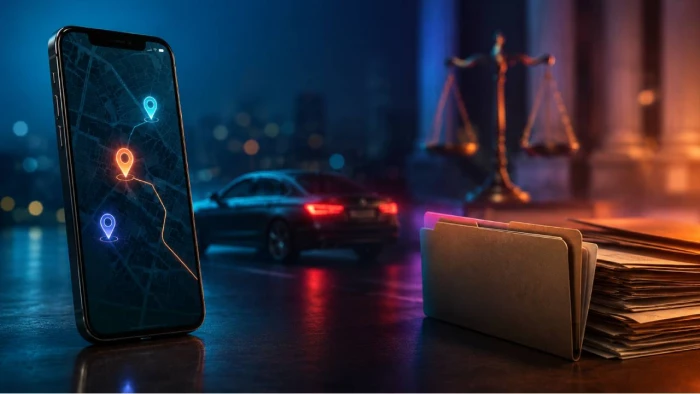
A dispute often begins with conflicting stories. Location data can add a third record, one built from phones, vehicles, apps, cameras, and connected devices that quietly track movement before anyone knows a legal claim may follow.
That is why location data is no longer a side issue in modern disputes. It can show where a person, phone, vehicle, or device was, when it moved, how long it stayed, and whether the timeline matches what people later claim.
Traditional evidence still matters: witness statements, documents, photos, police reports, medical records, contracts, and business logs. But location data adds something different. It is often created automatically during normal device use.
A smartphone may log GPS activity. A car may store speed or braking information. A smartwatch may record movement changes. A delivery app may preserve route history. A security camera may hold timestamped footage. A photo may contain metadata showing when and where it was taken.
This evidence is valuable because it can fix an event to a timeline. Instead of relying only on memory, investigators can compare statements against digital movement records. In disputes involving accidents, employment, insurance, business operations, property access, or family matters, that timeline can become central.
Location data is useful when it can help answer questions such as:
● Was the person or device near the relevant place?
● Did the movement pattern match the reported timeline?
● How long did the person, vehicle, or device remain there?
● Do other records support or contradict the same sequence?
The key point is that location data does not automatically prove a case. It becomes powerful when it is preserved properly, authenticated, and supported by surrounding evidence.
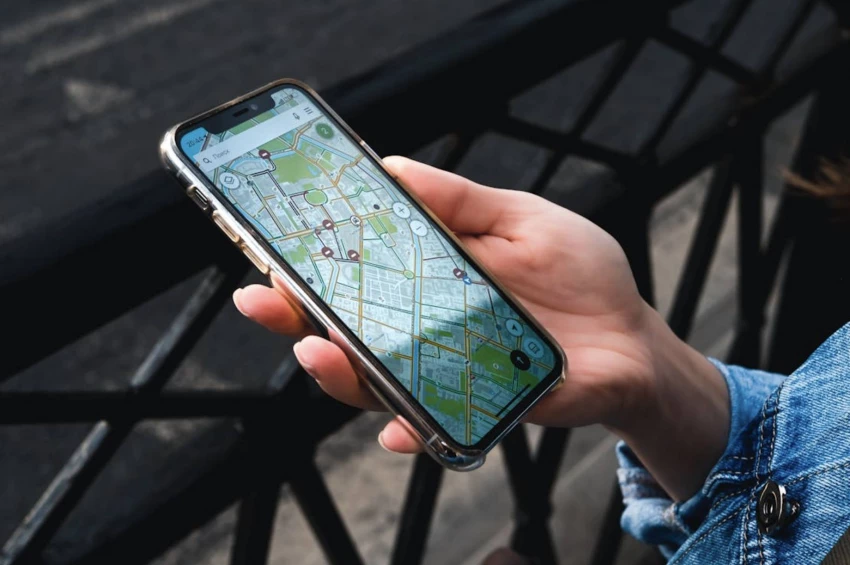
Location data is not only GPS. It can come from several systems, and each source has a different level of accuracy.
GPS data is usually the clearest. It may show routes, stops, direction of travel, arrival time, and departure time. But GPS can be affected by tall buildings, tunnels, indoor use, weak signal, battery settings, or app permissions.
Cell-site data is broader. It may show that a phone connected to a certain tower or sector, but it usually cannot prove an exact location. It is more useful when combined with calls, texts, app activity, or other records.
Vehicle telematics is increasingly important. Connected cars may record speed changes, braking, impact events, diagnostic data, and route information. In road-related disputes, this can help explain what happened before and after an event.
Photos, videos, wearables, Wi-Fi records, Bluetooth signals, app logs, access badges, and security systems can also reveal location-linked facts. The strongest cases often use several sources together rather than relying on one data point.
| Source | What It May Show | Main Limitation |
| Smartphone GPS | Route, stops, movement, arrival and departure | Accuracy depends on signal and settings |
| Cell tower records | General area of a device | Less precise than GPS |
| Vehicle data | Speed, braking, route, impact indicators | Access may require technical review |
| Photos and videos | Capture time, device details, possible location | Metadata can be lost during sharing |
| Wearables | Movement, activity change, possible health response | Does not prove cause by itself |
| Security footage | Visual timeline and presence | Footage may be overwritten quickly |
Most disputes are arguments about sequence. What happened first? Who was nearby? How much time passed? Did the reported route make sense? Did someone arrive before or after the event?
Location data helps because it can put movement into a chronological structure. A single map point may not mean much. But a phone record, vehicle log, timestamped photo, receipt, message, and camera clip can create a timeline that is far harder to challenge.
In an accident dispute, location records may show a vehicle’s route before impact, a sudden stop, or post-event movement. In an employment dispute, GPS logs may show whether a worker reached a job site. In an insurance dispute, movement records may support or weaken the reported version of events.
The best use of location data is not to replace human evidence. It is to test it. A witness may be mistaken. A claimant may misremember. A business record may be incomplete. Device records can help confirm which account fits the available facts.
A major mistake is treating location data as if it speaks for itself. It does not. A map screenshot is not the same as an original export. A shared photo is not the same as the original file. A route summary is not the same as raw device data.
Courts and legal teams usually look at four things: authenticity, reliability, relevance, and chain of custody. The question is not only whether the data exists. The question is whether it can be trusted.
| Evidence Requirement | What It Means |
| Authenticity | The record must be tied to the correct device, account, or source |
| Reliability | The data must be collected and interpreted in a sound way |
| Relevance | The record must connect directly to the dispute |
| Chain of custody | The handling of the data should be documented |
| Context | The data should be read alongside other evidence, not in isolation |
Time settings also matter. One system may use local time, another may use UTC, and another may sync later. GPS may drift. Cell towers may cover wide areas. A device may have been carried by someone other than its owner. These details can change how the evidence is understood.
That is why expert review is often necessary. A digital forensic analyst can examine metadata, accuracy ranges, device settings, export methods, and conflicts between records. Good analysis explains what the data shows, what it suggests, and what it cannot prove.
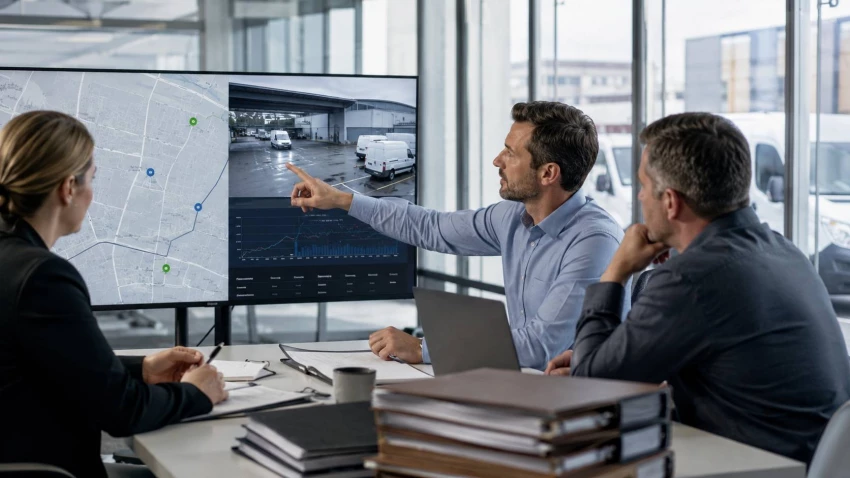
Location evidence is especially useful when the physical scene changes quickly. Roads reopen, vehicles are moved, weather shifts, surveillance footage is overwritten, and witnesses leave. Digital records can preserve details that are no longer visible.
In accident-related disputes, phone history may show a route, vehicle data may show braking, dashcam footage may capture the road, and nearby cameras may confirm timing. A smartwatch may show an activity interruption or health response, but it must be matched with other evidence before drawing conclusions.
For someone dealing with a serious claim, early preservation can be critical. Speaking with a Louisville personal injury lawyer can help a person understand which records may need to be protected, including phone data, dashcam clips, vehicle information, original photos, app-based location history, and nearby surveillance footage.
The same evidence logic applies in business and workplace disputes. Location data may confirm site visits, delivery routes, vehicle use, field work, or access to restricted areas. It can help a company defend itself, or help an employee challenge an unfair claim.
Location data is sensitive because it can reveal private routines: homes, workplaces, medical visits, religious activity, schools, meetings, and travel habits. In a dispute, this creates a serious privacy question.
Legal teams should not collect more movement data than needed. A focused request for records around a specific date, place, and event is easier to justify than a broad demand for months of personal history.
How the data is obtained also matters. Evidence gathered through unauthorized account access, hidden tracking, spyware, or questionable data purchases can create legal and ethical problems. Location evidence should be useful, but it must also be lawfully collected.
This issue is becoming more important as apps, data brokers, vehicles, and workplace systems collect more movement information. The future of location evidence will depend as much on consent, retention, and privacy controls as on technical accuracy.
Many people assume digital evidence remains available forever. It often does not.
Dashcams can overwrite footage when storage fills. Security cameras may delete clips after a short retention period. Apps may limit detailed location history. Vehicle data may be lost after repairs, resets, or system overwrites. Photos may lose metadata when sent through messaging platforms. Business logs may rotate automatically.
Once a dispute is possible, the safest step is to preserve first and analyze later.
Important early steps include:
● Save original photos and videos, not only forwarded copies.
● Export dashcam and security footage before it is overwritten.
● Avoid resetting phones, apps, vehicles, or devices too quickly.
● Document the device, account, app, time zone, and export method.
● Request third-party records before retention windows expire.
Preservation does not mean every record will be used. It simply keeps the evidence available long enough for proper review.
Businesses now create large volumes of location-linked records through fleet systems, delivery tools, access badges, employee apps, cameras, and field-service platforms. These records can become useful evidence, but they can also create privacy and compliance risks.
A strong policy should explain what location data is collected, why it is collected, who can access it, how long it is kept, and what happens when a dispute arises. Without those rules, companies risk collecting too much, deleting too soon, or mishandling sensitive movement records.
The best approach is purposeful collection. Businesses should not track more than they need, but they should also have a legal hold process when records may become relevant. Clear retention and access controls protect both the business and the people whose movement data is being stored.
Location data has become critical evidence because it can turn a disputed story into a measurable timeline. It can show movement, presence, timing, route patterns, and consistency in ways that memory often cannot.
Its value depends on discipline. The data must be preserved early, collected lawfully, authenticated properly, and interpreted with technical care. A single map pin is rarely enough. A well-supported pattern of records can become one of the strongest ways to establish what really happened.
Share your thoughts about this article.
Be the first to post a comment!
For most of working history, speed was evidence of mastery. A skilled technician...
Parveen Verma3 weeks ago
A machine stops, a vehicle changes direction, or a network account is breached....
Parveen Verma3 weeks ago
Service search is no longer a simple list of links. It is now shaped by AI summa...
Parveen Verma1 month ago

The modern website is no longer a digital brochure. It is becoming the first pla...
Parveen Verma1 month ago
A digital service does not fail only when the final outcome is poor. It often fa...
Parveen Verma1 month ago

In its landmark crash-causation survey, the National Highway Traffic Safety Admi...
Parveen Verma1 month ago