
Over the past few years, I have experimented with many study platforms, flashcard apps, AI summarizers, and note-taking systems. Most of them promise to simplify studying, but in practice they often shift the workload somewhere else. Either the summaries require heavy editing or the flashcards feel too generic to be useful.
When I first came across Knowt, I was curious about how it approached the same problem. The platform focuses on turning study material, PDFs, notes, or even videos into flashcards and quizzes automatically. Instead of manually creating revision material, the system attempts to generate it.
I spent time exploring the platform, reading independent reviews, and looking at user feedback across multiple sources. My goal was not simply to see what the platform offers, but to understand how well it actually works when used as part of a real study routine.
After creating an account through Knowt’s signup page, the main interface immediately centers around study material creation. The platform encourages users to upload notes, paste lecture transcripts, or import PDFs.
The workflow is straightforward. Once material is uploaded, the AI processes the content and produces summaries and flashcards.
One tool I tested was the AI PDF summarizer. After uploading a lecture document, the platform generated short summaries and question-answer flashcards based on the text.
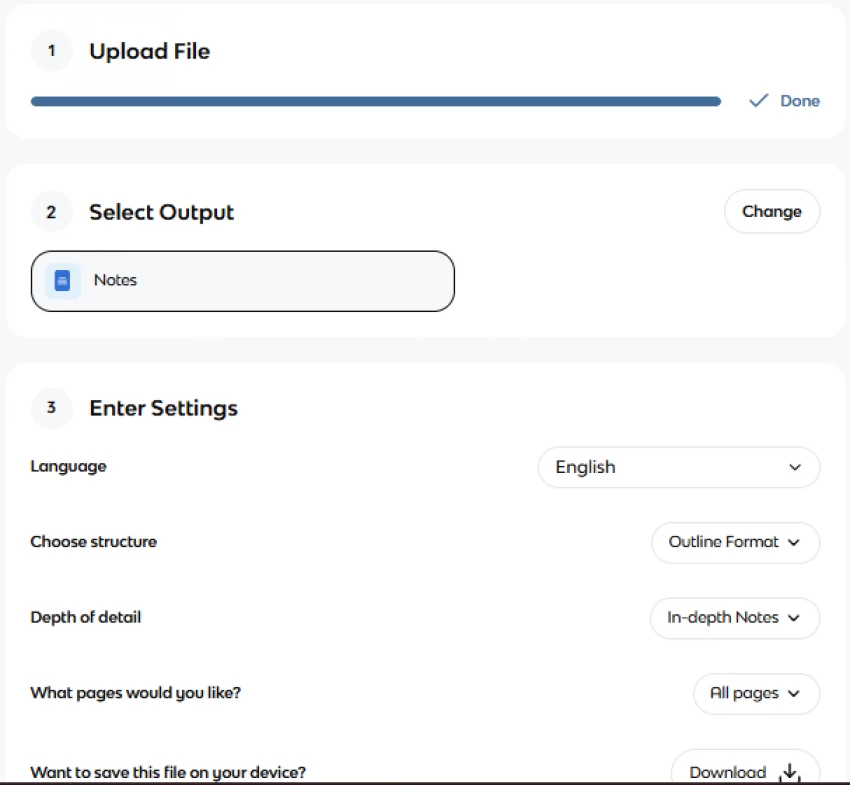
Another feature I tried was the AI video summarizer, which extracts information from video lectures and converts them into study notes and flashcards.
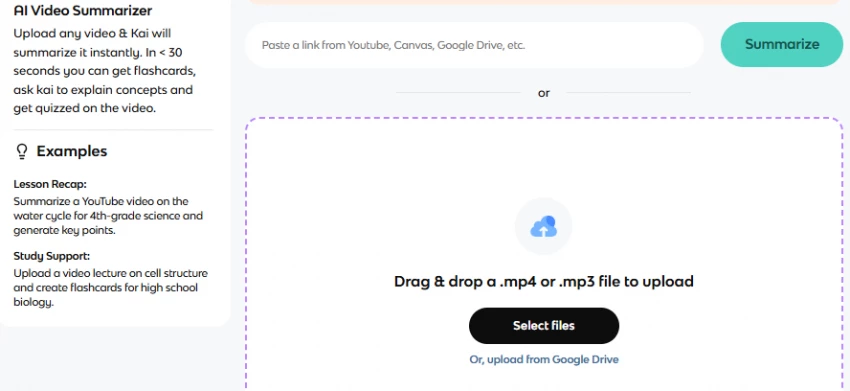
From a workflow perspective, the idea makes sense. Instead of spending 30–40 minutes manually creating flashcards, the system generates them within seconds.
However, the speed of generation raises an important question: how reliable is the output?
The first thing I noticed while using Knowt is that the platform tries to do several things at once. It is not just a flashcard generator. It includes note summarization, quiz generation, spaced repetition learning modes, and a shared study library.
That breadth is convenient, but it also makes the interface feel busy. When I opened the dashboard, there were multiple tools visible simultaneously: flashcards, quizzes, notes, and AI explanations.
From a usability perspective, the system feels optimized for students who want to convert large amounts of material quickly.
The actual flashcard generation worked reasonably well for straightforward lecture material. For example, factual content such as definitions or key terms translated into flashcards fairly accurately.
Where I noticed limitations was with more complex explanations. Some generated flashcards simplified concepts too aggressively, which could easily lead to misunderstandings if the student relied solely on those cards.
One of the biggest concerns with AI study tools is reliability.
After testing Knowt with several different types of material, lecture notes, textbook excerpts, and recorded lectures, I found that the platform performs best with structured content.
When the source material contains clear definitions, headings, or lists, the AI tends to extract useful flashcards.
However, when working with more complex paragraphs or conceptual explanations, the flashcards sometimes lose context.
This observation aligns with insights mentioned in Fritz AI’s review of Knowt, which notes that the platform can produce study prompts quickly but may still require manual verification.
In other words, the AI works best as a starting point rather than a final version of study material.
For serious exam preparation, I still found myself reviewing and editing the generated cards.
Another part of the platform that stood out to me is the public study library available through Knowt Explore.
This section allows students to browse flashcards and notes created by other users.
At first glance, this looks similar to Quizlet’s community study sets. However, the quality of content varies widely because anyone can upload materials.
While browsing through the library, I found some useful study sets that summarized course material clearly. But I also encountered sets that were incomplete or poorly organized.
This variability is not surprising for a user-generated library, but it does mean that students should treat shared content cautiously.
I also tested the mobile version of the platform to see how it compares with the web interface.
The iOS version listed on the Apple App Store currently holds a rating around 4.7 stars, which suggests many users find it helpful.
The Android version on Google Play shows a rating around 4.4 stars.
From my own testing, the mobile experience works well for reviewing flashcards or quizzes. However, creating study material on mobile felt slightly less comfortable than using the desktop interface.
Uploading documents, editing flashcards, and reviewing AI outputs were noticeably easier on a larger screen.
To balance my own experience, I also looked at feedback from review platforms.
Editorial reviews tend to be fairly positive. For example, MobileAppDaily’s Knowt review highlights the platform’s ability to convert notes into flashcards quickly and rates it around 4.5 out of 5.
However, user review platforms show more mixed opinions.
On Trustpilot, the platform currently holds a much lower rating, around 2.4 out of 5.
Several complaints mention issues such as ads within the free version, subscription confusion, or technical problems like flashcards not saving correctly.
Meanwhile, discussions in student communities such as Reddit show a more balanced perspective. Some students describe the platform as a useful productivity tool, while others point out that AI-generated questions sometimes require corrections.
Taken together, the feedback suggests that the platform works well for many users but still has room for improvement.
_1773656760.webp)
Another aspect worth mentioning is the platform’s pricing structure.
Knowt offers a free plan that allows users to create flashcards, notes, and quizzes.
Premium plans expand the AI capabilities and remove ads. Pricing varies depending on the subscription structure.
Compared with other AI learning tools, the free version is relatively generous. Students can experiment with the platform before deciding whether premium features are worth the cost.
After spending time with the platform, the biggest advantage I noticed is speed.
Uploading notes and generating flashcards happens very quickly. For large lecture documents, the time savings can be significant.
The platform also integrates several study tools into one environment, which reduces the need to switch between multiple apps.
Another positive aspect is accessibility. Because a free version exists, students can try the platform without financial commitment.
At the same time, several limitations became clear.
The most important one is accuracy. AI-generated flashcards sometimes simplify information too much, which can create misleading study prompts.
The interface can also feel crowded because multiple tools appear within the same dashboard.
Another limitation is reliance on internet connectivity. Most features require an active connection, which restricts offline studying.
Finally, user feedback suggests that the free version’s advertisements and subscription prompts can occasionally disrupt the experience.
After exploring Knowt and examining feedback from other users, I see the platform primarily as a productivity tool.
It can significantly reduce the time required to convert study material into flashcards and quizzes.
However, the AI-generated content still requires review and editing.
Students who treat the platform as a tool for organizing and accelerating study preparation will likely find it helpful.
Those expecting perfectly accurate AI-generated study materials without verification may be disappointed.
For me, the platform worked best as a starting point for building study resources rather than as a complete replacement for manual studying.
While testing Knowt, I kept thinking about how it compares with other study tools I have used over the years. Platforms like Quizlet and Anki have dominated the flashcard space for a long time, so any newer tool inevitably invites comparison.
What immediately differentiates Knowt is the heavy use of AI. Traditional flashcard platforms usually rely on manual creation. Knowt attempts to automate the process.
However, automation changes the workflow rather than replacing effort entirely.
Below is how the three platforms feel from my perspective.
| Platform | My Experience Using It | Key Difference |
| Knowt | Generates flashcards automatically from notes and PDFs. Fast but sometimes requires editing. | AI-driven content generation |
| Quizlet | Simple interface and large library of existing study sets. | Strong community study sets |
| Anki | Extremely powerful spaced repetition system but requires manual setup. | Deep customization and control |
When studying complex material, I often found myself combining tools. Knowt helped generate quick flashcards from lecture notes, while Anki still felt better for long-term memory training.
Quizlet sits somewhere in between, with a huge library of shared flashcards but less automation.
After exploring the platform and reading reviews from sources such as MobileAppDaily, Fritz AI, and Trustpilot, I noticed several patterns in how people describe Knowt.
These patterns align closely with my own experience using the platform
| Pros | Cons |
| Quickly generates flashcards from notes | AI flashcards may lack context |
| Multiple study tools in one platform | Interface can feel crowded |
| Free plan available | Ads appear in free version |
| Easy to use for beginners | Limited offline functionality |
After spending time exploring Knowt and reviewing feedback from multiple sources, I see the platform primarily as a productivity tool.
Its biggest value lies in reducing the time required to prepare study resources. Uploading lecture notes and instantly generating flashcards can make studying feel less tedious.
However, the system is not perfect. AI-generated study material can sometimes miss context or simplify concepts too aggressively.
For that reason, I would not rely on the platform blindly.
In my own workflow, Knowt worked best when treated as a starting point for study preparation rather than a finished solution.
Students who are comfortable editing flashcards and verifying AI-generated content will likely find it useful. Those expecting perfectly accurate automated studying may find the experience less reliable.
Like many AI tools, the value comes from how it is used rather than what it promises to do.
During my research I noticed that many students ask similar questions when evaluating Knowt. Below are some of the most common ones based on review discussions and user forums.
Is Knowt reliable for exam preparation?
It can be useful for organizing study materials and generating flashcards quickly. However, the AI-generated content should always be reviewed and verified before relying on it for exams.
Does Knowt replace traditional studying?
In my experience, it does not replace studying. Instead, it reduces the time spent preparing study materials.
Students still need to review concepts, verify answers, and engage with the material actively.
How does Knowt compare with Quizlet?
Quizlet focuses more on community-created flashcard sets, while Knowt emphasizes AI-generated study materials.
Both approaches have advantages depending on how students prefer to study.
Can Knowt generate flashcards from lectures or videos?
Yes. Tools such as the Knowt AI PDF summarizer and video summarizer can process lecture materials and convert them into flashcards and notes.
Be the first to post comment!
Just a few years ago, creating a professional video meant cameras, lighting, mic...
Sakshi Dhingra9 hours ago

I still remember the excitement when Janitor AI first hit the scene. As a longti...
Sakshi Dhingra3 days ago
Why content writing looks different nowA few years ago, most content writers did...
Sakshi Dhingra1 week ago

Over the past few years, the way I manage sales teams has changed dramatically....
Sakshi Dhingra1 week ago

Helping my cousin prepare for NEET last year gave me an unexpected look into how...
Sakshi Dhingra1 week ago
Artificial intelligence has fundamentally altered how YouTube content is produce...
Sakshi Dhingra2 weeks ago