If you’ve ever searched for “unblocked games” during a boring class, a slow office day, or just because you didn’t feel like downloading anything, there’s a good chance you’ve come across Hypackel Games (often called Hypackel Lite).
At first glance, it looks simple, almost too simple. A list of familiar games. No login. No install button. Just click and play.
But once you spend some time on it, Hypackel turns out to be a bit more interesting than a random game site. It’s not just about games, it’s about how those games stay available when so many similar sites disappear or get blocked.
This article breaks down what Hypackel Games actually is, how it works in practice, what people like about it, and what you should realistically be careful about.
So, What Exactly Is Hypackel Games?
Hypackel Games is a browser-based gaming hub that hosts a collection of HTML5 and WebGL games. You don’t download anything, you don’t create an account, and you don’t need a powerful system. Everything runs directly inside your browser.
What makes Hypackel different from normal gaming websites is where and how it’s hosted.
Instead of relying on traditional hosting providers, Hypackel is primarily hosted on GitHub Pages, which is normally used for developer projects and documentation.
That single choice explains a lot about why the site works the way it does.
In simple terms:
- It’s lightweight
- It’s fast
- It’s hard to permanently block
And it doesn’t behave like a commercial gaming platform
Why People Call Hypackel an “Unblocked Games” Site
The word “unblocked” gets thrown around a lot, but here’s what it usually means in real life.
Many schools, colleges, and workplaces block known gaming domains. However, GitHub Pages domains are commonly allowed, because they’re used for coding projects, portfolios, and documentation.
Since Hypackel lives there, it often slips through filters that would block traditional gaming websites.
That doesn’t mean it’s doing anything magical or illegal, it’s just using infrastructure that isn’t automatically flagged.
That’s also why Hypackel links tend to:
- Change occasionally
- Have mirrors or clones
- Reappear under slightly different URLs
It’s not instability—it’s part of the design.
What Kind of Games Does Hypackel Actually Have?
Hypackel doesn’t try to overwhelm you with thousands of low-quality games. Instead, it sticks to titles that are:
Instantly playable
Well-known
Lightweight enough to run smoothly in a browser
Here’s how the library generally breaks down.
Fast, Skill-Based Games
These are perfect for short sessions:
1v1.LOL
Ragdoll Archers
Snow Rider 3D
They load quickly and don’t require long tutorials.
Endless & Reflex Games
This is where Hypackel really shines:
Slope
Tunnel Rush
Subway Surfers
Tiny Fishing
These games work well because you can play for two minutes or twenty, it’s your choice.
Classic Games Everyone Recognizes
This is where the nostalgia kicks in:
Minecraft Classic (web version)
Tetris
2048
Angry Birds
No learning curve. You already know how they work.
Strategy & Thinking Games
For slower-paced play:
Bloons TD
Chess
These don’t rely on fast reflexes and are great when you want something calmer.
What It Feels Like to Use Hypackel
This is where Hypackel either clicks for you, or doesn’t.
First Impressions
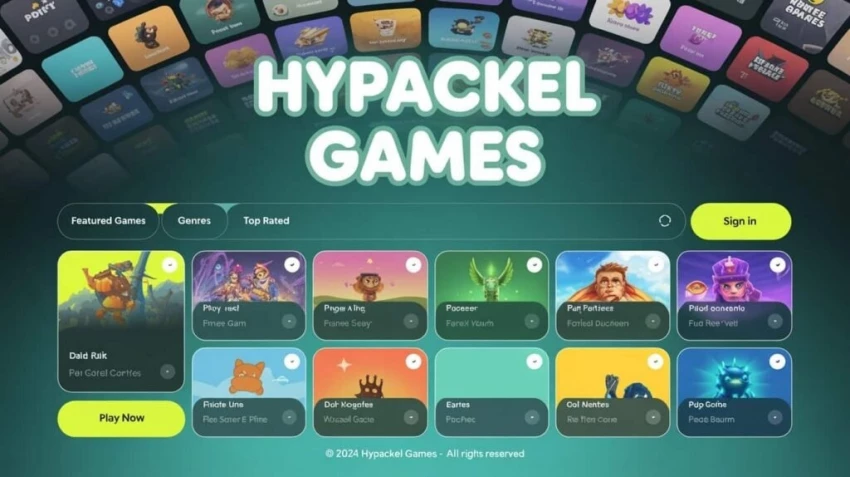
The site loads fast. There’s no heavy branding, no pop-ups asking you to sign up, and no onboarding screens. You see the games almost immediately.
It feels more like a toolbox than a platform.
Navigation
Simple lists
Clear game titles
Minimal clutter
It’s not pretty, but it’s practical.
Performance
Performance depends mostly on:
- Your browser
- Your device
- The specific game
HTML5 games usually run smoothly even on low-end systems. WebGL games are a bit more demanding but still manageable.
Ads & Distractions
This part depends heavily on which mirror you’re using.
Some versions are clean.
Others include ads or external redirects.
That inconsistency is one of Hypackel’s biggest trade-offs.
Features People Talk About
“No Installation”
This isn’t just convenience, it’s the entire appeal. No downloads means:
No admin permissions
No storage usage
No system changes
For casual gaming, that matters.
“Tab Cloaking”
Some versions let you rename the browser tab to look like something harmless.
Technically, this is just changing the page title.
Practically, it’s meant to reduce attention.
Whether you should use it is another question, but that’s why people mention it.
Open, Community-Driven Structure
Because Hypackel is public and forkable:
It doesn’t rely on one owner
It can’t easily be shut down permanently
New versions appear when old ones disappear
This is why Hypackel keeps resurfacing even after blocks.
Is Hypackel Safe to Use?
The Safer Aspects
- No mandatory sign-ups
- No downloads required
- Games run directly in the browser
- That already removes many common risks.
Realistic Risks to Watch For
Because mirrors exist, not all versions are equal.
Avoid any site that:
- Prompts downloads
- Shows fake “update” messages
- Asks for browser extensions
Those are not part of Hypackel’s core concept.
Privacy Reality
Like most casual websites, mirrors may collect:
- IP addresses
- Cookies (often for ads)
- Basic device info
It’s not privacy-first, and it doesn’t pretend to be.
Who Hypackel Is Actually Good For
Works Well If You:
- Want quick browser games
- Don’t want downloads or accounts
- Have a low-end device
- Just want to pass time casually
Not Ideal If You:
- Care deeply about privacy
- Want competitive or ranked gaming
- Need consistent performance across sessions
- Are in a strict policy-controlled environment
Hypackel isn’t trying to be Steam or an esports platform, and that’s fine.
What Hypackel Really Represents
Hypackel Games isn’t a breakthrough gaming innovation. It’s something quieter, and more revealing.
It shows that:
- People still want simple, instant games
- Heavy apps and logins aren’t always welcome
- Browser gaming hasn’t gone away, it’s just adapted
As long as there are restrictions, filters, and limited devices, platforms like Hypackel will keep existing in some form.
Not because they’re perfect, but because they’re useful.
A Personal Take: Why Hypackel Ends Up Sticking Around
After spending time on Hypackel, what stands out isn’t the games themselves, you’ve played most of them before. It’s the lack of friction. No sign-ups. No installs. No pressure to commit. You click, you play, and you leave when you’re done.
That simplicity feels almost intentional in a world where everything wants your email, your data, or your attention for longer than you planned. Hypackel doesn’t ask for much, and because of that, it doesn’t overstay its welcome.
That said, it’s not something I’d rely on regularly or recommend blindly. The experience depends heavily on which version you land on, and the presence of mirrors means you always need to stay a little alert. It works best when you treat it exactly as what it is: a temporary, casual escape, not a long-term gaming platform.
If you go in with realistic expectations, short sessions, familiar games, minimal commitment, Hypackel does its job quietly and effectively. And sometimes, that’s all people are really looking for.