Fika Jobs has raised $4 million in pre-seed funding to build a video-first hiring platform where AI agents interview candidates before employers ever meet them.
The startup wants to change the early hiring process by replacing static resumes with short AI-led video interviews. Instead of only reading a candidate’s LinkedIn profile or resume, employers can watch structured video clips that show how a candidate communicates, thinks and presents their experience.
According to TechCrunch, the round will be used to continue building the platform, grow the team and prepare for a wider launch later this year.
The Hiring Problem Fika Wants to Fix
Most hiring platforms still begin with a resume.
That creates a familiar problem for both sides. Candidates struggle to stand out, while recruiters spend hours filtering profiles that often look similar. A resume can show experience, but it does not always show communication style, motivation, confidence or personality.
Fika Jobs is trying to make the first step more human by using video. But instead of asking recruiters to manually interview everyone, the platform uses AI agents to run the first conversation.
How the Platform Works
Fika starts with a candidate’s LinkedIn profile.
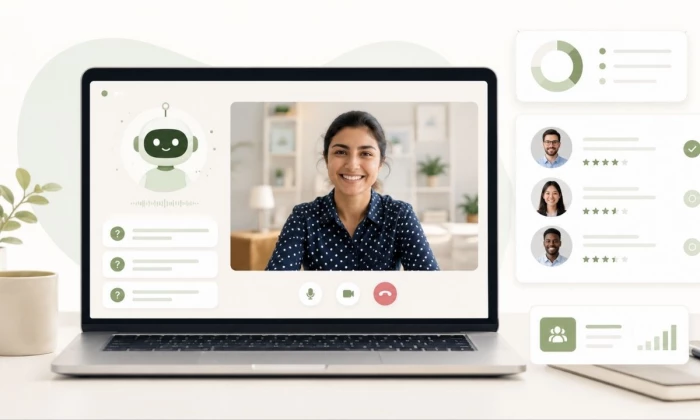
The AI reviews the candidate’s background and generates personalized interview questions. The candidate then completes a roughly 10-minute video interview with an AI agent, currently powered by Google’s Gemini models.
After that, the system turns the interview into short video clips and organizes them into a profile that employers can browse.
This changes the usual application model. Instead of applying to every role from scratch, candidates can maintain a live video profile that recruiters can discover when relevant jobs open.
Funding Snapshot
| Detail | Information |
|---|---|
| Company | Fika Jobs |
| Funding | $4 million |
| Round | Pre-seed |
| Category | AI hiring / recruitment tech |
| Main product | Video-first hiring platform |
| AI role | Interviews candidates and creates personalized questions |
| Model provider | Google Gemini models |
| Use of funds | Product development, team growth and wider launch preparation |
A Different Kind of Candidate Profile
Fika’s biggest idea is that a candidate profile should feel more alive.
Traditional hiring profiles are mostly text-based. Fika wants employers to see a candidate through video clips, AI-generated interview responses and structured background information.
This could be especially useful for roles where communication matters, including sales, customer success, marketing, operations, support, recruiting and entry-level business roles.
It may also help candidates who are better at explaining themselves than writing polished resumes.
AI Interviews Come With Questions
The idea is useful, but it also raises important concerns.
AI-led interviews need to be fair, consistent and transparent. Candidates should know how their answers are evaluated, what data is stored and whether the AI is influencing hiring decisions or only helping create profiles.
Bias is another major issue. Hiring tools can unintentionally favor certain communication styles, accents, backgrounds or personality traits if not carefully tested.
Fika will need to show that its platform helps recruiters understand candidates better without turning hiring into another black-box scoring system.
The Bigger Recruitment Shift
Fika Jobs is part of a larger movement in hiring technology.
Recruitment platforms are moving beyond keyword matching and resume filters. Newer AI tools are trying to understand skills, experience, role fit and communication in more flexible ways. Recent research on AI job-matching systems also points to the limits of keyword-based hiring and the growing role of semantic matching and explainable AI.
Fika’s video-first approach adds another layer: not just what a candidate has done, but how they explain it.
Final Take
Fika Jobs’ $4 million raise shows that AI hiring tools are moving into a new phase.
The company is not only trying to match resumes with job descriptions. It wants AI agents to conduct first-round interviews, create video profiles and help employers discover candidates faster.
That could make hiring more efficient and give candidates a better way to stand out. But the platform’s success will depend on trust, fairness and whether employers actually prefer video-first profiles over traditional resumes.
If Fika gets that balance right, it could become part of a broader shift from resume-based hiring to AI-assisted candidate discovery.