Google Makes Gemini Tasks Free, Adds AI Calls and Payments
by Nitin - 13 hours ago - 3 min read
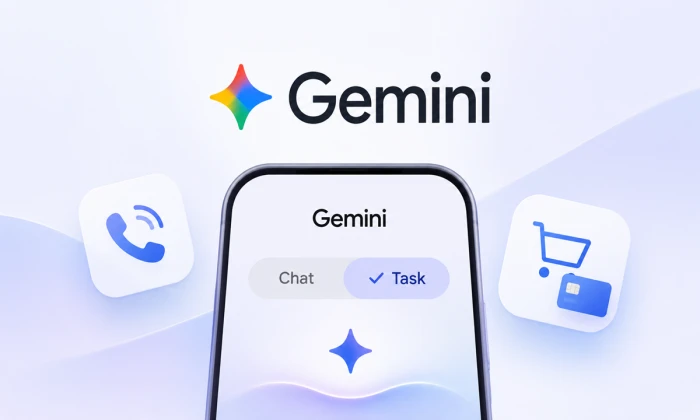
Google Opens Up Gemini Tasks, Letting the Assistant Place Calls and Pay for Things
Google removed the price tag from Tasks in Gemini on November 17, pushing its agentic mode out to what the company describes as hundreds of millions of people across six countries. Josh Woodward, the vice president who leads Labs and the Gemini app, announced the change on Google's blog under the line that Gemini can now “make the calls, pay the bills, and finish your tasks.”
Tasks lives behind a toggle on the Gemini home screen. Flipping from Chat to Task hands the assistant a job to work on in the background, and it reports back once there is something to show.
Six Countries Get It Without a Subscription
The free rollout covers the United States, Canada, Australia, India, Japan and Korea, and runs on Gemini 4 Hydrogen, a model Google introduced alongside this release. Pro and Ultra subscribers in a handful of other countries keep access through their existing plans. Eligibility is limited to adults.
Calls and Checkout Land First in the U.S.
The more aggressive capabilities are starting in the United States. Gemini can phone businesses on a user's behalf, and it identifies itself as an AI on the line. Woodward described it ringing two dealerships at once to book a service appointment and sitting through the hold music. Businesses can opt out of receiving the calls, and calling is unavailable in Indiana, Louisiana, Minnesota, Montana and Nebraska.
Purchases run through Google's Shopping Graph and check out with Google Pay over the Agent Payments Protocol. Google is working with Mastercard and Visa on tokenised cards, with American Express listed as coming, and card rewards still apply on anything the agent buys. Users set a hard spending cap, and receipts and tracking land in Google Wallet.
A Google Password Manager integration lets the agent sign in to a utility portal once permission is granted. In Google's own example, it read through billing statements and traced an unusually high charge to a heat pump running during peak pricing hours.
Requests no longer have to start in the app. Anyone with a U.S. number on an eligible carrier can text Gemini over RCS, or forward email to [email protected].
Isolated Machines and Confirmation Prompts Sit Underneath
Each task runs on Google Cloud's Agent Compute Engine inside a hardware-isolated virtual machine tied to a single account and never shared with another user. Prompt-injection filters scan search results and webpages, and Safe Browsing narrows which links the agent is allowed to open.
Gemini also pauses for confirmation before anything critical, including the moment it would click Buy. Routine actions can be set to always allow, and a user can step in mid-task, disconnect an app, or wipe the history.
Google Admits the Agent Still Misses
The company is unusually plain about the failure modes. Tasks can stall or land short of the goal, and Google says extensive testing has not removed every mistake.
The sharper constraint is the open web itself. Plenty of sites were built to block automated traffic by default, so on some of them Gemini gets most of the way through a task and then hands the screen back for the final click. Google says it is working with large websites and security providers on that gap, and argues the fix has to be open, verifiable standards rather than one-off arrangements.