Internet Pioneer Vinton Cerf Retires After Decades of Shaping the Web
by Michael Hicklen - 3 months ago - 3 min read
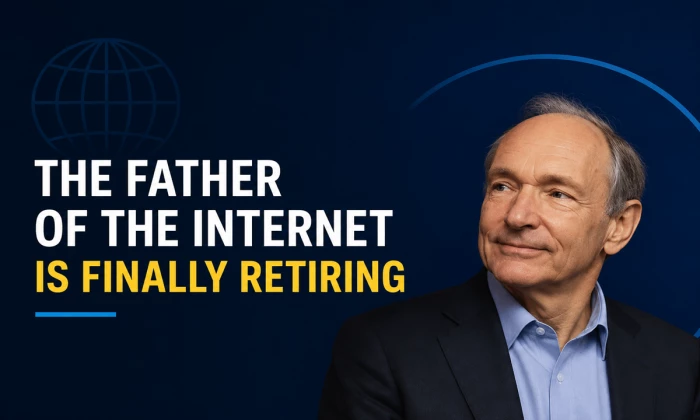
When someone says “the internet changed our lives,” most people think of smartphones, social media, cloud apps and the endless stream of content we scroll through every day. But very few people can point to the person whose work actually made all of that possible.
Now, one of those people often called the “Father of the Internet” is stepping back from the public stage after decades of shaping the digital world.
Who Is the “Father of the Internet”?
The title usually refers to Vinton G. Cerf, the American computer scientist whose work in the 1970s helped define the underlying language of the internet, a set of protocols called TCP/IP that all connected networks still use today.
Yep, the reason networks, devices and services around the world can talk to each other at all goes back to the rules he helped write. That’s not hype; it’s the foundation of modern digital life.
Cerf later worked with his longtime collaborator Robert Kahn, and together they set standards that transformed ARPANET and early research networks into the global internet we rely on now.
What’s Happening Now? A Quiet Retirement Announcement
At 83 years old, Cerf has announced he will step down from his role as Google’s Vice President and Chief Internet Evangelist, a position he has held since 2005.
The retirement was announced at the Open Frontier conference, where his contributions were publicly recognized by peers.
This moment feels symbolic, not just organizational. It marks a generation of pioneers who built the internet from concept into reality, moving definitively out of the spotlight as the digital world evolves into new forms driven by AI, cloud services and mobile platforms.
Why This Matters More Than You Think
It’s easy to think of the internet as just another tool, but its architecture underpins nearly every technology in modern life. Cerf’s TCP/IP protocols are effectively the grammar of the internet, ensuring data gets from place to place reliably.
When you:
- refresh a webpage
- stream a video
- send a message across the globe
you’re using something his work directly enabled.
We tend to celebrate innovators in consumer tech like Apple, Meta or Google but the real plumbing of the internet, the invisible systems that make everything else possible, were codified decades ago by researchers like Cerf.
What His Retirement Signals
Cerf has remained active professionally well into his 80s, guiding internet governance, outreach and discussions about openness and standards. So his stepping down isn’t just personal, it’s symbolic of the transition from an era of foundational building to one of mass automation, platform dominance and AI evolution.
In a way, his retirement feels like a closing chapter on the internet’s first era: the time when the focus was on simply connecting people and networks. The next era will be defined by how connected systems adapt, optimize and even act autonomously, a very different world from the one he helped design.
A Legacy That Will Last
Vinton Cerf’s influence isn’t going away. His work is literally woven into the fabric of the internet from technical standards to governance frameworks and global interoperability. Future technologies, whatever shape they take, will still depend on the foundations he helped set.
So while the title “Father of the Internet” might sound grand, in this case it’s earned and his retirement is worth paying attention to, not just as news, but as a moment of reflection on how far digital technology has come in a few short decades.