New Google Workspace Ad Blends AI and U.S. History
by Michael Hicklen - 3 months ago - 3 min read
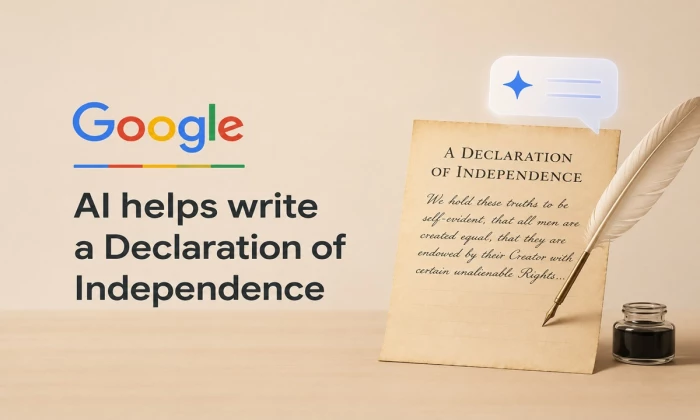
Google this week released a **July 4th commercial that imagines what might have happened if the Founding Fathers had access to Google Workspace and AI tools like Gemini while drafting the Declaration of Independence, sparking both amusement and controversy online. The tongue‑in‑cheek spot forms part of Google’s broader “America 250” campaign marking the 250th anniversary of the nation’s founding, blending historical homage with product promotion in a way that has generated mixed reactions.
The ad opens with colonial figures such as Thomas Jefferson, Benjamin Franklin and John Adams in period attire, but instead of quills and parchment alone, they’re shown interacting with Google Docs, Calendar, Google Meet and e‑signatures to coordinate edits, schedule meetings and finalize the document. The commercial’s tagline, “Group project, but make it 1776,” plays on both the challenges of collaborative work and the modern ubiquity of digital productivity tools.
AI in the Background: Humor With Tools More Than Text
While the spot foregrounds Google’s Workspace suite, AI makes subtle appearances rather than outright rewriting history. Characters use a “help me visualize” AI feature to experiment with different animals for a proposed national seal, and Google’s Gemini AI appears to take notes during meetings and provide light‑hearted chatbot advice, famously declining a request from King George III for editing access.
This restrained use of AI aligns with Google’s broader strategy of embedding generative tools into everyday workflows without overstating their role. Notably, the ad stops short of suggesting that AI would have actually improved the text of the Declaration itself, a deliberate creative choice that separates it from earlier AI‑centric marketing efforts.
Divergent Reactions Across Audiences
Response to the commercial has been sharply divided. On platforms like YouTube and Instagram, many viewers have praised the lighthearted creativity and clever product integration. Commenters appreciate the playful imagining of historical figures using today's tools and the recurring jokes, such as attendees keeping their cameras off in Google Meet.
However, other corners of social media, particularly Bluesky, have been far more critical. Some commentators described the spot as “cringey” or “tone deaf,” questioning whether it trivializes a pivotal historical moment by framing it as a collaborative AI project. Historians like Angus Johnston have argued that even in jest, it's hard to present AI as a genuinely useful tool for profound political and philosophical creativity, underscoring broader skepticism about AI’s role in meaningful decision‑making.
Marketing, History, and the AI Era
Analysts say the commercial reflects a larger trend in how major tech companies are approaching AI marketing: making generative tools visible enough to signal innovation without overshadowing human creativity. Google appears to have struck a strategic balance by keeping the AI role supportive and playful, rather than central to crafting the core message of independence.
In an era where AI is increasingly embedded in productivity suites and creative tools, the ad underscores how brands are testing narratives that fuse cultural moments with technology, even if the reception is unpredictable. Google’s July 4th spot thus serves as both a product showcase and a litmus test for how audiences feel about AI’s place in storytelling, collaboration and iconic national traditions.