OpenAI AI Speaker: First Hardware Device With Moving Design
by Harpreet Singh - 3 months ago - 6 min read
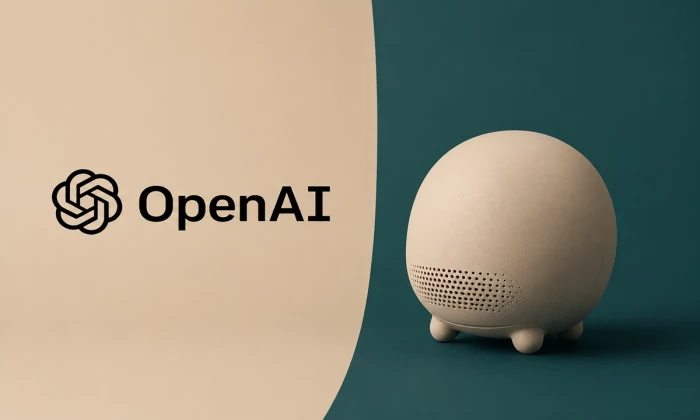
OpenAI’s first consumer device may not be a phone, wearable pin or pair of smart glasses. According to reporting cited by Reuters and Bloomberg, the company is developing a portable, screenless speaker designed to behave more like an AI companion than a traditional voice assistant.
The device is reportedly being created with input from Jony Ive’s design firm LoveFrom and members of io, the AI hardware company OpenAI acquired in a deal valued at approximately $6.5 billion in 2025. OpenAI previously confirmed that the io team had joined the company, although it has not publicly confirmed the speaker’s final design, name or complete feature set.
A Speaker Designed to Feel Present in the Room
The reported device would be portable, rechargeable and built without a conventional display. It is expected to include cameras and environmental sensors that could help the AI understand nearby people, objects and activities.
Its most unusual feature may be mechanical movement. The speaker could reportedly turn or reposition parts of its body while interacting with users, giving it a more animated presence than devices such as the Amazon Echo or Apple HomePod.
That movement may sound cosmetic, but it could become an important part of the interface. A device that turns toward the person speaking, visually acknowledges a command or changes its position during a conversation could communicate attention without needing a screen.
OpenAI may be trying to replace visual menus with physical behaviour, voice and environmental awareness.
The reported functions remain relatively familiar. The speaker may answer questions, play media, control connected home devices, send messages and provide access to ChatGPT. The difference would be its ability to use surrounding context instead of relying entirely on direct voice commands.
The Real Product May Be Ambient ChatGPT
Calling the device a smart speaker risks understating OpenAI’s broader ambition.
Amazon, Apple and Google built voice assistants around commands. Users ask for a timer, weather update or song, and the assistant completes that specific request. OpenAI appears to be exploring a device that remains aware of what is happening around it and maintains more natural, continuous conversations.
That creates a very different product category.
The hardware itself may not be OpenAI’s main product. The product is persistent access to an AI that can see, hear, remember context and respond without requiring users to open an app.
OpenAI recently introduced GPT-Live voice models capable of listening and speaking simultaneously. That technology could support faster conversations in which users interrupt, change direction or speak more naturally instead of waiting for a voice assistant to finish each response.
Bringing that experience into a dedicated device would allow OpenAI to control the microphones, cameras, sensors and physical interactions instead of depending entirely on smartphones made by Apple or Google.
OpenAI Is Competing for the Interface, Not Just the Speaker Market
The biggest strategic implication is that OpenAI is trying to move ChatGPT from an application into a permanent computing interface.
Today, most people access ChatGPT through a phone, computer or browser controlled by another technology company. A dedicated device would give OpenAI a direct relationship with users and a new source of revenue beyond software subscriptions and API access.
The reported product would still compete with smart speakers, but its larger competitors may be the smartphone and the operating systems that organise people’s digital lives.
| Product | Main interaction | Environmental awareness | Screen |
|---|---|---|---|
| Amazon Echo | Voice commands | Limited | Usually no |
| Apple HomePod | Voice and Apple ecosystem | Limited | No |
| Rabbit R1 | Voice and task requests | Camera-assisted | Small |
| Humane AI Pin | Voice, camera and projection | Yes | No traditional display |
| Reported OpenAI device | Continuous voice, cameras, sensors and movement | Expected to be central | No |
OpenAI’s challenge is therefore not simply to build a better speaker. It must prove that a separate AI device can do something meaningfully easier, faster or more natural than opening ChatGPT on a phone.
Physical Movement Could Be Useful or Merely a Gimmick
The moving design is likely to attract attention, but its value will depend on how movement improves everyday interactions.
Useful movement could help the device identify who is speaking, aim its cameras and microphones, show that it is listening or follow activity within a room. Poorly implemented movement could make the product feel distracting, fragile or unnecessarily expensive.
This distinction will matter because previous AI hardware launches demonstrated that a novel form factor is not enough. Consumers will tolerate fewer apps and no screen only when the replacement experience is noticeably more convenient.
A moving speaker will create curiosity. A reliable assistant that understands the room will determine whether people continue using it after the first week.
Privacy May Become Its Hardest Selling Point
A screenless AI device equipped with cameras, microphones and contextual memory creates immediate privacy questions.
Users will need to know when the device is recording, what information is processed locally, what is sent to OpenAI’s servers and whether conversations or visual data are stored. Physical indicators, camera shutters, microphone switches and clear data controls may prove just as important as the AI model itself.
A conventional smart speaker waits for a wake word. A contextual companion may need to observe more continuously to be useful, creating tension between convenience and surveillance.
OpenAI has not yet publicly detailed the device’s privacy architecture. Until it does, claims about always-on awareness, local processing or personal memory should be treated as possibilities rather than confirmed features.
Price and Launch Timing Remain Uncertain
Earlier reporting suggested that OpenAI’s smart speaker could cost between $200 and $300 and may not ship before February 2027. The current Bloomberg report similarly indicates that the product remains under development, meaning its appearance, features, launch schedule and pricing could still change.
The project also arrives during a legal dispute with Apple. Apple has accused OpenAI and former Apple employees involved in its hardware operation of improperly using trade secrets. OpenAI has denied wrongdoing, and the outcome of the case remains unresolved.
The dispute does not prove that the product will be delayed, but it introduces another uncertainty around OpenAI’s hardware expansion.
Our Take
OpenAI’s reported speaker is interesting not because it can play music, answer questions or control lights. Existing products already do those things.
Its importance lies in OpenAI’s attempt to build an AI-native computer that does not depend on apps, menus or constant screen interaction. Cameras, natural voice conversations and mechanical movement could make the device feel more aware than a traditional speaker, but those same features also create difficult questions involving privacy, trust and usefulness.
If smartphones made computing personal, OpenAI appears to be betting that contextual AI can make computing present.
That is a compelling vision, but OpenAI still has to demonstrate that people need a separate device to experience it. Until the company officially introduces the product, its moving design, features and launch plans should be described as reported details rather than confirmed specifications.