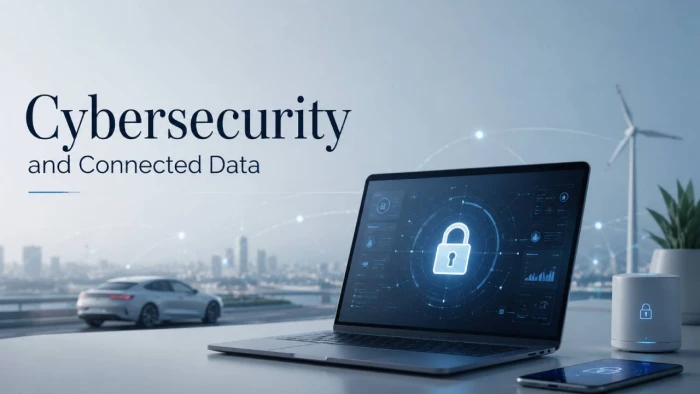
Connected data now sits quietly behind everyday life. It powers smartphones, smart homes, cars, workplaces, hospitals, payment systems, delivery networks, fitness devices, cloud platforms, and AI tools. Every tap, trip, login, sensor reading, location ping, software update, and device interaction can become part of a larger digital trail.
That trail is useful. It helps companies detect fraud, improve safety, personalize services, automate decisions, manage fleets, monitor health, secure buildings, and understand how products perform in the real world. But it also creates a new problem: the more connected systems become, the harder it is to know where data goes, who controls it, whether it has changed, and whether it can be trusted.
Cybersecurity is no longer just about protecting a server from hackers. It is about protecting the full path of connected data from the moment it is created to the moment it is stored, shared, exported, analyzed, or used in a serious decision.
Connected data no longer comes from one obvious source. A person may generate data through a phone, smartwatch, banking app, delivery app, smart speaker, car infotainment system, workplace login, home camera, fitness tracker, and cloud account in the same day.
Businesses face the same challenge at a larger scale. Retailers collect payment, loyalty, customer-service, app, and in-store behavior data. Hospitals depend on electronic health records, patient portals, diagnostic systems, insurance platforms, and connected medical devices. Logistics companies use GPS trackers, warehouse scanners, fleet dashboards, driver apps, route tools, and delivery updates. Offices rely on identity platforms, collaboration tools, badge systems, cloud storage, and employee devices.
The result is a digital environment where data rarely stays in one place. It moves between devices, apps, vendors, dashboards, databases, and cloud systems. That movement makes technology more efficient, but it also creates more places where data can be lost, misread, copied, exposed, or manipulated.
Cybersecurity used to be framed mostly as defense: stop malware, block intrusions, prevent account takeovers, and secure networks. Those tasks still matter, but connected data has expanded the meaning of security.
A connected record is useful only if it can be trusted. A GPS log, payment event, access record, medical alert, vehicle report, workplace file, or sensor reading may look precise, but precision does not automatically mean reliability. The record may be incomplete, badly exported, changed by a software update, stripped of context, copied into an insecure folder, or stored by a vendor with weak access controls.
This is where cybersecurity and digital trust become the same conversation. Organizations need to prove that important data came from the right source, was handled by the right people, was protected after collection, and was not silently changed along the way.
| Connected Data Source | What It May Capture | Why Security Matters |
| Smartphones and apps | Location, usage patterns, messages, payments, device IDs | App permissions and data sharing can expose personal behavior |
| Smart home devices | Voice commands, camera feeds, routines, device activity | Weak accounts can expose private spaces |
| Workplace platforms | Logins, files, messages, productivity signals, access records | Poor controls can create privacy and insider-risk issues |
| Healthcare systems | Patient records, diagnostics, wearable data, treatment history | Breaches can expose highly sensitive information |
| Financial platforms | Transactions, identity data, fraud signals, account behavior | Account takeover and data abuse can cause direct harm |
| Logistics systems | GPS, delivery updates, driver activity, asset movement | Vendor outages or breaches can disrupt operations |
| Connected cars | Speed, braking, GPS, software state, infotainment activity | Data integrity and privacy can affect claims, safety, and trust |
The pattern is clear. Connected systems make data more useful, but they also make data more vulnerable.
Every connected device adds another possible weak point. A smart camera, router, fitness tracker, phone, office sensor, medical device, vehicle module, payment terminal, or industrial controller may look small, but it can still connect to a larger platform.
Attackers often do not need to break the strongest system. They look for the easiest opening. That may be an old device with outdated firmware, a vendor dashboard without multi-factor authentication, a reused password, a poorly secured API, an exposed cloud bucket, or an employee using an unapproved tool.
This is why connected environments are difficult to secure. A company may protect its main network but overlook a third-party portal. A household may secure its Wi-Fi but forget about an old camera. A logistics firm may protect its dispatch system but depend on apps and trackers managed by outside vendors.
The biggest risk is not always the device itself. It is the chain behind the device.

Privacy is often discussed only after data leaks, but connected data can create privacy risk even before a breach happens. The problem begins when too much data is collected, stored for too long, shared too widely, or used in ways people do not clearly understand.
Connected data can describe personal behavior in detail. It can reveal where someone goes, when they leave home, what they buy, how they drive, which apps they use, what devices they own, when they sleep, and how they work. In healthcare, it may reveal medical patterns. In finance, it may reveal spending behavior. In workplaces, it may reveal employee habits. In smart homes, it may reveal private routines.
The best privacy strategy is not simply a long policy page. It is better design. Companies should collect less data, ask for fewer unnecessary permissions, give users clearer controls, restrict internal access, and delete old records when they are no longer needed.
Data minimization is now a cybersecurity principle. The less unnecessary data an organization stores, the less damage a breach can cause.
Connected cars are one of the clearest examples of how everyday products are becoming data systems. A modern car can record speed, braking, steering input, throttle position, seatbelt status, airbag timing, GPS movement, infotainment activity, driver-assistance alerts, software version, diagnostic data, and connected-service events.
That data can improve safety, support maintenance, help insurers review claims, assist fleet operators, and explain what happened during a crash. But it also raises difficult questions. Who owns the data? Was it stored inside the vehicle or in the cloud? Can it be shared with insurers, repair shops, automakers, or third-party platforms? Was the driver clearly informed? Can the file be verified later?
The technical detail is becoming more important. NHTSA’s updated Event Data Recorder rule expands the pre-crash recording window from 5 seconds at 2 Hz to 20 seconds at 10 Hz. That means future crash-related records can capture a longer and more detailed view of what happened before impact. A few seconds of extra data can change how braking, acceleration, steering, and system behavior are understood.
Connected cars are not separate from the broader data debate. They are part of it. The same questions now apply to smart home devices, medical systems, workplace tools, logistics platforms, banking apps, and industrial sensors.
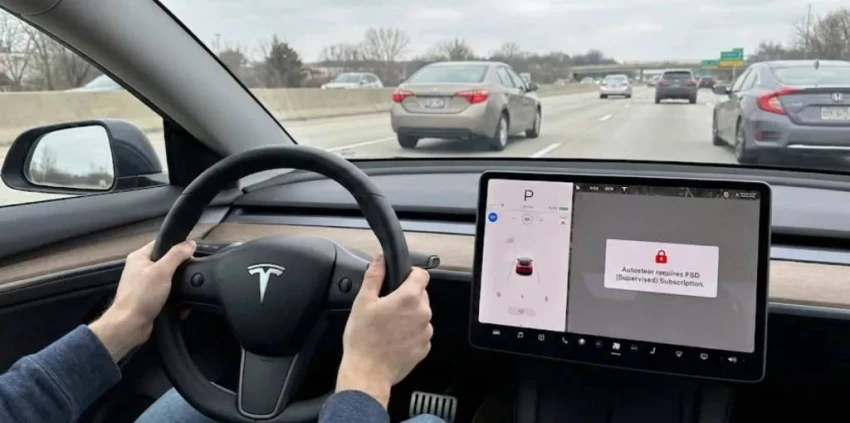
The Tesla Autopilot litigation in Florida showed how quickly connected data can become central when something goes wrong. In 2026, a federal judge refused to overturn a $243 million verdict tied to a fatal 2019 crash involving an Autopilot-equipped vehicle. The case drew attention not only because of the size of the verdict, but because crash-related data became part of the dispute.
The broader lesson is not limited to Tesla. When connected systems create important records, organizations must be able to explain where the data came from, how it was stored, who accessed it, whether it changed, and why it can be trusted.
A missing record can become as important as the record itself. If one side says data is unavailable and another side later recovers it, the focus can shift from the original event to the handling of the data. That is why strong data preservation, access logging, secure storage, and verified exports now matter across many connected-data environments.
Connected data often becomes most valuable after something has already gone wrong. A cyberattack, workplace dispute, product failure, insurance claim, delivery breakdown, medical error, financial fraud alert, or crash may all require people to reconstruct events from digital records.
This is where poor data handling creates problems. A screenshot from a dashboard may help explain a situation, but it is not the same as a verified source export. A device alert may be useful, but only if the timestamp, account, software version, and source system are clear. A cloud report may look official, but it still needs context about how it was generated and whether it is compete.
In serious crash-related matters, someone searching for a Knoxville Truck Accident Attorney may need guidance from professionals who understand how digital records, insurer data, connected-car logs, preservation timelines, and secure handling can affect a claim. The broader point applies beyond car accidents too: connected data becomes stronger when it is preserved early, protected properly, and reviewed with technical discipline.
This is the practical bridge between technology and real-world consequences. Connected records do not stay theoretical when they are used to explain damage, responsibility, safety, fraud, or failure.
Many connected-data systems depend on third-party vendors. That is true across healthcare, finance, retail, transportation, logistics, education, manufacturing, and professional services.
A business may collect data through its own app but store it with a cloud provider. A hospital may use a third-party patient portal. A fleet operator may depend on a telematics vendor. A retailer may rely on a payment processor. A law firm may use outside case-management or file-sharing tools. A manufacturer may use cloud dashboards for equipment monitoring.
If the vendor is breached, misconfigured, or unavailable, the organization depending on that vendor still suffers. Customer data may be exposed. Operations may stop. Important records may become inaccessible. Trust may fall even if the original organization did not directly cause the failure.
Vendor risk management should not be treated like paperwork. It should include security reviews, access controls, breach-notification rules, data-retention limits, audit rights, and clear exit plans.
Connected systems are not static. Phones update. Cars update. medical devices update. Smart speakers update. Workplace platforms update. Cloud dashboards change in the background. AI tools add new features. Security tools modify logs and detection rules.
That creates a difficult technical problem. A system may not behave the same way after an update. A setting may change. A log format may change. A feature may disappear. A device may overwrite older data. A platform may change how long records are retained.
For any important connected-data review, software state should be documented early. That includes device model, operating system, app version, firmware, account status, configuration settings, update history, and any changes made after the incident.
Without that context, data can be misunderstood. A record may be accurate but incomplete. A system may be functioning correctly now but may have behaved differently at the time of the event. A dashboard may show current settings but not the settings that existed when the issue occurred.
Chain of custody is not only for courtrooms. Businesses also need to understand how important records move through their systems.
A customer complaint, product investigation, insurance claim, audit, internal review, fraud alert, cybersecurity incident, or safety issue may all depend on connected data. If the organization cannot explain how the data was created, stored, accessed, exported, and protected, that data becomes weaker.
A strong data chain of custody includes the source system, timestamp, export method, account used, people with access, storage location, file version, and any changes made after collection. Original records should be separated from working copies. Sensitive files should not sit in ordinary email threads or shared folders without logs.
This becomes even more important when AI tools are added to workflows. AI can summarize, classify, or analyze connected data, but it should not replace the original record. The source material still needs to be preserved.
Strong connected-data security starts with visibility. Organizations cannot protect data they have not mapped. They need to know what devices collect information, which apps receive it, which vendors process it, where it is stored, who can access it, how long it is retained, and how it is deleted.
Once that map exists, the controls become clearer. Multi-factor authentication reduces account takeover risk. Encryption protects sensitive files and transfers. Access logs show who opened or exported information. Data minimization limits exposure. Patch management reduces known vulnerabilities. Retention rules prevent old data from becoming a liability.
| Security Control | Why It Matters |
| Multi-factor authentication | Reduces account takeover risk |
| Encryption | Protects sensitive data during storage and transfer |
| Access logs | Shows who opened, changed, or exported records |
| Vendor reviews | Reduces third-party exposure |
| Data minimization | Limits breach damage |
| Patch management | Keeps devices and platforms safer |
| Retention limits | Prevents unnecessary long-term storage |
| Verified exports | Helps prove records are complete and unchanged |
The strongest security programs are not only technical. They are operational. They create habits that make data easier to protect and easier to trust.
Connected data can improve safety, convenience, personalization, automation, fraud detection, customer service, healthcare, mobility, and business operations. But it also creates risk when data becomes fragmented, over-collected, or poorly secured.
| Risk | What Can Go Wrong | Result |
| Over-collection | Apps or devices gather more data than needed | Privacy exposure increases |
| Weak access control | Too many people can view or export records | Insider misuse or accidental leaks become more likely |
| Vendor breach | A third-party platform is compromised | Customer trust and operations suffer |
| Poor retention rules | Old data remains stored without purpose | Breach impact becomes larger |
| Bad exports | Data is copied without source context | Records become harder to verify |
| Software changes | Updates alter settings, logs, or system behavior | Data interpretation becomes weaker |
| Shadow IT | Teams use unapproved apps or tools | Security visibility drops |
| No audit trail | Access and edits are not tracked | Accountability becomes difficult |
The lesson is simple. Connected data should be treated as an active security asset, not a background technical detail.
Connected data is now part of how modern systems work. It powers phones, smart homes, workplaces, hospitals, financial platforms, logistics networks, industrial tools, AI workflows, and connected cars. It can make services faster, safer, more personalized, and easier to investigate when something goes wrong.
But connected data also creates a new trust challenge. The more information moves between devices, cloud systems, vendors, apps, and users, the more important cybersecurity becomes.
The future will not belong to organizations that collect the most data. It will belong to the ones that can prove their data is relevant, secure, limited, accurate, and properly handled.
Cybersecurity, privacy, and digital trust are now part of the same conversation. Connected systems can make life easier, but only when the data behind them is protected with the same seriousness as the products and services built on top of it.
Share your thoughts about this article.
Be the first to post a comment!
Every modern enterprise now operates two workforces. The first is the employees,...
Deepak Mehra3 weeks ago

Three months ago, I closed Cursor mid-sentence, downloaded a 180MB installer, an...
Sakshi Dhingra4 weeks ago

You've probably already read five articles trying to figure this out. I have too...
Sakshi Dhingra1 month ago
Locker manufacturing has come a long way from simple metal compartments used in...
Parveen Verma1 month ago
In today’s competitive digital landscape, having an online presence is no longer...
Parveen Verma1 month ago
Why this comparison is differentMost comparisons between Semrush and Ahrefs thro...
Suraj Malik2 months ago