Picture your online operations like a busy airport. Every request is a passenger, every destination is a website or platform, and every security system is watching for patterns that feel “off.” In that world, proxy providers act like reliable transit routes – helping businesses keep traffic organized, consistent, and easier to manage across multiple workflows.
If you’re doing anything at scale – data collection, market research, ad verification, brand monitoring, QA testing, or managing multiple operational sessions – your network layer stops being background noise and becomes part of the strategy. A strong proxy provider isn’t just about getting an IP address; it’s about predictability, control, and the ability to run clean processes without constant interruptions.
A proxy is essentially an intermediary that routes your request through another address before it reaches the target. That sounds simple, but the implications are huge: you can control geography, spread requests across multiple endpoints, and reduce “single-source” bottlenecks that cause instability when you’re doing repetitive tasks.
A proxy provider is the company that supplies this infrastructure: the IP pool, authentication access, routing, and the management layer that helps you use proxies in real workflows. Think of it like choosing a logistics partner. Two companies can both “deliver boxes,” but one delivers on time with tracking and support, while the other leaves you chasing lost shipments. The difference shows up fast once you scale.
Most providers offer multiple proxy categories. The best choice depends on your task, your risk tolerance, and how “natural” you need the traffic to look. Here are the common types and the roles they typically play:
When you’re evaluating a provider, don’t just ask “Do they offer these types?” Ask “How transparent are they about how these proxies behave in real use?” The label on the box matters less than what’s inside the box.
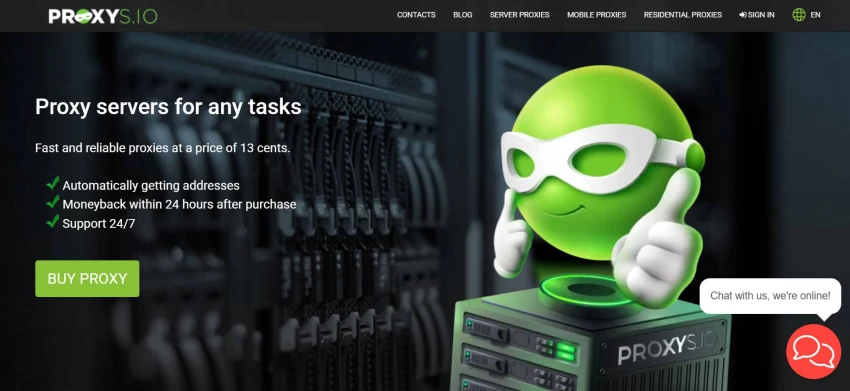
A proxy service can be technically solid and still feel frustrating if the user experience is clunky. The dashboard is where the difference between “possible” and “pleasant” becomes obvious. A good interface should help you do three things quickly: provision access, manage locations, and monitor usage.
Here’s what strong tooling typically includes: simple credential management (user/pass or whitelisted IP), clean access strings, clear labeling of proxy types, and straightforward location targeting. Bonus points if you can rotate endpoints in a controlled way rather than feeling like you’re spinning a roulette wheel.
Many teams also care about operational convenience: can you split traffic by project? Can you hand access to a teammate without sharing your entire account? Can you track consumption and errors without building your own reporting system? These aren’t “nice to haves” when you’re scaling – they’re the difference between calm operations and constant firefighting.
Speed is sexy, but reliability pays the bills. The best proxy setup is the one that runs quietly in the background while your team focuses on outcomes. When reliability is poor, you feel it everywhere: retries increase, tools slow down, sessions break, and your workflow becomes a game of whack-a-mole.
If you want a practical way to evaluate performance, focus on these signals:
| Evaluation Factor | What It Means in Practice | Why It Matters |
| Uptime consistency | Proxies stay available without random drops | Prevents broken tasks and wasted runs |
| Latency stability | Speed stays predictable, not just “fast once” | Makes automation and tooling behave consistently |
| Pool freshness | IPs aren’t overused or burned out | Helps reduce unnecessary verification loops |
| Location accuracy | Geo targeting matches what you selected | Critical for local testing and research |
| Support response | Help arrives when issues happen | Saves time when stakes are high |
A provider that performs well here isn’t just “good” – it becomes dependable infrastructure, like electricity in an office. You don’t think about it until it fails, so you want it to not fail.
Proxy pricing can feel like a maze: per IP, per GB, per port, concurrency limits, rotating access, sticky sessions – the vocabulary alone can be a speed bump. The key is to map pricing to your use case.
If your tasks are bandwidth-heavy (large page loads, media, or long sessions), usage-based billing can become the real driver. If your tasks are request-heavy but lightweight (many small calls), you’ll care more about concurrency, rotation control, and how quickly you can switch endpoints without breaking your tooling.
A smart approach is to start by estimating your monthly load in plain terms: how many projects, how many tools, how many hours a day, how many concurrent sessions. Then choose a plan that gives you breathing room. Too tight and you’ll constantly hit ceilings; too loose and you’ll overpay. The “perfect plan” is rarely perfect – so pick the one that stays stable as you grow.
Proxies aren’t a single-purpose tool. They show up across teams because they solve a shared problem: managing traffic at scale without turning every workflow into a fragile experiment.
Common practical uses include:
And yes – if your workflow involves lots of repetitive actions, proxies are like shock absorbers on a car. You can drive without them, but every bump hits harder, and eventually something rattles loose.
With so many proxy providers on the market, the real question isn’t “Is this a proxy service?” – it’s “Is this the kind of service that matches how I work?” The best providers tend to win on the unglamorous details: control, consistency, and an experience that doesn’t punish you for scaling.
proxys.io is positioned as a proxy provider option for teams who want a straightforward way to source proxy access for business workflows, with the goal of keeping operations stable as demand grows. The smartest next step is to compare providers using your own checklist – proxy types you need, target geos, expected load, and how much operational control your team requires.
In the end, picking a proxy provider is like choosing a long-term teammate. You’re not just buying access – you’re buying fewer interruptions, smoother execution, and the confidence that your workflow won’t collapse under pressure.
Be the first to post comment!

Few software websites have survived as many internet eras as Softonic. Launched...
Suraj Malik1 week ago
PDF files are everywhere, from business contracts and academic papers to invoice...
Suraj Malik1 week ago

The Xender APK has remained relevant for one simple reason: it solves a very rea...
Sakshi Dhingra1 week ago

In January 2026, something happened in AI that didn’t feel like a product launch...
Suraj Malik2 weeks ago

1. Meaning of Fidzholikohixy :Fidzholikohixy refers to a conceptual product...
Cheshta Upmanyu2 weeks ago

1) What Chub Venus AI is?➔ Platform purpose and core concept-Chub (and “Ven...
Cheshta Upmanyu2 weeks ago