Amazon has begun offering new OpenAI products directly through its cloud platform, marking a significant shift in how enterprise AI tools are distributed and deployed. The move signals a deeper partnership between Amazon Web Services and OpenAI, and reflects broader changes in the competitive landscape of cloud computing and artificial intelligence.
Amazon confirmed that its AWS Bedrock platform now includes OpenAI’s latest AI models, alongside its coding-focused system Codex and a new agent-building capability.
Bedrock is Amazon’s managed service that allows businesses to build AI applications while choosing between multiple foundation models. With the addition of OpenAI’s models, AWS customers can now access these capabilities without relying on Microsoft Azure, which previously had exclusive distribution rights.
The company also introduced a new feature called Bedrock Managed Agents. This system is designed to help developers build and control AI agents powered by OpenAI’s reasoning models, with added layers for security and operational control.
This launch follows a major restructuring of OpenAI’s relationship with Microsoft. The earlier agreement had effectively limited access to OpenAI models through Azure. That exclusivity has now been relaxed, allowing OpenAI to distribute its technology across multiple cloud providers, including AWS.
The change opens the door for Amazon to integrate OpenAI tools directly into its ecosystem, something that was previously restricted. It also signals a broader strategy by OpenAI to expand its reach beyond a single cloud partner.
For developers and businesses, the integration simplifies how AI systems are built and deployed. Instead of managing separate APIs or infrastructure, teams can now access OpenAI models within AWS alongside other tools and services.
This includes:
Industry analysts note that this approach aligns with growing demand for multi-model ecosystems, where organizations can mix and match AI providers rather than committing to a single vendor.
The partnership fits into Amazon’s larger push to compete in enterprise AI. AWS has been expanding its generative AI offerings, positioning Bedrock as a central platform for building applications across different models and use cases.
Amazon has also invested heavily in OpenAI, with reports indicating multi-billion-dollar commitments tied to infrastructure and long-term collaboration.
At the same time, AWS continues to support other AI providers, including Anthropic and Meta, reinforcing its strategy of offering a wide model marketplace rather than a single proprietary system.
The addition of OpenAI models to AWS intensifies competition among major cloud providers:
Microsoft retains deep integration with OpenAI through Azure
Amazon now offers OpenAI alongside alternative models
Google Cloud is also positioning itself as a multi-model AI platform
This shift moves the industry away from exclusivity and toward distribution, where access and integration matter more than ownership of models.
For OpenAI, the strategy increases distribution and revenue potential. For AWS, it strengthens its position as a neutral infrastructure layer for AI development.
This development marks a turning point in how AI tools are delivered at scale. Instead of being tied to a single cloud provider, advanced models are becoming more accessible across platforms.
The result is a more flexible ecosystem where:
In practical terms, it lowers the barrier to building AI-driven products, especially for companies already embedded in AWS.
The AWS rollout of OpenAI products is not just a product update. It reflects a structural shift in the AI industry, where partnerships are becoming more fluid and competitive dynamics are evolving rapidly.
As AI adoption accelerates across industries, the ability to access, combine, and deploy models efficiently is becoming the defining factor. Amazon’s move positions AWS as a central hub in that transition, while OpenAI expands its presence beyond a single ecosystem.
The next phase of the AI race is no longer just about who builds the best models. It is about who makes them easiest to use at scale.
Share your thoughts about this article.
Be the first to post a comment!

$19.99Pro monthly price (May 2025 hike)$179.99Pro annual (saves 25%)30 daysOur h...
Suraj Malik3 months ago

Meta’s artificial intelligence business may be accelerating, but the company is...
Suraj Malik3 months ago
QUICK ANSWER - Why AI Chatbots Break After 10 MessagesMost AI chatbots brea...
Suraj Malik3 months ago

POLYBUZZ VS JANITOR AI: THE QUICK ANSWERPolyBuzz AI is the better choice for cas...
Suraj Malik3 months ago

Abhyas AI vs. Gauth AI: which is better?Abhyas AI is better for Indian students...
Suraj Malik3 months ago
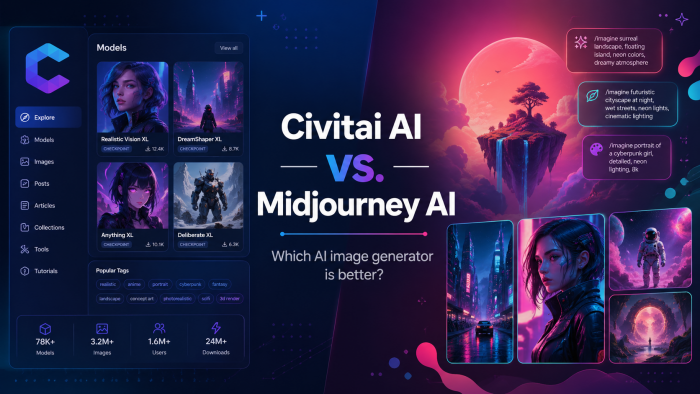
Civitai vs. Midjourney: which is better?Midjourney is better for beginners and f...
Suraj Malik4 months ago