
Meta’s artificial intelligence business may be accelerating, but the company is still pouring enormous amounts of money into augmented reality and virtual reality projects that continue to generate massive losses.
The company’s Reality Labs division, which oversees Meta’s AR and VR hardware and metaverse initiatives, remains one of the most expensive bets in the technology industry. According to recent reporting, Meta expects overall company spending in 2026 to reach between $125 billion and $145 billion, significantly above earlier projections. A major portion of that investment continues to flow into AI infrastructure and Reality Labs.
Reality Labs has become synonymous with Meta CEO Mark Zuckerberg’s long-term vision of owning the next computing platform beyond smartphones. But years after the company rebranded from Facebook to Meta, the business is still struggling to turn VR and AR investments into a profitable operation.
Meta’s AR and VR division has been losing billions of dollars every quarter for several years.
Earlier in 2026, reports showed Reality Labs lost roughly $19 billion during the previous year alone, continuing a long streak of heavy financial losses tied to headset development, metaverse software, AI wearables, and experimental computing platforms.
The division includes products and platforms such as:
Despite the losses, Meta has shown little sign of slowing down.
The company continues expanding infrastructure, custom silicon development, and AI-powered wearable technologies because Zuckerberg still believes future computing will eventually shift away from smartphones toward immersive hardware ecosystems.
One of the biggest shifts inside Meta over the last two years has been the company’s move away from heavily promoting the term “metaverse.”
Instead, Meta is increasingly framing its hardware ambitions around artificial intelligence.
That transition is visible across the company’s newer products. The Ray-Ban Meta smart glasses, for example, are now positioned more as AI assistants with cameras and voice interaction rather than purely augmented reality devices.
Meta has also been aggressively expanding its AI infrastructure footprint through new internal initiatives focused on data centers, AI chips, and energy capacity. Zuckerberg recently said the company plans to build “tens of gigawatts” of AI infrastructure capacity over time.
Even Horizon Worlds, once promoted as a centerpiece of the metaverse strategy, has undergone major changes. Reports earlier this year indicated Meta was shifting more attention toward mobile experiences while reducing emphasis on VR-only usage.
The broader technology market has also cooled on the metaverse concept. Industry analysts and commentators increasingly view AI as the dominant technology trend replacing the earlier metaverse hype cycle.
While VR headsets remain expensive and relatively niche, Meta’s AI smart glasses business has shown stronger consumer traction.
More than seven million Meta smart glasses have reportedly been sold, according to legal filings connected to recent privacy lawsuits involving the product line.
The glasses are important strategically because they give Meta a chance to build hardware that consumers may wear daily, something the company never fully achieved with VR headsets.
The company appears increasingly focused on combining:
That direction could eventually become more commercially viable than the broader metaverse vision that originally drove Meta’s rebranding effort.
Wall Street remains split on whether Meta’s AR and VR investments will eventually pay off.
Supporters argue that Meta is making the same kind of long-term infrastructure bet Amazon once made with AWS. If wearable computing eventually becomes mainstream, Meta could control both the platform and the advertising ecosystem built on top of it.
Critics, however, point to the scale of spending versus the relatively limited commercial success of VR so far.
Reality Labs has become one of the clearest examples of how expensive the race for next-generation computing platforms has become. Between AI infrastructure expansion and AR/VR research, Meta is now spending at levels that rival some governments’ national technology budgets.
Still, Zuckerberg appears committed to continuing the strategy even as the company reshapes its messaging around AI rather than the metaverse itself.
For Meta, the underlying goal has not changed: own the next major computing platform before someone else does.
Share your thoughts about this article.
Be the first to post a comment!

QUICK ANSWER - Why AI Chatbots Break After 10 MessagesMost AI chatbots brea...
Suraj Malik5 months ago
Abhyas AI vs. Gauth AI: which is better?Abhyas AI is better for Indian students...
Suraj Malik5 months ago
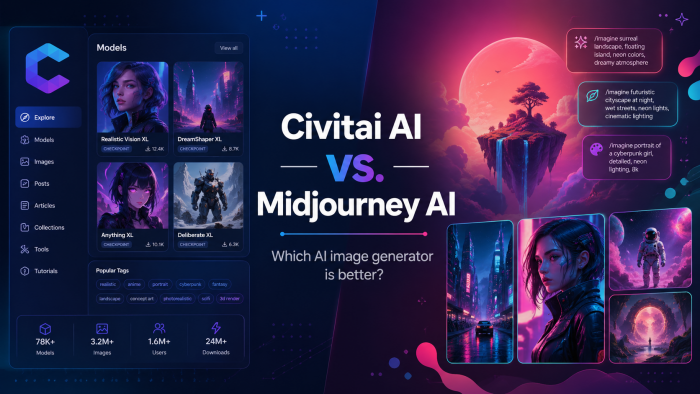
Civitai vs. Midjourney: which is better?Midjourney is better for beginners and f...
Suraj Malik5 months ago

If you have spent even an hour searching for an online study tool in 2026, you h...
Suraj Malik5 months ago

Cohere’s decision to merge with Germany-based Aleph Alpha is not just another AI...
Suraj Malik5 months ago
Google is preparing one of the largest AI investments to date, committing up to...
Suraj Malik5 months ago