Mesh CRM Launches on Android With AI-Powered Contact Management
by Vivek Gupta - 1 month ago - 4 min read
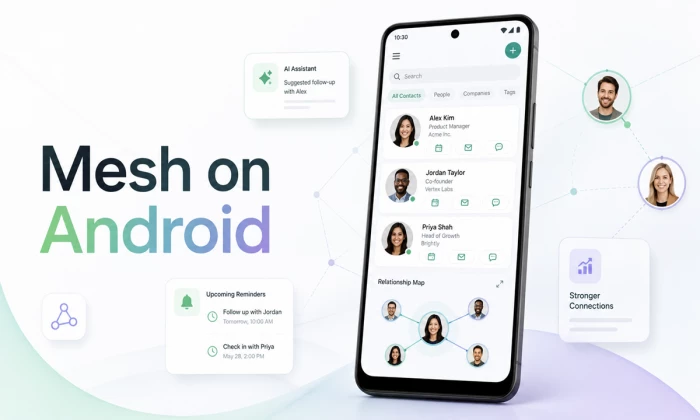
Automattic is expanding its push beyond websites and publishing with the Android launch of Mesh, the personal relationship manager it acquired last year when the product was still known as Clay.
Mesh announced on August 12 that its Android app is now available through Google Play, completing its lineup across Android, iPhone, iPad, Mac, Windows and the web. The new version was built specifically for Android phones, tablets and foldable devices rather than simply porting over the existing iOS experience.
The idea behind Mesh is somewhere between a contacts app and a traditional CRM. Instead of being centered on sales pipelines and leads, it attempts to remember the context around the people someone knows, from professional connections to friends and other personal contacts.
Android Gets More Than a Basic Contact Manager
Mesh can combine information from services such as email, calendars, LinkedIn and other connected sources to build richer profiles for people in a user's network. Users can attach notes to contacts, set reminders to reconnect, track birthdays and important dates, search their network using natural language and follow updates such as job changes.
The Android release includes features designed specifically around Google's mobile platform. Mesh supports split-screen and pop-up views so people can keep a contact profile visible while using email or messaging apps. It also supports keyboard shortcuts on tablets and foldables, Android home-screen widgets using Material You styling, in-app search and real-time synchronization with Mesh on other devices.
Users can also point their phone's camera at a business card and have Mesh create the contact automatically. The app includes launcher shortcuts for jumping directly into search or a new note, while Android's share sheet can be used to send information from another app into Mesh.
That makes the Android release particularly relevant for people who use Mesh professionally. According to the company, around 70% of its customers use the service for some form of business purpose, even though Mesh continues to position itself as a product that can manage both personal and professional relationships.
AI Is Becoming a Bigger Part of Mesh
Automattic also has bigger plans for Mesh than simply creating a more sophisticated address book.
Its Nexus AI assistant is already in early access and lets users ask questions about their own network using natural language. Someone could, for example, search for contacts who work at a particular company, live in a certain city or have experience in a specific field without manually filtering through thousands of entries.
Mesh is also experimenting with voice-based AI interactions and improvements to its business-card scanning technology. Co-founder Zachary Hamed has argued that AI becomes increasingly useful when people have tens of thousands of connections spread across social networks and workplace tools, making it almost impossible to remember the context around every relationship manually.
The scale of the underlying network is already significant. When Clay was renamed Mesh in March 2026, the company said users had entrusted it with more than 170 million relationships. The company described the rebrand as part of a larger attempt to move from simply storing contacts toward mapping and understanding people's broader networks.
Automattic Is Building a Larger Communication Ecosystem
Automattic acquired Clay in June 2025 for an undisclosed amount. Before the deal, the startup had raised more than $9 million from investors including General Catalyst and Forerunner Ventures. At the time, the service was already managing more than 150 million relationships.
The acquisition also pointed toward a larger strategy involving Beeper, Automattic's cross-platform messaging service. Mesh and Beeper already have some interoperability: Mesh users can start drafting messages through Beeper and follow links between the two products. Automattic has discussed deeper integrations and additional AI capabilities in the future, although it has not announced a timeline or bundled subscription.
The Android launch makes that strategy more interesting because it removes one of Mesh's biggest platform gaps. Rather than competing directly with heavyweight enterprise CRMs such as Salesforce or HubSpot, Automattic appears to be targeting the much broader space between a basic address book and a full sales CRM.
Mesh is free for users managing up to 1,000 contacts, while unlimited contacts require a Mesh Pro subscription. New users receive a 14-day Pro trial, according to its Google Play listing.
With Android now part of the lineup, the bigger story is where Automattic takes Mesh next. If it can successfully connect a person's relationship graph in Mesh with conversations happening across Beeper and add AI capable of understanding both, Automattic could end up building something considerably broader than another CRM: a personal relationship layer spanning messaging, contacts and AI.