Roblox Introduces AI Game Creator for Phones and Tablets
by Vivek Gupta - 3 months ago - 4 min read
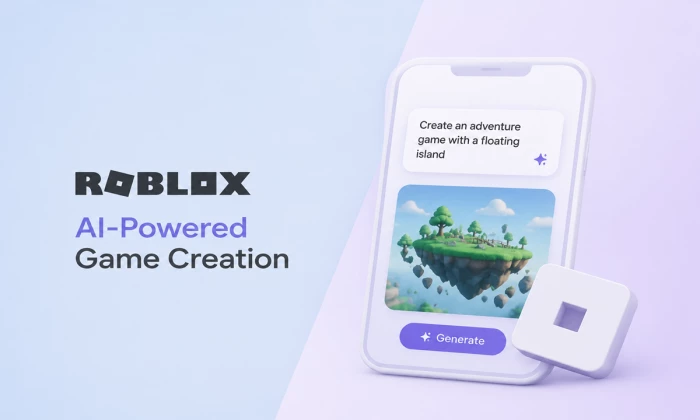
Roblox is making game development significantly more accessible by bringing AI-powered creation tools directly into its mobile app. The company has introduced Build, a new mobile-first feature that enables users to create playable Roblox experiences simply by describing their ideas in natural language. Instead of requiring a desktop computer and Roblox Studio, aspiring creators can now start building games from a smartphone or tablet using text prompts.
A New Way to Build Games From a Phone
With Build, users can type a simple prompt such as a fantasy adventure, racing challenge, or puzzle game, and the AI generates an initial playable version. The system creates gameplay mechanics, environments, characters, sound, and visual styling automatically, giving creators a working prototype that can be refined through additional prompts or manual editing.
Unlike traditional game development tools that require coding knowledge and familiarity with complex editors, Build is designed to reduce the time between an idea and a playable experience. Roblox says the feature is intended for creators of all skill levels, including people with no previous game development experience.
Build Works Alongside Roblox Studio
Roblox is positioning Build as an extension of Roblox Studio rather than a replacement for it.
Projects created inside the mobile app share the same backend, AI models, and chat history as Studio. This means a creator can begin developing a game on a phone during a commute and later continue expanding it with the advanced capabilities available on desktop. Professional developers can also launch AI agents from Studio and monitor progress from their mobile devices.
This connected workflow reflects Roblox's broader strategy of making game creation available wherever creators are working rather than limiting development to traditional desktop environments.
AI Handles More Than Just Visuals
The Build system goes beyond generating scenery or characters.
According to Roblox, the AI can assemble multiple components of a playable experience simultaneously, including game logic, interactive mechanics, environments, audio, and artistic style. The company uses a combination of proprietary Roblox AI models and selected open-source models to power these capabilities.
Because the generated project remains editable, creators can continue modifying every aspect instead of treating the AI output as a finished product.
Initial Rollout Begins in New Zealand
Build will enter public alpha on July 28, beginning with verified users in New Zealand who are at least nine years old. Roblox plans to expand availability to additional countries over the coming months as it improves the platform based on user feedback. Games that successfully pass Roblox's safety review process can eventually be published for the wider Roblox community, with published experiences initially available to users aged 16 and above.
Part of a Larger AI Creator Platform
The mobile Build feature is only one element of Roblox's expanding AI ecosystem.
The company has already introduced AI-assisted procedural 3D model generation through Cube and is working on scene-generation models capable of creating entire editable game environments from a single prompt. Roblox has also previewed AI agents designed to automate playtesting, analytics, experimentation, and creator assistance across both Build and Roblox Studio.
Together, these tools point toward a future where AI supports nearly every stage of game development, from concept creation to testing and optimization.
Industry Perspective
The most significant aspect of Build is not that AI can generate another game—it is that Roblox is moving game development onto the same device where most of its users already play. For younger creators especially, eliminating the requirement for a desktop computer could dramatically increase participation in game creation.
However, making creation easier also changes the platform's biggest challenge. As AI lowers the barrier to publishing games, discovery becomes increasingly important. Success is likely to depend less on who can build a game and more on who can design experiences that keep players engaged over time. Roblox appears aware of this shift, emphasizing that its recommendation systems prioritize sustained player engagement rather than simply increasing the number of published experiences.