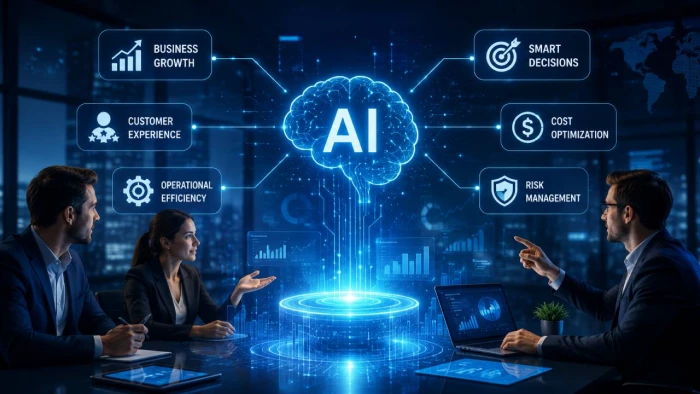
Artificial intelligence is no longer a future experiment. In 2026, businesses are using AI to automate operations, improve customer experience, accelerate software development, reduce costs, and build smarter products. The global AI market was estimated at $390.9 billion in 2025 and is projected to grow to $539.5 billion in 2026, according to Grand View Research. Enterprise AI is also expanding fast, with the enterprise AI market projected to grow at a 37.6% CAGR through 2030.
Adoption is already mainstream. McKinsey reports that 88% of organizations now use AI in at least one business function, up from 78% a year earlier. But adoption does not always mean impact. Only about one-third of companies have started scaling AI across the enterprise. Menlo Ventures also found that enterprise generative AI spending reached $37 billion in 2025, up from $11.5 billion in 2024, showing how quickly companies are moving from experimentation to investment.
This is where AI Development Services become critical. Businesses do not just need AI tools. They need secure, scalable, production-ready AI solutions that connect with their workflows, data, systems, and business goals.
AI development services include the planning, design, engineering, deployment, and optimization of artificial intelligence solutions. These services help companies build AI systems that solve specific business problems instead of relying only on generic tools.
Common AI development services include custom AI application development, machine learning model development, generative AI applications, AI agents, copilots, predictive analytics, computer vision, natural language processing, recommendation engines, workflow automation, MLOps, and responsible AI governance.
The biggest AI challenge in 2026 is not access. Most businesses already have access to tools such as ChatGPT, Microsoft Copilot, Salesforce Einstein, GitHub Copilot, ServiceNow AI, and cloud AI platforms. The real challenge is implementation.
Many companies launch pilots but struggle with data quality, system integration, security, user adoption, and ROI measurement. AI development services help close that gap by turning ideas into working systems.
A strong AI development partner helps businesses identify high-value use cases, prepare data, select the right models, build secure applications, integrate AI into existing systems, and monitor performance after deployment. This is how AI moves from a demo to a business asset.
1. Automating Repetitive Business Processes
AI development services help businesses automate repetitive work that slows teams down. These tasks include document processing, invoice matching, customer request routing, compliance checks, report generation, lead scoring, ticket classification, and data entry.
Unlike basic automation, AI-powered automation can understand text, classify information, extract data, detect patterns, and recommend next steps. Tools such as UiPath, Automation Anywhere, Workato, Zapier, and n8n can support workflow automation, while NLP and OCR models help process unstructured documents.
For example, an AI system can read customer emails, detect intent, extract key information, and route the request to the right team. In finance, AI can compare invoices with purchase orders and flag exceptions. In HR, an AI assistant can answer employee policy questions and reduce repetitive support tickets.
This improves speed, accuracy, and productivity while allowing employees to focus on higher-value work.
2. Improving Decisions with Predictive Analytics
AI development services also help businesses make better decisions through predictive analytics. Predictive models use historical and real-time data to forecast outcomes such as demand, churn, fraud risk, equipment failure, sales performance, and inventory needs.
Tools such as Python, TensorFlow, PyTorch, Scikit-learn, XGBoost, Databricks, AWS SageMaker, Google Vertex AI, and Azure Machine Learning help teams build and deploy predictive models at scale.
For example, retailers can forecast demand by region, banks can detect suspicious transactions, manufacturers can predict machine failure, and healthcare providers can identify patients who may need earlier intervention.
The value is simple: businesses can move from reactive decisions to proactive planning.
3. Enhancing Customer Experience
Customer experience is one of the strongest use cases for AI development. Customers expect fast, personalized, and consistent support across every channel. AI helps businesses deliver that experience through chatbots, virtual assistants, recommendation engines, AI-powered search, sentiment analysis, and personalized marketing.
Tools such as Salesforce Einstein, Zendesk AI, Intercom Fin, Amazon Lex, Google Dialogflow, and Microsoft Copilot Studio are commonly used for customer-facing AI solutions.
An ecommerce company can recommend products based on browsing history and purchase behavior. A bank can use an AI assistant to answer customer questions 24/7. A support team can use AI to summarize customer history and suggest responses before an agent replies.
The result is faster service, better personalization, and stronger customer retention.
4. Building Smarter Digital Products
In 2026, many digital products are becoming AI-powered by design. Users now expect software that can recommend, summarize, predict, search intelligently, and automate tasks.
AI development services help companies embed intelligence into products and platforms. Examples include project management tools that predict delivery delays, healthcare apps that personalize patient engagement, finance platforms that detect risk patterns, logistics tools that optimize routes, and CRM systems that recommend next-best actions.
Frameworks and tools such as OpenAI APIs, Azure OpenAI, Amazon Bedrock, Hugging Face, LangChain, LlamaIndex, Pinecone, Weaviate, Chroma, and FAISS help developers build AI-native applications and retrieval-augmented generation systems.
The key is not adding AI for the sake of trend value. The strongest AI product features solve a real user problem and improve the product experience.
5. Supporting AI Agents and Intelligent Workflows
AI agents are becoming a major business priority. Unlike basic chatbots, AI agents can complete multi-step tasks, retrieve information, interact with systems, use tools, and support workflows.
Examples include sales agents that qualify leads, HR agents that answer policy questions, finance agents that review expense claims, IT agents that classify tickets, and procurement agents that manage vendor requests.
Agent frameworks such as LangChain, CrewAI, AutoGen, LangGraph, and LlamaIndex help businesses design agentic workflows. However, agents must be built with strong controls. They need permissions, audit trails, human review, monitoring, and clear boundaries.
This is why AI development services matter. They help businesses move from simple assistants to governed, useful, and scalable AI agents.
6. Reducing Costs and Improving Productivity
AI can reduce costs by removing manual work, reducing errors, improving forecasting, preventing fraud, and speeding up service delivery. Menlo Ventures found that coding accounted for $4 billion of enterprise generative AI spending in 2025, making it one of the largest AI application categories.
This shows how strongly businesses are investing in productivity. Tools such as GitHub Copilot, Cursor, Tabnine, Amazon Q Developer, and Replit AI help development teams generate code, review logic, write tests, and improve documentation.
However, AI does not remove the need for skilled developers. It helps them work faster. Human experts are still needed for architecture, security, integration, quality control, and business logic.
7. Strengthening Governance, Security, and Compliance
As AI adoption grows, governance becomes essential. Businesses must manage risks around privacy, bias, security, hallucinations, explainability, and regulatory compliance.
Responsible AI development includes secure data handling, access control, model evaluation, red-teaming, human-in-the-loop review, audit trails, model cards, bias testing, and continuous monitoring. Tools such as MLflow, Weights & Biases, LangSmith, PromptBench, DataRobot, Azure ML, Google Vertex AI, and AWS SageMaker can support model lifecycle management and governance.
In 2026, governance is not only a compliance requirement. It is what helps businesses scale AI safely.
The AI Readiness-to-Production Framework
Businesses can use this five-step framework to move from AI idea to measurable outcome:
1. Audit: Identify business problems, workflows, data sources, risks, and expected ROI.
2. Data Readiness: Clean, structure, connect, and secure the data needed for AI models, RAG systems, or analytics.
3. Pilot: Build a focused MVP or proof of concept for one high-value use case.
4. Harden: Add security, integrations, monitoring, governance, human review, and performance testing.
5. Scale: Expand the solution across teams, automate more workflows, monitor ROI, and continuously optimize.
This framework prevents companies from building disconnected pilots that never reach production.
How to Choose the Right AI Development Partner
The right AI development partner should understand both technology and business outcomes. Before choosing one, ask:
· Do they start with business goals instead of tools?
· Can they identify high-value AI use cases?
· Do they have experience with production-ready AI?
· Can they support data engineering and system integration?
· Do they understand responsible AI and governance?
· Can they work with your CRM, ERP, cloud, and data platforms?
· Do they offer monitoring and optimization after launch?
· Can they measure ROI?
A good partner helps you build AI that works inside your business, not just in a demo environment.
Final Thoughts
AI development services are driving business success in 2026 by helping companies automate operations, improve decisions, personalize customer experiences, build smarter products, deploy AI agents, reduce costs, and scale responsibly.
The companies that win with AI will not be the ones that adopt the most tools. They will be the ones that apply AI to the right problems, prepare the right data foundation, and build secure, scalable, measurable solutions.
AI development is no longer only a technology investment. It is a business growth strategy.
AI development services help businesses design, build, deploy, and optimize artificial intelligence solutions. These services may include machine learning, generative AI, AI agents, predictive analytics, automation, NLP, computer vision, and AI integration.
They help businesses automate tasks, improve decision-making, personalize customer experiences, reduce costs, increase productivity, and build smarter digital products.
In 2026, businesses are moving from AI experimentation to production-ready AI adoption. AI development services help companies build secure, scalable, and measurable AI systems.
Industries such as banking, healthcare, retail, manufacturing, telecom, insurance, logistics, and technology benefit from AI development services.
Businesses should look for experience in AI strategy, custom development, data engineering, system integration, responsible AI, governance, deployment, and long-term optimization.
It depends on the business need. Off-the-shelf tools are useful for simple tasks, but custom AI development is better when a company needs AI connected to its own data, workflows, systems, and business goals.
Share your thoughts about this article.
Be the first to post a comment!
At a glanceDarlink AI is an AI companion (“AI girlfriend”) platform, custom char...
Sakshi Dhingra19 hours ago
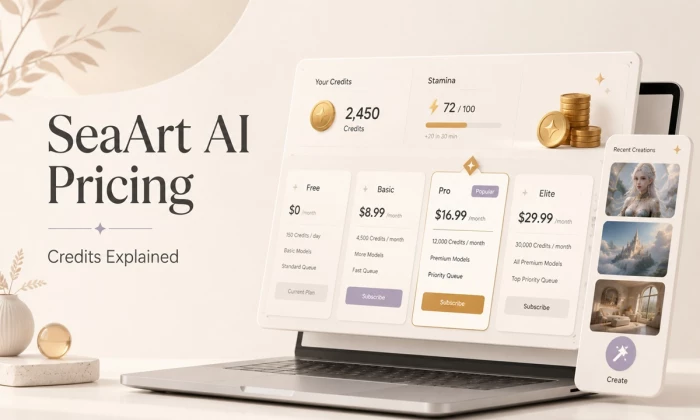
I checked SeaArt AI’s pricing because AI image tools often look free at first, a...
Michael Hicklen4 days ago
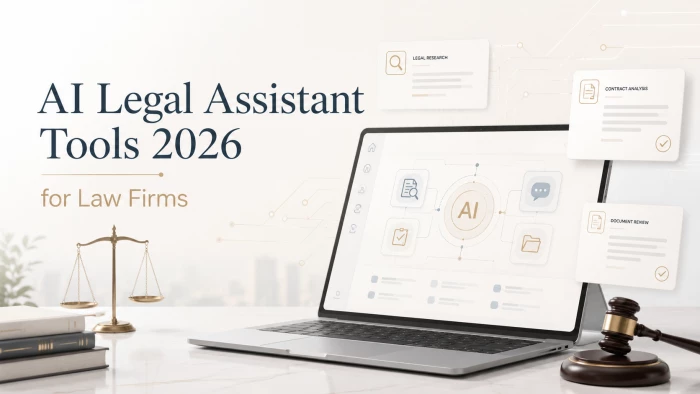
I evaluate software the way a law firm has to live with it: not by the demo, but...
Sakshi Dhingra4 days ago
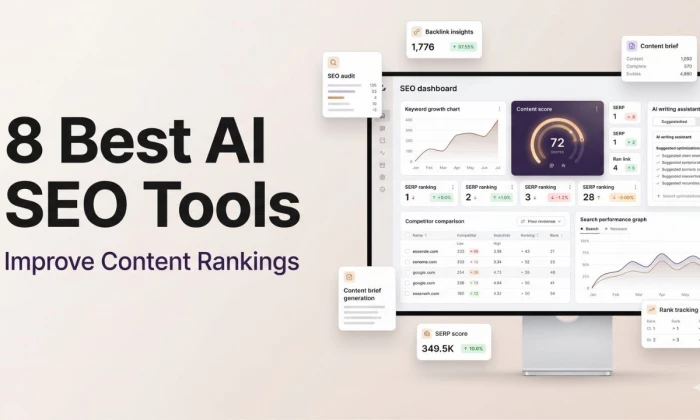
AI SEO tools now help with much more than writing. The best ones support keyword...
Sakshi Dhingra5 days ago
Looking Beyond SongtellSongtell is a tool people reach for when a lyric sticks i...
Mighva Verma5 days ago
Pephop AI's paid plans run from about $4.99 to roughly $29.99 a month, yet its p...
Mighva Verma6 days ago