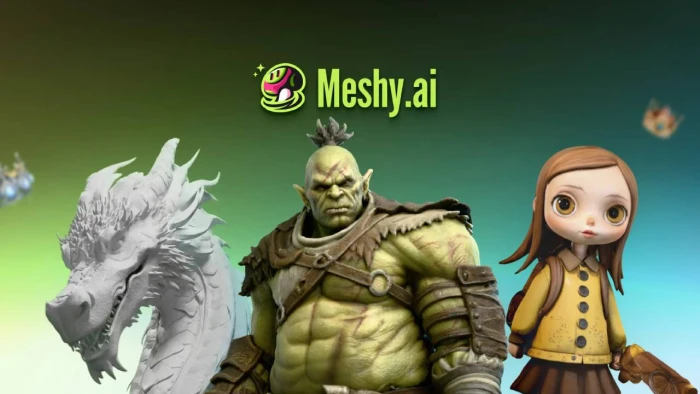
Three-dimensional content is no longer limited to game studios and specialist animation companies. Online retailers use 3D product views, educators build interactive learning materials, marketing teams create virtual experiences and software companies add customisable objects to digital platforms.
The business value can be significant, but conventional 3D production is demanding. Each asset may require modelling, UV preparation, texturing, optimisation and export before it reaches the intended application.
AI-assisted generation can shorten the early stages of this process. However, adopting it successfully requires more than choosing the tool that produces the most attractive demo. A business must determine whether it has a repeatable use case, whether an API is necessary and how generated assets will be checked before publication.
A company should not add AI 3D generation simply because the technology is available. The first question is whether 3D content solves a defined business problem.
Useful applications may include:
● Producing placeholder assets for game prototypes
● Creating background objects for virtual environments
● Testing product concepts before detailed modelling
● Building interactive educational content
● Preparing assets for augmented reality
● Creating variations for digital marketing campaigns
● Expanding a catalogue of virtual objects
● Supporting customer configuration tools
The expected volume matters. A designer who needs one carefully controlled hero asset may be better served by traditional modelling. A team that needs hundreds of simple product variations may benefit more from automation.
Businesses should also decide what “successful” means. The goal could be reducing the time required for the first prototype, increasing the number of concepts tested or lowering the cost of producing non-critical assets. Without a measurable objective, faster generation can simply create more files for employees to review.
Many AI 3D platforms offer a browser interface where a user enters a prompt or uploads an image. This works well for exploration, occasional projects and teams that need direct creative control over each generation.
An API serves a different purpose. It allows software to request and retrieve assets programmatically. Instead of an employee manually repeating the same steps, the generation process can become part of an application or internal production system.
A browser-based workflow may be sufficient when:
● The team creates assets occasionally.
● Each model requires individual art direction.
● Users need to compare several visual ideas.
● The process is still experimental.
● The number of requests is small.
An API becomes more useful when:
● Assets must be generated at scale.
● Customers initiate generation inside an application.
● Prompts come from structured product data.
● Jobs need to run automatically or in batches.
● Results must move into an existing asset pipeline.
● The business needs consistent status tracking and error handling.
The decision should be based on workflow requirements rather than technical ambition. Automating an unclear or unstable process usually makes its problems harder to manage.
An API can connect generation with the systems a company already uses. A product application might collect a user’s description, submit it for generation, monitor the task and display the completed model without sending the user to a separate platform.
Development teams can also build internal tools around an AI 3D model API. Meshy provides programmatic access to capabilities including text-to-3D, image-to-3D and AI texturing, allowing businesses to incorporate generation into applications or automated asset workflows.
Possible implementations include:
● A game prototyping tool that generates placeholder props
● An educational platform that turns lesson descriptions into visual objects
● A design application that creates early models from uploaded references
● A virtual-world platform that gives users custom environmental assets
● An e-commerce system that prepares preliminary 3D product content
● An internal dashboard for generating and reviewing asset variations
The generated model should still pass through a defined review process. An API can automate the request, transfer and storage of a file, but it cannot independently determine whether the asset fits a brand, meets a polygon budget or accurately represents a real product.
AI 3D systems commonly begin with either text or images. Businesses should determine which input reflects their available data.
Text input
Text-to-3D is useful when a team starts from a general idea. A prompt can describe the object, visual style, material and intended context.
This approach suits conceptual work, fictional props and early prototypes. It offers flexibility but may produce greater variation because the system must interpret the description.
Image input
Image-to-3D is more appropriate when the business already has a product photograph, sketch or concept image. It can give the system stronger visual direction, although parts hidden from the camera must still be inferred.
Multiple views may improve the representation of the sides and rear. Even so, image-generated geometry should not be assumed to have engineering accuracy.
Existing model input
Some workflows begin with an untextured model that needs surface treatment. AI texturing can help produce an initial material direction, but the output must be checked for seams, incorrect material values, distorted details and consistency with brand guidelines.
The company should test its own typical inputs. A tool that performs well on stylised game props may not be equally suitable for transparent products, reflective machinery or objects with intricate typography.
A model is useful only if the destination system can open and display it correctly.
Common formats serve different purposes. OBJ is widely supported for static geometry, FBX is frequently used in animation and game pipelines, and GLB can package geometry, materials and other asset data for web and real-time delivery.
The Khronos Group glTF 2.0 specification describes glTF as an API-neutral runtime asset delivery format designed to support efficient, interoperable transmission and loading of 3D content. Its binary container format, GLB, can make an asset easier to distribute as a single file.
Before adopting a platform, confirm:
● Which formats it exports
● Whether textures are embedded or supplied separately
● Whether material properties transfer correctly
● Whether scale and axis orientation are preserved
● Whether animation data is supported
● Whether files work in the target engine or viewer
● Whether conversion is required after generation
● Whether metadata can be controlled
A format appearing in an export menu does not guarantee a perfect import. Businesses should test representative assets in the exact software, device and delivery environment they intend to use.
AI tools are often evaluated by how quickly they produce an asset. Generation time matters, but it is only one part of the total cost.
A more useful calculation includes:
● Generation fees or credits
● Failed and repeated generations
● Employee review time
● Manual geometry repair
● Texture correction
● File conversion
● Storage and bandwidth
● Quality assurance
● Integration development
● Ongoing API maintenance
Suppose an asset can be generated in one minute but requires two hours of repair. It may still be useful if traditional production takes several days, but the business should not describe the process as a one-minute workflow.
Teams should track how many outputs are accepted, rejected or extensively revised. This provides a clearer picture of cost than the advertised generation speed alone.
An API integration does not need to begin with the company’s most valuable content.
A controlled pilot can focus on a narrow, low-risk asset category, such as generic background props or internal prototypes. The team can then measure actual performance before expanding the programme.
A useful pilot might include:
1. One clearly defined use case
2. A representative group of prompts or images
3. A fixed asset-quality standard
4. A manual production baseline
5. A limited budget
6. A small review team
7. A defined testing period
8. A final go-or-no-go decision
During the pilot, track:
● Average generation cost
● Acceptance rate
● Number of retries
● Time spent correcting each asset
● Import success rate
● Performance on target devices
● Feedback from designers and developers
The strongest business case is not necessarily the one with the fastest output. It is the one that produces acceptable assets with a lower total cost or enables a valuable experience that was previously impractical.
Without an acceptance standard, different reviewers may approve assets according to personal preference. A simple checklist makes the process more consistent.
Visual requirements
● The silhouette matches the brief.
● Important components are present.
● Colours follow the intended direction.
● Text and symbols are not distorted.
● The model remains convincing from all required angles.
● Unwanted visual artefacts have been removed.
Geometry requirements
● The polygon count fits the target platform.
● The mesh has no obvious holes or disconnected parts.
● Surface normals display correctly.
● Hidden geometry is not unnecessarily complex.
● Moving areas have suitable topology.
● Scale and orientation are correct.
Material requirements
● Textures are assigned to the correct channels.
● Resolution matches expected screen size.
● Metallic and roughness values are plausible.
● Lighting is not incorrectly baked into the base colour.
● UV seams and stretching have been checked.
● Transparent materials behave correctly.
Operational requirements
● The file opens in the target application.
● Naming follows the company convention.
● The asset’s origin and generation settings are recorded.
● Usage rights have been reviewed.
● A responsible person has approved publication.
Standards can vary by asset category. A temporary background object does not need the same scrutiny as a product model used for customer purchasing decisions.
Generated files should not move directly from an API response into a public catalogue or production build.
A safer workflow uses several stages:
1. Request
The system submits an approved prompt or reference image and records the generation settings.
2. Temporary storage
The result is placed in a controlled review location rather than the live asset library.
3. Automated validation
Software checks the file type, size, naming structure and other measurable requirements.
4. Visual review
A designer or content specialist checks whether the asset matches the brief and brand.
5. Technical review
A 3D artist or developer evaluates geometry, materials, performance and compatibility.
6. Correction
The asset is regenerated, edited or rejected if it does not meet the standard.
7. Approval
An authorised reviewer confirms the intended use and records the final decision.
8. Publication
Only the approved version moves to the production system.
This structure allows automation to handle repetitive tasks while keeping important decisions under human control.
Prompts and images can contain confidential business information. A product photograph may reveal an unreleased design, while a text prompt may include a client name or internal project description.
Before integrating a third-party service, investigate:
● How inputs and outputs are stored
● Whether submitted data may be used for training
● How long files are retained
● Whether deletion controls are available
● Which employees can access the service
● How API credentials will be protected
● Whether logging exposes sensitive prompts
● What happens when an employee leaves
● Whether the service meets client or contractual requirements
API keys should not be embedded in public applications or stored directly in source code. Requests should generally pass through a protected backend where credentials, usage limits and access rules can be managed.
Teams should also remove unnecessary confidential information from prompts. The generation system only needs details that materially affect the desired asset.
A company should be able to explain where each published asset came from and how it was modified.
An asset record can include:
● The source prompt or reference
● The tool and model version
● The generation date
● The employee or system that initiated the request
● The output identifier
● The original file
● Manual changes
● Licence information
● Reviewer names
● Final approval status
This information helps with internal audits and future revisions. It also prevents temporary experimental files from being mistaken for approved commercial assets.
Businesses must verify both the platform’s usage terms and their rights to the inputs. Owning or licensing the final output does not necessarily resolve problems caused by uploading a protected image without permission.
AI 3D generation is not appropriate for every project.
Traditional modelling may be preferable when an asset requires:
● Exact engineering dimensions
● Safety-critical accuracy
● Complex mechanical movement
● Strict brand or product fidelity
● Detailed custom topology
● Advanced character deformation
● A distinctive handcrafted aesthetic
● Complete control over every surface
AI may still assist with early visualisation, but it should not be presented as a substitute for CAD, engineering analysis or specialist artistic work.
Companies should also avoid automating production before their standards are stable. If the team cannot explain what qualifies as an acceptable asset, connecting an API will increase volume without improving quality.
Before adding AI 3D generation to a business workflow, decision-makers should ask:
● What specific problem are we solving?
● How many assets do we actually need?
● Do we need a browser tool or an API?
● Are our inputs text, images or existing models?
● Which output formats does the destination require?
● How much manual correction is acceptable?
● Who reviews generated assets?
● How will we protect confidential inputs and API credentials?
● Do we have permission to use the reference materials?
● How will asset provenance be recorded?
● What metrics will determine whether the pilot succeeds?
● Can we stop or replace the integration without disrupting production?
Clear answers make it easier to distinguish a useful workflow improvement from an experiment with no operational owner.
What is an AI 3D model API?
An AI 3D model API allows an application to request 3D generation programmatically. It can submit text or image inputs, monitor the generation task and retrieve the resulting model without requiring a user to complete every step manually in a browser.
Does every business using 3D content need an API?
No. A browser tool may be sufficient for occasional use or individually directed assets. An API is more appropriate when generation must happen repeatedly, at scale or inside an existing product.
Are AI-generated models ready to publish immediately?
Usually not. They should be reviewed for visual accuracy, geometry, textures, performance, file compatibility and usage rights before publication.
Can generated 3D models represent real products accurately?
They can support early visualisation, but they should not be assumed to reproduce exact dimensions or hidden details. Product-facing models need comparison with verified specifications and reference materials.
How should a company measure the value of AI 3D generation?
The company should compare total costs, including generation, retries, review and correction, with its previous production process. It should also measure acceptance rate, delivery time and whether the assets achieve the intended business outcome.
AI-assisted 3D generation can help businesses test ideas, produce prototypes and scale selected categories of digital content. An API can extend those capabilities by connecting generation with applications and internal production systems.
The technology creates the most value when the use case is repeatable, quality standards are clear and the cost of human review is understood. It is less useful when a project demands exact dimensions, highly controlled topology or complete fidelity to a physical product.
Businesses should begin with a limited pilot, evaluate results in the destination environment and calculate the complete cost of producing an approved asset. Automation should move files through a process; it should not remove accountability from that process.
The right question is therefore not whether AI can generate a 3D model. It is whether the organisation can turn that output into reliable, useful and responsibly managed content.
Share your thoughts about this article.
Be the first to post a comment!