
There was a phase last year when my younger brother was genuinely struggling. Not because he wasn’t putting in effort, but because nothing seemed to convert into actual progress.
His board exams were approaching, and every day followed the same cycle: reading chapters, highlighting notes, watching random videos, and still feeling stuck. The frustration wasn’t loud. It was subtle, but constant. The kind where you sit with your books for hours and still feel like nothing is sticking.
At one point, he said something that stayed with me:
"I’m studying, but I don’t feel like I’m learning anything."
That’s when I stepped in, not to push him harder, but to change how he was studying.
Instead of adding more material, I introduced him to a few AI tools. Not as shortcuts, but as systems designed to fix specific problems in the way he was studying.
Over the next few weeks, the shift was visible.
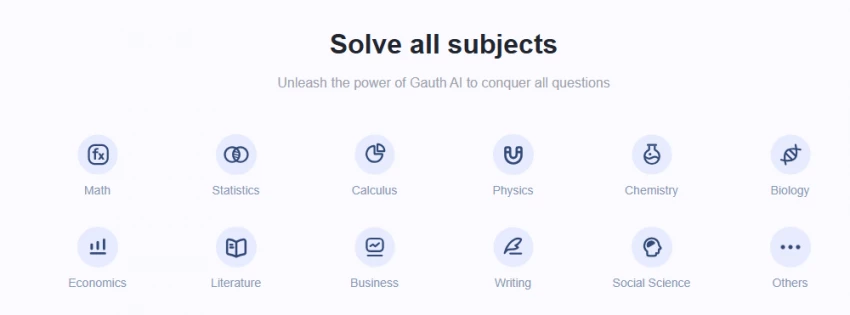
The first problem I noticed was simple, he was getting stuck too often.
One difficult question would eat up 20–30 minutes, break his flow, and slowly kill his motivation. That’s where Gauth AI came in.
The first time he used it, he uploaded a math problem he had been struggling with. Within seconds, the solution appeared, step-by-step, clearly explained.
That moment matters more than it seems. When you're preparing for exams, flow is everything. And Gauth restores that flow instantly.
But after a few days, a pattern became clear. He was solving more questions, but not all of them were staying in his memory. The understanding was temporary unless he actively revised it later.
| Factor | Score | Insight |
| Speed | 9/10 | Almost instant solutions, removes friction immediately |
| Clarity | 8.5/10 | Steps are easy to follow, especially for math problems |
| Retention Impact | 6.5/10 | Does not reinforce memory on its own |
| Ease of Use | 9/10 | Extremely simple, works out of the box |
My Take:
Gauth AI is a momentum tool. It doesn’t teach deeply, but it prevents you from wasting time when you’re stuck. It keeps your study session alive.
Once the “getting stuck” problem was solved, the next issue surfaced, retention.
He understood concepts while studying, but a day later, most of it faded. That’s where Gizmo AI completely changed the process.
Instead of solving questions, Gizmo transformed his notes into interactive learning cycles.
He uploaded his notes, and within minutes, they were converted into structured flashcards. But what made the difference wasn’t the flashcards themselves, it was how Gizmo made him use them.
Every session became a loop of recall, correction, and repetition.
Over time, he stopped rereading notes and started testing himself. And that shift, from passive reading to active recall—is where real learning began.
The biggest strength of Gizmo is how it quietly builds discipline.
It tracks what you remember and what you forget. It brings back weak topics at the right time. It doesn’t let you “feel productive” without actually proving it.
After about a week, I noticed something different. He wasn’t revising entire chapters anymore. He was focusing only on what he was getting wrong.
That level of precision saves time and improves outcomes.
Gizmo is not a starting point. If your concepts are weak, it won’t explain them from scratch like a tutor would. It works best when you already have material, notes, chapters, or some level of understanding.
My Takeaway:
Gizmo AI turns studying into a memory system. It doesn’t help you finish faster, it ensures you don’t have to relearn the same thing again.
I’d confidently rate it 9/10 for serious learners.
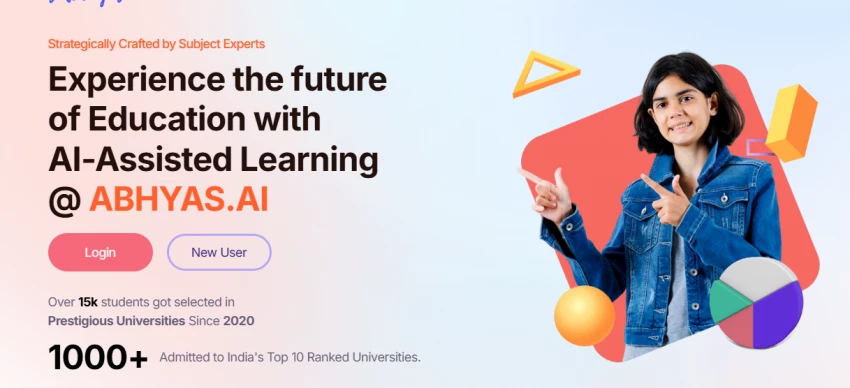
After solving problems and improving retention, there was still one missing piece, performance under pressure.
This is where Abhyas AI came into play.
Unlike the other tools, Abhyas doesn’t focus on teaching. It focuses on testing.
It introduced structured practice sessions that felt closer to actual exam conditions. Instead of random study sessions, he started working within a system, timed attempts, topic-based tests, and repeated evaluation.
At first, it didn’t feel as exciting as the other tools. But over time, its impact became very clear.
Within two weeks, the difference showed up in behavior, not just scores.
He started managing time better during tests.
His accuracy improved because he was making fewer careless mistakes.
He became more aware of his weak areas without needing external feedback.
Most importantly, his confidence improved. He no longer felt unsure going into practice tests.
Many students study well but fail to perform in exams. Abhyas bridges that gap.
It converts knowledge into execution.
Abhyas doesn’t guide you much. It assumes you already know what you need to practice. Without the right base (concepts + memory), it won’t be as effective.
My Take:
Abhyas AI is not about learning, it’s about performing when it matters. It completes the system.
I’d rate it 8.5/10, especially for exam-focused students.
| Tool | Best For | Strength | Limitation | Rating |
| Gauth AI | Solving questions fast | Instant clarity and speed | Weak retention | 8/10 |
| Gizmo AI | Memory & revision | Strong recall system, smart repetition | Needs prior understanding | 9/10 |
| Abhyas AI | Practice & exam prep | Builds confidence and accuracy | Less guidance | 8.5/10 |
By the time exams got closer, the difference was visible.
He wasn’t studying longer hours.
He wasn’t overwhelmed anymore.
He knew exactly what to revise and what to ignore.
And that’s the biggest shift, clarity.
Most students don’t fail because they don’t study enough. They struggle because their system is broken.
Reading more doesn’t guarantee learning. Solving more doesn’t guarantee remembering. And knowing doesn’t guarantee performing.
That’s where these tools fit in.
Gauth helps you move forward.
Gizmo helps you retain.
Abhyas helps you perform.
Individually, they solve problems. Together, they create a system.
And once the system is right, studying stops feeling like a struggle—and starts showing results.
Be the first to post comment!

There’s a phase every writer eventually reaches where effort stops being the pro...
Sakshi Dhingra9 hours ago

The first time my younger brother mentioned these apps, I didn’t think much of i...
Sakshi Dhingra10 hours ago

A client message comes in.“Can you share a presentation in 10 minutes?”There’s n...
Sakshi Dhingra1 day ago

I run a workflow where creating ideas isn’t the problem.I can sit down and write...
Sakshi Dhingra1 day ago
The rise of AI-driven platforms has made it easier than ever to engage in rolepl...
Sakshi Dhingra3 days ago
Imagine running a small business, juggling customer queries, product information...
Sakshi Dhingra3 days ago