There comes a point in every writer’s career when effort is no longer the main problem.
You know how to research. You understand your audience. You can structure an argument and turn an idea into a useful article. Yet the process still begins to feel unnecessarily slow.
Research expands into multiple tabs. Outlining becomes repetitive. Introductions take longer than expected. Editing feels endless, especially after spending hours looking at the same draft.
I reached that stage while managing content across several websites. The challenge was no longer whether I could write a good article. It was whether I could repeat the process consistently without sacrificing quality, accuracy, or originality.
At first, I searched for one AI tool that could handle everything. I tested tools by asking them to generate complete articles, comparing the outputs and looking for the most polished draft.
That approach did not work particularly well.
The articles often appeared complete, but they were generic. They followed familiar patterns, repeated obvious points, and sounded like content that could have been published on almost any website. The output saved typing time, but it did not remove the more difficult work of developing an angle, checking claims, adding experience, and making the article genuinely useful.
The breakthrough came when I stopped asking which AI tool was the best writer.
Instead, I began asking a more practical question: which part of my blogging workflow is slowing me down?
That change made AI considerably more useful. I stopped treating it as a replacement for the entire writing process and started using different tools for different stages.
ChatGPT became useful for shaping ideas and testing structure. Copy.ai helped when I needed several starting directions quickly. Jasper AI became more relevant when consistency mattered across multiple drafts. Writesonic helped organize search-focused content. Grammarly improved the final edit.
No single tool solved blogging. Each one removed a particular type of friction.
That distinction matters because the best AI blogging tool is not necessarily the one that generates the longest draft. It is the one that improves the stage of the process where you are currently losing the most time or quality.
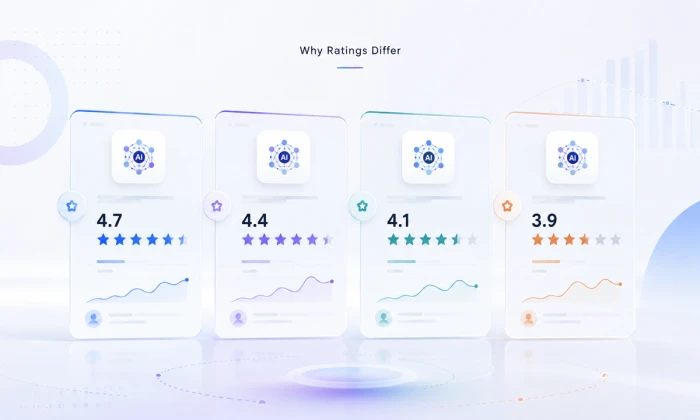
AI Blogging Tools Rating Overview
Tool
Rating
Best for
Main strength
Most important limitation
ChatGPT
9/10
Idea development and article structuring
Flexible, conversational, and adaptable
Output quality depends heavily on the instructions
Jasper AI
8/10
Scaling content production
Consistency across multiple pieces of content
Structured output can feel less original
Writesonic
8.5/10
SEO-focused blog drafting
Search-intent alignment and organized coverage
Drafts still require human editing and personality
Copy.ai
7.5/10
Ideation and first-draft momentum
Generates directions quickly
Less suitable as a complete long-form writing solution
Grammarly
9/10
Editing and readability
Improves clarity, flow, and correctness
Cannot replace strategic or factual editing
How I Evaluated These AI Blogging Tools
I did not judge these tools solely by asking each one to generate a complete blog post.
That type of comparison can be misleading because it rewards the tool that produces the cleanest-looking first draft, even when the draft lacks original research, first-hand insight, accurate sourcing, or a clear reason to exist.
Instead, I evaluated each tool according to the part of the blogging process it is most likely to support.
For ideation tools, I looked at whether they could uncover useful angles rather than simply repeat broad topic suggestions. For drafting tools, I considered structure, search intent, continuity, and the amount of rewriting required. For editing tools, I focused on whether the suggested changes improved the article without flattening the writer’s voice.
I also paid attention to something that is often overlooked in AI tool comparisons: the amount of decision-making the tool returns to the writer.
A useful tool should reduce low-value work while leaving important editorial decisions in human hands. A less useful tool often does the opposite. It generates a large quantity of content but creates additional work because the writer must remove repetition, verify unsupported claims, repair the structure, and restore personality.
The ratings in this article therefore reflect practical usefulness within a real content workflow rather than the quantity of text each platform can generate.
ChatGPT
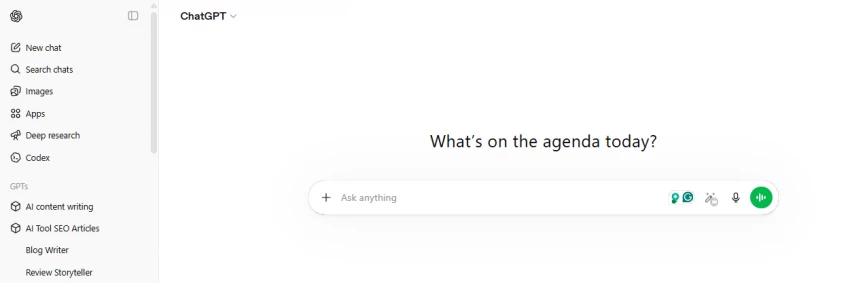
ChatGPT is not the tool I use to “write blogs.” It’s the tool I use before writing even begins.
Earlier, I made the mistake of using it for full article generation. The content looked fine, but it lacked depth and felt replaceable. The real value came when I started using it differently.
Now, every article starts with ChatGPT. It helps refine the angle, break down the topic, and structure the flow before I write anything manually. That alone removes confusion and saves a significant amount of time.
In practice, it reduces the effort needed to start and gives clarity to the entire direction of the article.
However, it requires strong input. If the direction is unclear, the output follows the same pattern. It doesn’t think for you; it organizes your thinking.
Where ChatGPT Fits Best
ChatGPT is most valuable at the planning stage, especially when the subject is broad or the writer has too many disconnected ideas.
It can also support revision, headline testing, FAQ development, and structural analysis. It becomes less dependable when used as the sole source of factual research or when asked to generate a publication-ready article without human input.
My Verdict on ChatGPT
ChatGPT receives a rating of 9 out of 10 because it is the most adaptable tool in this group.
It does not provide the strongest workflow for every specific task, but it can improve more stages of the process than the other tools. Its usefulness depends heavily on the writer’s ability to provide context, evaluate the output, and retain editorial control.
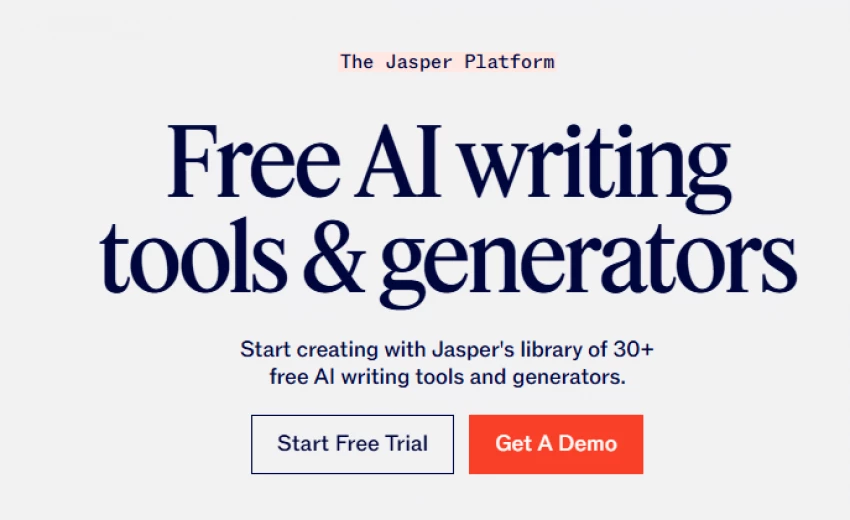
Jasper becomes relevant when writing moves from occasional to consistent production.
When working on multiple articles, maintaining tone becomes difficult. Jasper solves that by keeping the output aligned across different pieces.
In my workflow, it becomes useful when handling multiple drafts at once. It reduces the time spent adjusting tone and structure manually.
At the same time, the structured nature of Jasper can feel limiting when trying to create something unique. It performs best when consistency matters more than creativity.
The Real Advantage of Jasper AI
The practical benefit of Jasper is not simply speed.
A tool can generate text quickly and still create more work during editing. Jasper’s advantage is its ability to reduce variation when consistency is a major publishing requirement.
For a solo writer producing one deeply researched article, this may not be the deciding factor. For a marketing team managing several campaigns, it can be extremely valuable.
Where Jasper AI Needs Human Input
Jasper still requires fact-checking, original examples, and editorial judgment.
It can maintain a defined tone, but it cannot decide whether an article contains meaningful first-hand experience. It can follow a content brief, but it cannot determine whether the brief is strategically strong.
The writer must still add the details that make the article credible, including test results, real use cases, screenshots, expert commentary, and carefully verified claims.
My Verdict on Jasper AI
Jasper receives a rating of 8 out of 10.
It is one of the stronger choices for teams that need to produce content consistently while protecting brand voice. It is less compelling for writers whose main priority is originality, experimentation, or highly personal editorial works.
Writesonic introduced a more structured way of approaching SEO writing.
The difference is not just in the content itself, but in how it is organized. It naturally aligns with search intent, which makes it useful for blogs that are meant to rank.
After using it, I noticed that fewer adjustments were needed in terms of headings and topic coverage. It already reflects how search-focused content should be structured.
The limitation is that the writing still needs refinement. It provides a solid base, but the personality has to be added manually.
Search Intent Is More Than Keyword Placement
One reason Writesonic is useful is that it encourages writers to think in terms of intent rather than repeating a keyword.
A reader searching for AI blogging tools may want a comparison, a recommendation, pricing guidance, workflow advice, or an explanation of which tool fits a particular role.
A strong article should recognize those needs and answer them naturally.
Writesonic can support that process by creating a broader content framework. However, the writer must still decide which questions matter most and which answers can be supported with direct experience.
What I Would Still Change Before Publishing
A Writesonic draft should be reviewed for unsupported statements, repetitive wording, weak examples, and sections that exist only to increase length.
I would also add first-hand observations, remove generic claims, verify product information, and rewrite sections that sound similar to competing articles.
The platform can create a useful skeleton, but the writer is responsible for turning that skeleton into something worth reading.
My Verdict on Writesonic
Writesonic receives a rating of 8.5 out of 10.
It is one of the better choices in this group for search-focused bloggers who want help with structure and topical coverage. It performs best when the writer treats the generated content as a foundation rather than a finished article.
Starting a blog is often the hardest part. Not because of complexity, but because of hesitation.
Copy.ai helps remove that.
When I don’t feel like starting from scratch, I use it to generate initial directions. It quickly provides multiple ways to approach the same topic.
It doesn’t produce final content, but it removes the friction of beginning. That alone makes it valuable in a real workflow.
A Better Way to Use Copy.ai
Rather than asking for a complete blog post, I find it more useful to ask for contrasting approaches.
For example, the same article could begin with a first-person experience, a direct problem, a counterintuitive claim, or a comparison. Seeing those variations helps the writer choose a direction without handing over the entire article.
Copy.ai can also help generate alternative headings when the original version feels flat. The writer can then refine the strongest option and ensure it accurately represents the section.
Where Copy.ai Falls Short
Copy.ai does not replace research, detailed outlining, or final editing.
It can help create momentum, but it cannot determine whether the article offers enough evidence to compete in search results. It can suggest a persuasive angle, but it cannot verify whether the supporting facts are correct.
The tool becomes less useful when the writer accepts the first output without developing it further.
My Verdict on Copy.ai
Copy.ai receives a rating of 7.5 out of 10.
It is a useful tool for ideation, hooks, variations, and early-stage momentum. It is not the strongest option for producing a complete long-form article, but it performs well when the main obstacle is getting started.
Grammarly
Even strong content can lose its impact if readability is not maintained.
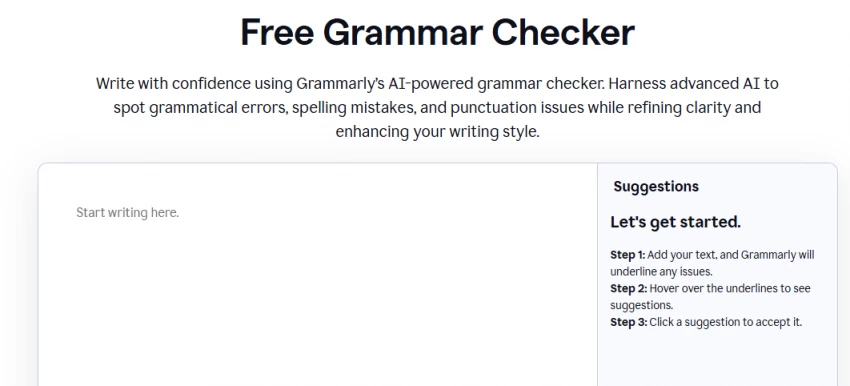
Grammarly plays a critical role at the final stage. After writing long-form content, it becomes difficult to notice small errors or awkward phrasing.
Grammarly improves clarity, sentence flow, and overall readability.
It doesn’t change the core content, but it ensures the final output feels polished and easy to read.
How These Tools Work Together in Practice
The biggest mistake is trying to use one tool for everything.
In reality, each tool handles a different part of the process.
ChatGPT helps define direction. Copy.ai helps you start. Jasper helps you scale. Writesonic and Frase align the content with SEO. Grammarly refines the final output.
When combined, they create a workflow that is faster, clearer, and more efficient
Grammarly Cannot Perform a Strategic Edit
It is important to understand what Grammarly does not do.
It cannot tell you whether the article’s argument is weak. It cannot determine whether a product claim is accurate. It cannot identify that a section lacks first-hand experience unless the writing itself reveals the problem.
An article can be grammatically perfect and still be unhelpful.
That is why Grammarly should be treated as the final polishing layer rather than the complete editing process.
Before running the draft through Grammarly, I still review the structure, factual accuracy, originality, examples, and search intent manually.
My Verdict on Grammarly
Grammarly receives a rating of 9 out of 10.
It is one of the most useful tools in the workflow because nearly every writer benefits from a final readability check. Its suggestions are most effective when the writer applies judgment rather than accepting every recommendation automatically..
How I Use These AI Blogging Tools Together
After testing these tools across multiple websites, I realized that the biggest productivity gains didn't come from finding a single "best" AI writer. They came from assigning each tool a specific job in the content creation process.
Everything starts with topic research and content planning. I usually begin with ChatGPT to explore different angles, identify questions readers are likely to ask, and create a logical structure for the article. Rather than asking it to write the entire piece, I use it to clarify the direction before I start writing.
Once the outline is ready, Copy.ai helps overcome the blank-page problem. If an introduction or section feels difficult to begin, generating a few opening ideas is often enough to get the writing process moving naturally.
For larger content projects or when multiple articles need to be produced within a short timeframe, Jasper AI becomes useful. It helps maintain a consistent writing style across different articles, reducing the amount of editing required to keep the tone aligned.
Before publishing, Writesonic helps verify that the article addresses the topic from an SEO perspective. It often highlights related subtopics and search intent that can easily be overlooked during manual writing, making the content more comprehensive without forcing unnecessary keywords.
The final step is always Grammarly. No matter how much AI assistance is used, every article goes through a readability and grammar review before publication. This final polish improves sentence flow, removes awkward phrasing, and catches small mistakes that are easy to miss after spending hours editing the same document.
Following this workflow has significantly reduced the time spent producing long-form content while keeping the final article original, readable, and aligned with what both readers and search engines expect.
What AI Still Can't Do Well
AI has become remarkably good at organizing information and accelerating the writing process, but it still struggles with several aspects that separate average content from genuinely authoritative content.
One of the biggest limitations is originality. AI can summarize existing information extremely well, but it rarely produces unique perspectives based on real-world experience. Articles that rely entirely on AI often sound technically correct yet interchangeable with dozens of similar posts already available online.
Personal experience is another area where AI falls short. It cannot explain what happened during an actual software test, describe unexpected issues, or compare how a tool performs after weeks of practical use. Those insights still need to come from the writer.
Interview-based content also remains difficult for AI. While it can generate questions or summarize transcripts, it cannot replace genuine conversations with industry experts or provide firsthand commentary based on those discussions.
Accuracy is another concern. AI occasionally presents outdated or incorrect statistics with complete confidence. Any numbers related to market size, user adoption, pricing, or product features should always be verified using official sources before publication.
Maintaining a consistent brand voice across dozens of articles can also be challenging. Although AI has improved considerably, subtle differences in tone, style, and messaging often appear between drafts, making manual editing necessary for brands that value consistency.
These limitations are why I treat AI as a writing assistant rather than a replacement for research, critical thinking, and editorial judgment.
Common Mistakes Bloggers Make When Using AI
Many bloggers fail to see meaningful results with AI because they expect it to complete the entire writing process without human involvement. In practice, that approach usually produces generic content that struggles to rank or engage readers.
One of the most common mistakes is publishing AI-generated text without substantial editing. Even when the grammar is correct, the content often lacks personality, practical examples, and unique insights that help differentiate it from competing articles.
Skipping fact-checking is another frequent problem. AI can occasionally fabricate statistics, misrepresent product features, or reference outdated information. Verifying important claims before publishing is essential, especially for technology and software reviews.
Some writers also focus too heavily on keywords while ignoring search intent. Repeating the same phrases throughout an article rarely improves rankings. Instead, content should answer the questions users actually have while naturally covering related concepts.
Another issue is relying on identical prompts for every article. Generic prompts usually produce generic results. Spending a few extra minutes providing context, audience details, desired tone, and specific objectives consistently leads to stronger drafts.
Finally, many creators assume AI removes the need for editing. In reality, editing has become even more important. Reviewing structure, improving transitions, refining examples, and adding personal observations are often the steps that transform an average AI-assisted draft into a genuinely valuable resource.
Which Tool Is Best for Different Types of Bloggers?
Blogger Type
Recommended Tool
Why It Fits Best
Beginner Bloggers
ChatGPT
Excellent for brainstorming ideas, creating outlines, and learning content structure.
SEO-Focused Bloggers
Writesonic
Produces content that naturally aligns with search intent and topical coverage.
Agencies & Content Teams
Jasper AI
Helps maintain a consistent tone and workflow across multiple writers and projects.
Bloggers Looking for Quick Ideas
Copy.ai
Generates introductions, headlines, and content directions in seconds.
Editors & Publishers
Grammarly
Improves grammar, readability, and overall polish before publication.
Final Verdict
There isn't a single AI blogging tool that performs every task exceptionally well. Each platform solves a different problem, and expecting one application to handle research, writing, SEO, editing, and publishing usually leads to disappointing results.
After using these tools across multiple content projects, I found that combining them strategically produces far better results than relying on any individual solution. ChatGPT works best for planning and structuring ideas, Copy.ai helps eliminate the friction of getting started, Jasper AI simplifies large-scale content production, Writesonic strengthens SEO-focused writing, and Grammarly provides the final quality check before publishing.
The most effective AI-assisted articles are still guided by human expertise. AI can accelerate research, improve efficiency, and reduce repetitive work, but originality, critical thinking, and practical experience remain the factors that make content trustworthy and worth reading. Instead of searching for the perfect AI blogging tool, focus on building a workflow where each tool contributes to a specific stage of the writing process. That approach consistently delivers better content for readers while creating a faster and more sustainable publishing process.