Caterpillar Takes Its Mining Automation Playbook Into the AI Era
by Vivek Gupta - 1 month ago - 6 min read
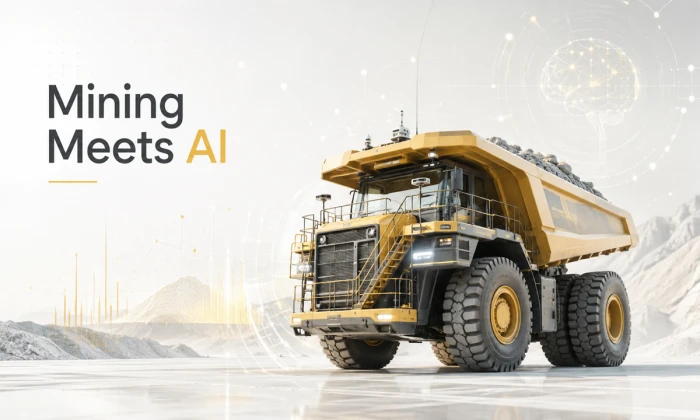
Caterpillar has spent years proving that autonomous technology can operate giant machines in some of the world’s harshest industrial environments. Now the 101-year-old equipment giant is applying many of those same lessons to artificial intelligence.
The company is expanding AI across construction sites, quarries, factories, equipment servicing and internal software development, using experience gained from deploying autonomous haul trucks in mines. The strategy is less about adding a chatbot to existing operations and more about redesigning how workers, machines, data and software operate together.
Caterpillar Chief Technology Officer Jaime Mineart told TechCrunch that the company can now take lessons learned from mining and apply them to more unpredictable environments such as construction sites and quarries.
Caterpillar Already Has Years of Real-World Autonomy Data
Mining has given Caterpillar something many companies entering physical AI do not yet have: autonomous systems operating at commercial scale.
Caterpillar said its autonomous mining fleet has moved more than 11 billion tonnes of material and traveled more than 380 million kilometers. The company says those operations were completed without a reported injury associated with autonomous hauling.
Its 2025 annual report showed the number of Caterpillar autonomous haul trucks in operation had climbed to 827, highlighting how far the technology has moved beyond experimental deployments.
That experience matters because deploying autonomous machinery requires more than installing sensors or AI models. Companies have to rethink traffic flows, safety procedures, worker responsibilities, maintenance processes and the way people interact with machines.
Mineart described workflow integration as one of the hardest parts of deploying both autonomy and physical AI.
That could become one of Caterpillar's biggest advantages as companies race to move AI beyond office software and into factories, warehouses and construction environments.
Quarry Deployment Shows the Mining Model Can Scale Down
Caterpillar is already testing whether technology developed for enormous mining operations can work in smaller industrial environments.
At Luck Stone's Bull Run quarry in Virginia, Caterpillar deployed autonomous Cat 777 trucks using its MineStar Command system. The operation went live in November 2024.
By July 2025, the autonomous trucks had moved 1 million tons of material. Within the first year, the operation had passed 2 million tons, with Caterpillar reporting no safety injuries from the autonomous operation.
The deployment is important because quarry operations can look very different from giant mines where hundreds of trucks run continuously.
At Bull Run, Caterpillar automated four 100-ton Cat 777 trucks operating a single shift. Engineers simplified some MineStar features and adjusted training and operational procedures to fit the site's requirements rather than simply copying a mining deployment.
That same approach could shape Caterpillar's broader AI strategy: start with proven technology, then redesign it around the environment where it will actually be used.
1.6 Million Connected Assets Give Caterpillar an AI Data Advantage
Another major part of Caterpillar's AI push is data.
The company says it has approximately 1.6 million connected assets globally feeding data into its digital ecosystem. Its Cat Helios cloud platform contains around 16 petabytes of data generated through those connected machines.
That creates a valuable foundation for industrial AI systems.
Unlike general-purpose AI trained largely on public text and images, Caterpillar can work with machine operating records, maintenance information, equipment telemetry and jobsite data generated by physical equipment.
The company is putting that information behind its Cat AI Assistant, which was introduced earlier this year.
The assistant is designed to help customers buy, maintain, manage and operate equipment through a conversational interface. Caterpillar has described it as a system capable of connecting users with its digital applications and equipment data rather than functioning as a conventional chatbot.
Technicians, for example, could use voice interactions while standing beside a machine to locate troubleshooting information, retrieve repair procedures or determine which parts may be required.
According to Mineart, the assistant is already being used by customers, operators and technicians.
AI Is Also Moving Inside Caterpillar's Software Operations
Caterpillar's AI deployment goes beyond machines in the field.
The company is using AI in manufacturing, digital-twin systems and software development. Mineart said Caterpillar is using AI agents to help modernize legacy software, create and test code and identify defects earlier in the development process.
Caterpillar is also strengthening its physical-AI capabilities through partnerships and acquisitions.
In January, it expanded its collaboration with Nvidia around AI-enabled machinery, factories and industrial systems. Caterpillar said the partnership would combine AI with machines, jobsites, manufacturing environments and supply-chain operations.
In July, Caterpillar acquired spatial-data company Skycatch. The technology provides near-real-time, high-resolution site data that can be integrated with Caterpillar's MineStar and RPM mining systems to improve planning and material movement.
Together, those investments point toward an industrial AI stack that connects sensors, equipment, site maps, operational software and autonomous machines.
Caterpillar Is Also Investing in Workers
Caterpillar's experience with mining has also shown that automation changes jobs instead of simply changing machines.
As autonomous equipment becomes more capable, an operator who previously controlled one machine may instead supervise several machines remotely or manage automated workflows from a command center.
Mineart told TechCrunch that Caterpillar plans to spend $100 million over five years on workforce development as employees adapt to technologies including AI, autonomy and robotics. Caterpillar employed approximately 118,000 people worldwide at the end of 2025.
The company has separately begun deploying its five-year, $100 million Building the Future Workforce Initiative across regions including Texas and Illinois, supporting advanced manufacturing and technician skills.
The investments underline a lesson Caterpillar appears to have taken from autonomous mining: technology deployment succeeds only when employee training and operational redesign happen alongside it.
The AI Boom Is Already Boosting Caterpillar's Business
Caterpillar is not only supplying equipment that uses AI. It is also benefiting financially from the infrastructure required to run AI.
The company reported $20.5 billion in sales and revenue during the second quarter of 2026, up 24% from $16.6 billion a year earlier and the first quarter in Caterpillar's history to exceed $20 billion in revenue. Adjusted profit per share reached $8.17, compared with $4.72 a year earlier.
Demand for equipment used to power data centers has become an increasingly important growth driver. TechCrunch reported that Caterpillar's power-generation sales jumped 72% to $3.1 billion in the quarter as cloud computing and generative AI infrastructure continued expanding.
For full-year 2025, Caterpillar generated a record $67.6 billion in sales and revenues.
The result is an unusual position for the industrial giant. Caterpillar can benefit from AI infrastructure demand while simultaneously embedding AI into the machines and operations its customers use.
Industrial AI May Be Won on the Jobsite, Not in the Chat Window
Caterpillar's strategy highlights how the next stage of AI deployment could look very different from the first.
Generative AI initially spread through browsers, productivity software and chat interfaces. Industrial AI has to interact with machines weighing tens or hundreds of tons, operate around workers and respond to environments where errors can have physical consequences.
That makes reliable data, safety processes, workflow redesign and human training as important as the underlying AI model.
Caterpillar has already spent more than a decade solving versions of those problems in autonomous mining. The company's next challenge is proving that the same playbook can work across construction sites, quarries, factories and other environments that are far less predictable than a controlled mine.
If it succeeds, Caterpillar's decades of experience automating heavy equipment may become one of its most valuable assets in the physical AI era.