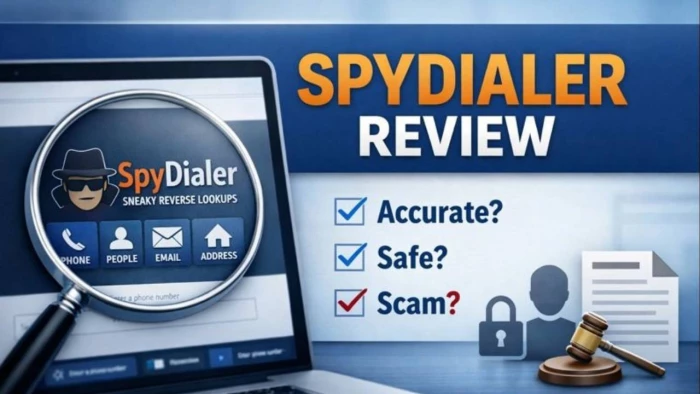
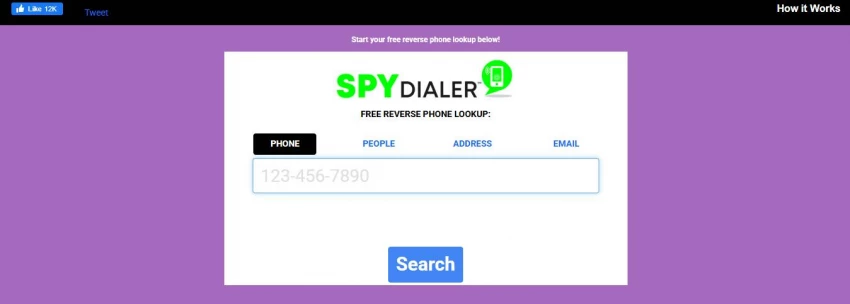
SpyDialer is a web-based reverse lookup service for U.S.-based numbers that lets you search by phone/people/address/email. It heavily positions itself as “free” and “sneaky,” while also including a prominent accuracy disclaimer. (spydialer.com)
“SpyDialer Free” in practice means:
● You can run lookups without paying SpyDialer directly (the site emphasizes “free” and a daily limit like “up to 50 a day”).
● But user reviews repeatedly describe the experience as ad-heavy and sometimes a redirect funnel to paid data-broker products (BeenVerified/Spokeo-like outcomes).
So “free” is best understood as: no upfront subscription required for basic attempts, but monetized via ads/upsells and, in some cases, referrals.
SpyDialer explicitly warns that the target may see a missed call from a SpyDialer number, and if that number is called back, it plays a recording that they were “spy dialed.”
That matters because it’s not “invisible OSINT magic.” There’s an operational footprint.
SpyDialer’s FAQ states it does not let you listen to someone’s private voicemail messages; it claims it only accesses the outbound greeting—what you hear if you call and it goes to voicemail.
3) What it actually does vs. what it claims to do :
| Topic | SpyDialer claim | What evidence shows in practice |
| Free reverse lookup | “Seriously free,” daily usage implied (ex, “up to 50 a day”) | Some users confirm it’s free and doesn’t require payment; others report “bait & switch” or redirects to paid services. |
| Sneaky | Branded as “SNEAKY” | It’s not fully stealth: the target may see a missed call; callback plays a disclosure recording. |
| Voicemail access | Only outbound greeting; not private messages | Users talk about “seeing if there’s a voicemail” and using it to sanity-check scam calls (anecdotally). |
| Accuracy | Official site disclaims accuracy; “no guarantees.” | Reports are polarized: some say it “used to work” then now returns “no results” + upsells; others say it still helps identify scammers. |
| Responsible use | Privacy policy says not a consumer reporting agency; not for FCRA decisions. | This is a legal boundary statement; it doesn’t prove users won’t misuse it—only that SpyDialer is trying to limit liability. |
SpyDialer’s own site includes a broad data warning that results may be wrong, and it makes no guarantees; it explicitly mentions errors and “false ‘no hits.’”
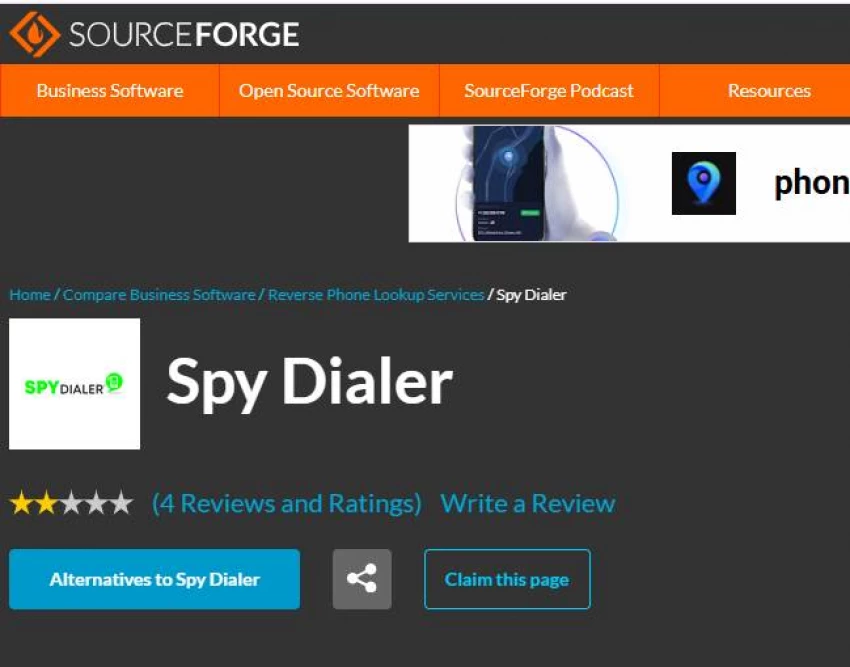
From SourceForge (4 reviews):
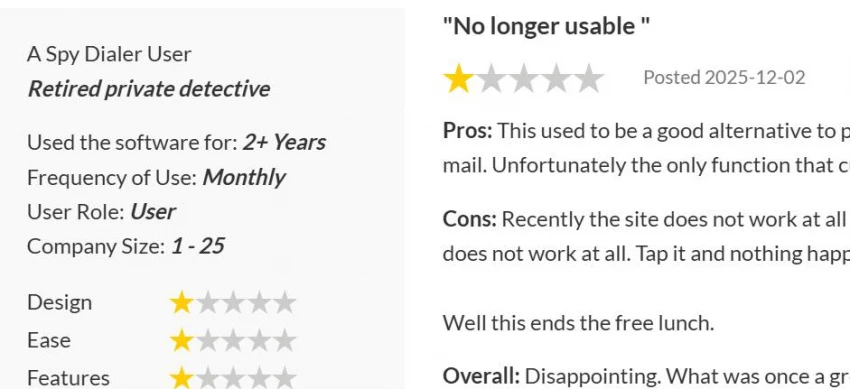
● One reviewer (Dec 2025) says the site became “no longer usable,” the search button is not working, and “only paid advertisements” are functioning.
● Another calls it “not a free service,” says it doesn’t show who’s calling, and calls the site “trash.”
● A third says they “love” checking if there’s a voicemail and using it to verify scam calls (ads are annoying but ignorable).
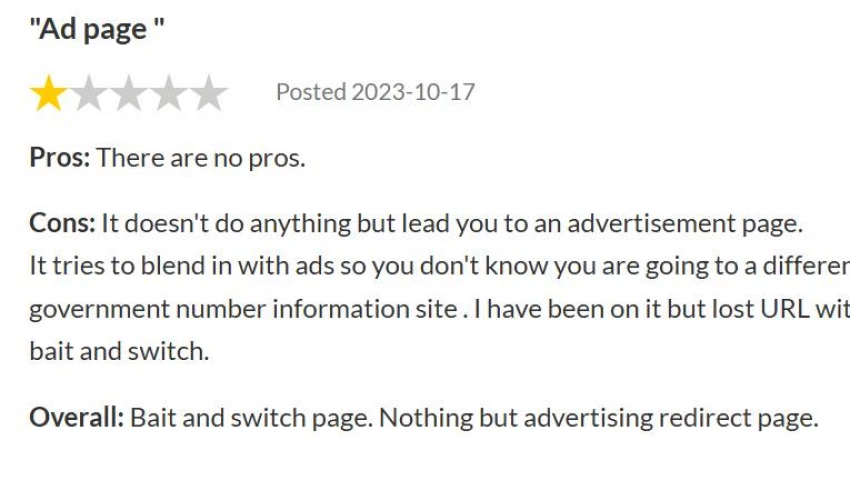
● A fourth calls it an “Ad page” that redirects and wastes time.
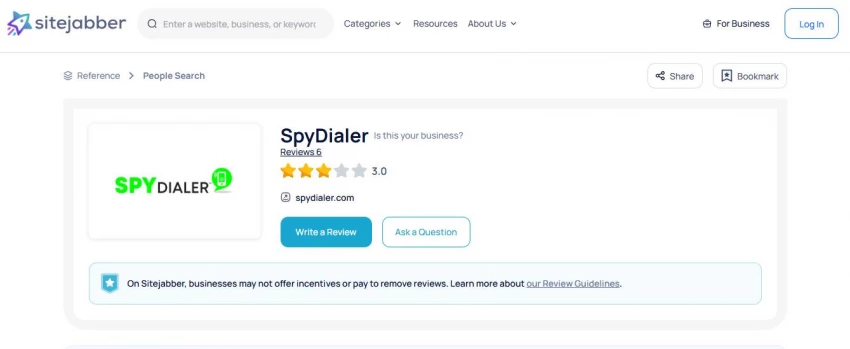
From Sitejabber (6 reviews):
● A positive reviewer praises it for being free and not demanding personal info.
● Two separate reviewers say it used to work, but now yields “NO RESULTS FOUND” and pushes them to paid services like Spokeo.
From Reddit snippet (limited):
● One user reports it was “100% inaccurate” for their tests and had their number mapped to the wrong person.
1. Data exposure / data-broker behavior:
● SpyDialer is described by opt-out services as a place where people’s info is searchable and removable via an opt-out process.
● SpyDialer itself provides “Remove My Info” and states it lets consumers opt out.
2. The “spy dial” footprint:
● SpyDialer warns the recipient may see a missed call and can learn they were spy-dialed if they call back. That’s a privacy/ethics wrinkle because it’s not purely a passive lookup. (
3. Misuse risk:
● Even if SpyDialer intends “scam screening,” the same capability can be used for harassment, stalking, or doxxing. That’s an ethical risk inherent to people-search products, especially when “free” removes friction.
United States:
● SpyDialer positions itself as legal and emphasizes it’s not a “consumer reporting agency” under the FCRA and forbids use for FCRA-covered decisions (credit, housing, employment, etc.).
● It also offers opt-out mechanisms and a “Do Not Sell or Share” style link, suggesting attention to state privacy requirements.
● Separately, data-broker legality can be affected by state laws and protected-person address confidentiality regimes (example: litigation around NJ “Daniel’s Law” shows how contentious these rules can get—though that case isn’t solely about SpyDialer’s product mechanics).
EU (GDPR):
● Under GDPR, “personal data” is broadly defined as information relating to an identifiable person.
● Running a people-search directory involving phone numbers and identities raises GDPR compliance questions (lawful basis, transparency, rights requests) if EU residents’ data is involved.
United Kingdom:
● The UK’s regulator guidance defines personal data similarly broadly and ties it to identifiable individuals.
Canada:
● Canada’s privacy regulator describes personal information as information about an identifiable individual, broadly.
Australia:
● Australian privacy guidance explicitly lists phone numbers as an example of personal information.
India (DPDP Act 2023):
● India’s DPDP Act covers “digital personal data” relating to an identifiable person; commentary sources explicitly include phone numbers as personal data, and the law’s text is published by MeitY.
● Practical enforcement timelines depend on rules/implementation steps (so “how strict in practice” can change).
What users praise-
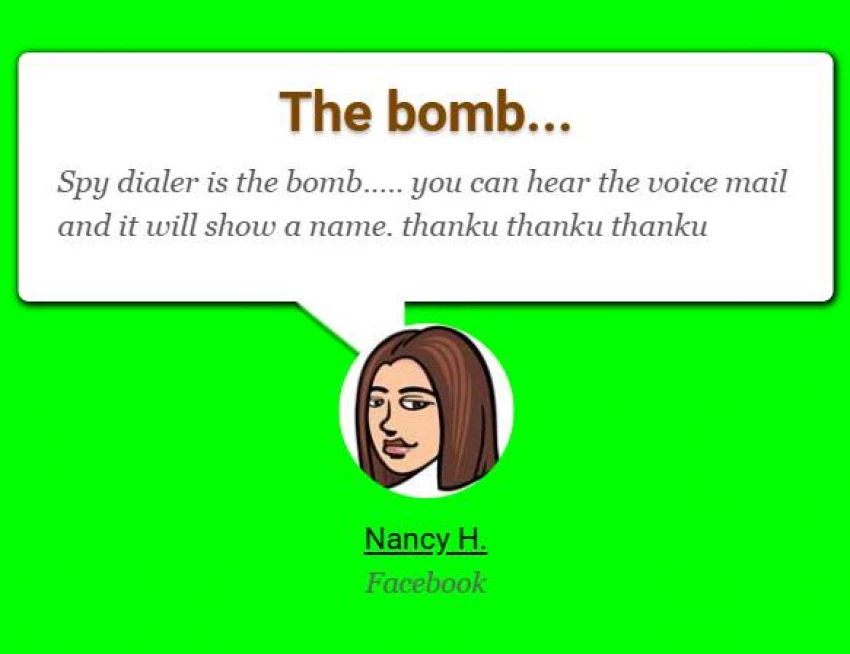
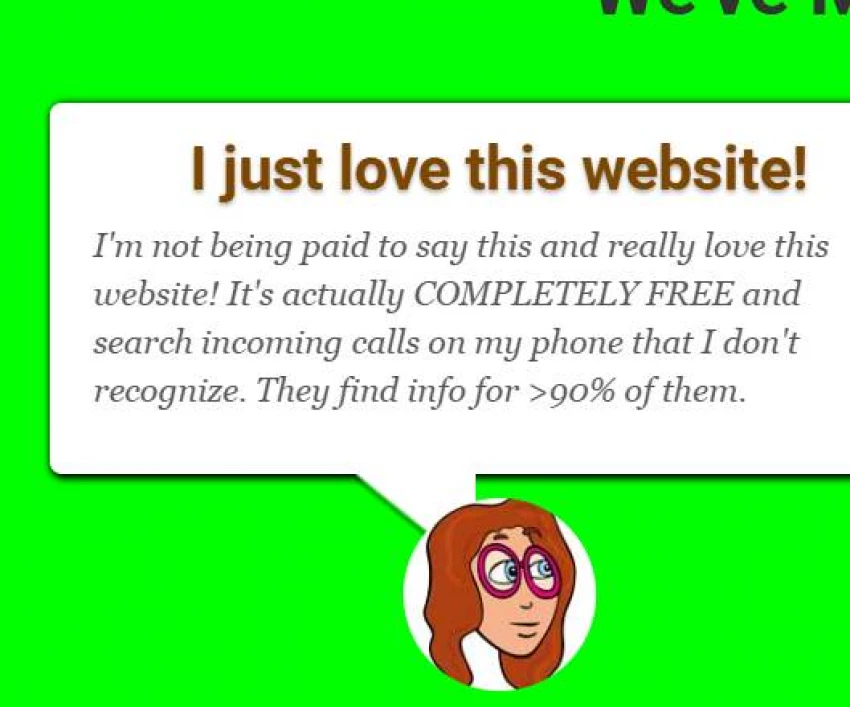
● Quick, free screening of unknown callers: Some reviewers say it helped them decide whether a caller was likely a scammer and appreciated not needing payment or personal info.
● Voicemail-greeting check: Some users specifically like checking if a number has a voicemail greeting to help identify spam/scam patterns.
● Notably, even positive reviewers often acknowledge ads or limited detail.
● “Used to work, now it doesn’t”: Users report formerly good results, now “no results” and/or referral to paid services.
● Ad/upsell overload: Users describe the product as essentially an ad funnel or “advertisement honey pot.”
● False matches / wrong owner: A Reddit snippet reports total inaccuracy and misattribution.
● UI/functionality breakage: One SourceForge reviewer claims the search button didn’t work.
“Useful sometimes, but high-friction and high-risk for being misled.”
Here’s why:
● SpyDialer clearly disclaims accuracy and admits public-source limitations. That’s not “scam language” by itself.
● But multiple independent reviewers describe patterns consistent with bait-y experiences: no results + prominent pushes to paid services, heavy ads, and degraded functionality.
● Accuracy complaints (wrong owner) are also present.
So I wouldn’t label it a confirmed scam from this dataset. I would label it borderline misleading in how “free” and “effective” it feels in real use, because the user experience can collapse into ads/redirects and unreliable results.
● Truecaller is primarily crowdsourced caller ID + spam detection (works best when lots of users contribute).
● Whitepages / BeenVerified are more classic people-search / public-record style products (often paid for deeper reports). Whitepages also has an iOS reverse-lookup app with in-app purchases.
● SpyDialer sits in the “free-ish lookup” lane, with a distinctive voicemail greeting angle and strong “sneaky” branding.
● Information.com / UnMask operates as a comprehensive people-search engine focused on compiling deep public records, such as criminal backgrounds and contact details, into organized, easy-to-use search reports.
| Tool | Strength | Tradeoffs | Best for |
| SpyDialer | Free attempts; voicemail greeting angle; opt-out exists | Inconsistent results; ads/redirect complaints; may generate a visible missed call to the target | Quick “maybe this number is real” checks when you don’t want to pay |
| Truecaller | Strong caller ID + spam signals; big network effects | Privacy concerns are often raised about crowdsourcing contact data (varies by region and settings) | Daily spam blocking + identifying frequent unknown callers |
| Whitepages | Established directory-style lookup; iOS app with paid tiers | Many details paywalled; U.S.-centric | When you’re willing to pay for richer directory results |
| BeenVerified | Deeper reports (paid) are described by directories/review pages | Subscription cost; still public-record limitations | When you need a broader context beyond the caller ID |
| NumLookup / similar free sites | Free reverse lookup claim for US numbers | Same “free lookup” ecosystem issues can apply (coverage + accuracy vary) | Lightweight free checks as a second opinion |
Use SpyDialer if your expectations are realistic and you’re treating it as a light, exploratory tool:
● You want a free, fast first look at a U.S. phone number, not a definitive answer. Think clues, not conclusions.
● You’re okay using the results as non-authoritative hints, knowing they may be incomplete or outdated.
● You specifically find value in the voicemail greeting method as an extra data point, and you understand that it may leave a trace or notify the recipient indirectly.
SpyDialer is not a good fit if accuracy, privacy, or ethics are important to your use case:
● You need high-confidence results. Many users report incorrect matches or no results at all, even for common numbers.
● You want a frictionless experience without ads, funnels, or redirects that interrupt the lookup flow.
● Your use case involves stalking, harassment, or sensitive personal investigations—whether about yourself or someone else.
● You’re concerned about legal or ethical boundaries. Even seemingly simple workflows (like outbound greeting-based lookups) can cross lines, and laws vary widely by country.
Bottom line:
SpyDialer works best as a quick, curiosity-driven tool, not a serious investigative resource. If you need accuracy, discretion, or compliance across regions, you’re better off looking elsewhere.
Share your thoughts about this article.
Be the first to post a comment!
Quick answerQuillBot and Stealth Writer are both AI rewriting tools, but they do...
Michael Hicklen3 weeks ago
AutoDraft AI looks appealing on the surface. It promises consistent cartoon char...
Muskan Kansay1 month ago
If you write scripts, build products, or publish videos, you have probably wonde...
Sakshi Dhingra1 month ago
Are you tired of spending hours creating invoices for your clients? I was,...
Sakshi Dhingra1 month ago
How I approached this review: I researched Wegic AI through its public site, pri...
Sakshi Dhingra2 months ago

PicLumen has been quietly creeping into AI creator circles for over a year now,...
Sakshi Dhingra2 months ago