If you've spent any time inside Pictory over the last twelve months, you've probably noticed the same thing the rest of us have: the platform that once felt like a quiet shortcut is starting to feel like a compromise. It still turns blogs into videos. It still scrapes a script and stitches together stock clips. But the gap between what Pictory does and what the rest of the AI video market now does without breaking a sweat has widened in a way that's hard to ignore.
Pictory was an early mover. In 2022 and 2023, it was one of the few tools that handled the "I have a blog post, I want a video" workflow without forcing you into a timeline. That was a real edge. In 2026, it's not. Tools you've barely heard of are bundling Sora 2 and Google's VEO 3.1 into a single subscription. Avatars now blink, gesture, and switch languages without the uncanny lag they had two years ago. Voice clones recorded from thirty seconds of audio are passable enough that creators routinely admit, only half-jokingly, that their clients can't tell.
So if you're searching for the best alternatives to Pictory, the honest framing is this: you're not looking for a Pictory clone. You're looking for the tool that does the one thing Pictory keeps doing badly for you, and does it well enough that you stop fighting your software.
I've grouped these by what each one solves, because that's the only useful way to think about a switch. "Top 10 lists" that rank avatar tools alongside cinematic generators alongside template editors aren't ranking anything they're padding word count. Here's what holds up.
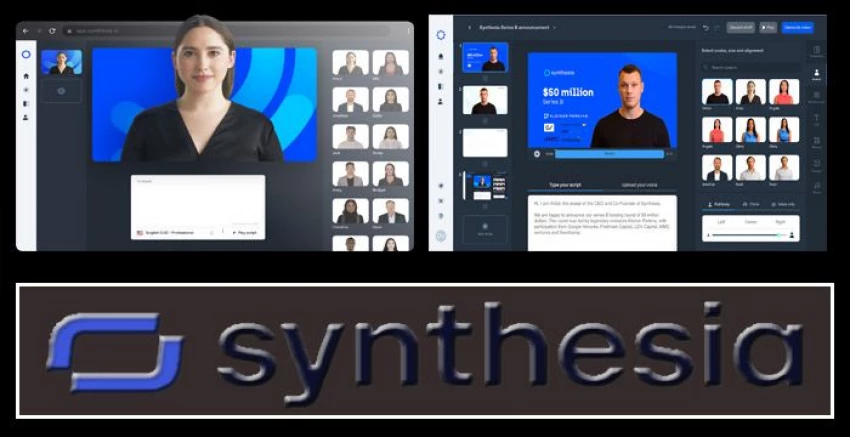
Synthesia is the platform Fortune 500 L&D departments default to, and it earned that position. The 2026 lineup includes 230+ stock avatars, support for 140+ languages, SOC 2 Type II and ISO 42001 compliance, SCORM export for LMS integration, and a Series E round that closed at a $4 billion valuation in January 2026. The Express-2 avatar engine reduces uncanny-valley artifacts noticeably compared to earlier generations.
Where it earns its keep: consistency. Every output holds a uniform, on-brand look, exactly what corporate training and HR onboarding need across multiple offices. Express Avatars, a 2026 release, generates a custom spokesperson from a single photo without a studio session.
Where it doesn't fit: solo creators making short-form social content. Synthesia's pricing starts around $22/month annual but jumps quickly. Custom avatars on the Enterprise tier carry a roughly $1,000/year add-on, and SCORM export lives behind that same gate. If you're a creator making TikToks, this isn't your tool.
Best for: Corporate L&D, HR onboarding, regulated industries, multilingual training at scale. Skip if: You need short-form social, cinematic visuals, or a free tier (Synthesia has no free plan).
HeyGen's Avatar IV engine, released in 2025 and refined through 2026, produces what most independent reviewers consider the most lifelike AI presenters currently available. Side-by-side tests on r/marketing and across multiple comparison reviews note natural micro-expressions, head tilts, and gestures that hold up in short-form content where viewers scrutinize faces.
Pricing starts at $24/month on the annual Creator plan ($29 monthly), supporting unlimited standard video generation. The catch, and Reddit communities raise this consistently, is the 200 premium credit allowance that gates Avatar IV and lip-sync translation. Heavy users hit that ceiling fast and face a steep jump to the Business plan.
HeyGen's voice cloning, particularly the Instant Voice Clone trained on 30 seconds of audio, is the feature that's quietly transforming sales workflows. Companies are using it to send personalized prospect videos at scale, a use case Pictory simply isn't built for.
Best for: Sales teams, social-first marketers, multilingual personalized outreach.
Skip if: You need stock-footage-driven blog repurposing or a predictable, non-credit-based pricing model.

InVideo took a different bet from everyone else on this list. Instead of stitching stock clips behind a script (Pictory's playbook) or generating an avatar (Synthesia's), it generates the entire video — script, footage, voiceover, subtitles, music, transitions from a single text prompt. As of 2026, it's the only consumer platform bundling both OpenAI's Sora 2 and Google's VEO 3.1 inside one subscription.
The Plus plan runs $28/month with about 50 generation minutes; the cheaper Standard tier sits at $15/month for 50 minutes on annual billing. Reviewers consistently praise the speed and the template breadth (10,000+). The honest critique, from a thorough max-productive.ai review and corroborated on Reddit, is that AI-generated scripts read as formulaic, roughly one in four editing commands needs a retry, and credits burn on bad outputs without refund.
If your workflow is "I need 30 product clips by Friday and I don't care if they're frame-perfect," InVideo will outperform Pictory on raw throughput. If you need brand fidelity, you'll fight it.
Best for: Marketers producing high-volume social content, agencies managing multiple client accounts, creators who treat AI video as a draft engine.
Skip if: You need pixel-precise editing control or fewer than five videos a month (the credit math doesn't pencil out).
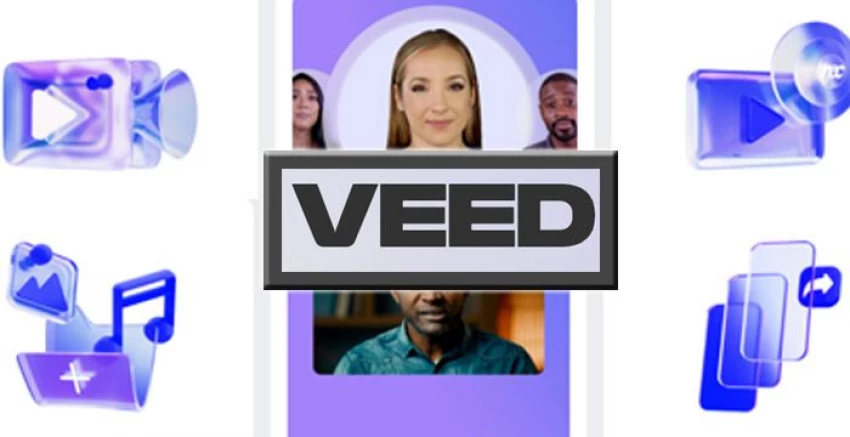
VEED takes the opposite approach from InVideo and Pictory. Instead of automating the whole pipeline, it provides a clean browser-based timeline editor with AI features layered on — subtitle automation (which marketing teams routinely call out as more accurate than competitors), background removal, eye contact correction, and a growing template library.
For teams whose video workflow is closer to "polish what we already shot" than "generate from a script," VEED is a stronger fit than Pictory. It's also the tool where a non-editor on your team can actually learn the interface in an afternoon, a non-trivial advantage when 43% of marketers cite in-house skills as their primary video adoption barrier (Wyzowl, 2026).
Limitations: VEED won't generate a video from a blog URL the way Pictory or InVideo will. You're still doing the assembly. And the AI features, while solid, don't match HeyGen's avatar realism or Runway's cinematic quality.
Best for: Social media teams, creators who shoot their own footage, teams that need collaborative editing. Skip if: Your goal is full automation from text input.
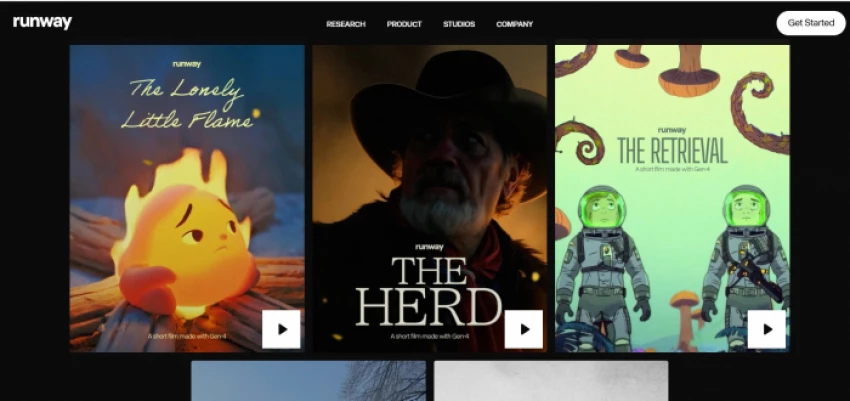
Runway is in a different stratum from Pictory entirely. Its Gen-4.5 model produces output that genuinely belongs in a film trailer, Lionsgate has used Runway in production work, and the company closed a $315 million Series E in February 2026 at a $5.3 billion valuation, a meaningful signal of where the cinematic AI video market is heading.
Pricing starts at $12/month for the Standard plan with 625 credits. A 10-second Gen-4 clip costs around 100 credits, so do that math carefully. The free tier offers 125 one-time credits, useful for evaluation, not for production.
Runway is not "Pictory but better." It's a tool for people who want to generate raw cinematic footage and assemble it elsewhere. There's no script-to-video pipeline, no built-in voiceover layer, no template gallery. If you need a publishable marketing video on Friday, Runway is the wrong choice. If you need a 12-second hero shot that no stock library could produce, it's the right one.
Best for: Filmmakers, ad creatives, brand teams producing premium hero content, anyone who values output quality over throughput.
Skip if: You need a complete production pipeline in one tool.
| Tool | Starting Price (Annual) | Best For | Generative AI Models | Avatar Support | Voice Quality |
| Pictory | $19/mo | Blog-to-video repurposing | Limited (AI Studio) | Basic | Decent, robotic on edge cases |
| Synthesia | $22/mo | Enterprise L&D, training | None (avatar-focused) | 230+ avatars | Strong, business-grade |
| HeyGen | $24/mo | Avatar realism, sales outreach | Sora 2, VEO 3.1 add-ons | 200+ avatars (Avatar IV) | Excellent, voice cloning |
| InVideo AI | $15-28/mo | Full pipeline from a prompt | Sora 2 + VEO 3.1 included | Limited | Solid |
| VEED | $18/mo | Browser editing + AI | Limited | Basic | Good |
| Runway | $12/mo | Cinematic generation | Gen-4.5, in-house frontier | None | Limited |
| Tool | Standout Strength | Honest Limitation |
| Pictory | Fast blog-to-video pipeline | Generic stock matches, slow editor |
| Synthesia | Enterprise compliance, avatar polish | Expensive add-ons, no free tier |
| HeyGen | Most realistic avatars, voice cloning | Premium credit system causes surprise costs |
| InVideo AI | Sora 2 + VEO 3.1 in one subscription | Formulaic AI scripts, credit waste on retries |
| VEED | Easy browser-based collaboration | Less automation than competitors |
| Runway | Cinematic quality, frontier models | No production pipeline, learning curve |
I've scored each tool on the dimensions that actually matter when you're choosing a Pictory alternative, not on a generic 1-10 scale that flattens trade-offs.
| Tool | Ease of Use | Output Quality | Value | Beginner Friendly | Support | Scalability |
| Synthesia | 4.4/5 | 4.7/5 | 3.8/5 | 4.2/5 | 4.5/5 | 4.8/5 |
| HeyGen | 4.5/5 | 4.8/5 | 4.0/5 | 4.4/5 | 4.2/5 | 4.5/5 |
| InVideo AI | 4.6/5 | 4.0/5 | 4.5/5 | 4.7/5 | 3.9/5 | 4.3/5 |
| VEED | 4.6/5 | 4.1/5 | 4.4/5 | 4.7/5 | 4.3/5 | 4.0/5 |
| Runway | 3.5/5 | 4.9/5 | 3.7/5 | 3.0/5 | 4.0/5 | 4.2/5 |
Reasoning highlights: Runway scores low on beginner-friendliness because its interface assumes familiarity with film terminology, prompts that work expect users to specify camera angles, lens choices, and shot composition. CapCut takes the value crown because the free tier is genuinely production-ready, not a crippled trial. Synthesia leads on scalability because its team management, SCORM export, and workspace controls are designed for thousands of users in regulated industries.
A clean framework, based on the actual decisions teams I've spoken with have made over the past year:
Repurposing blog posts and articles into social videos: InVideo AI, then Lumen5. Pictory's original use case, but its competitors now do it better.
Corporate training, onboarding, multilingual L&D: Synthesia first, HeyGen second. Compliance certifications matter here in ways they don't elsewhere.
Sales prospecting, personalized outreach, custom avatars: HeyGen. Voice cloning plus avatar realism makes one-to-one video at scale viable.
Cinematic short content, ad hero shots, brand-defining visuals: Runway, with VEED for assembly.
Marketing teams needing brand consistency: Lumen5 or VEED, depending on whether you want automation or control.
Multilingual content for global audiences: Fliki for voice depth, HeyGen for avatar lip-sync translation, Synthesia for training localization.
The honest answer: probably, but not for the reason you think.
Pictory still works for what it was designed to do, stitching a script or blog into a watchable video with stock footage and a serviceable AI voice. If that's your workflow, the $19/month plan is fine. The platform isn't broken. It just isn't growing as fast as the category around it, and the gap compounds month over month.
The real reason to switch isn't that Pictory got worse. It's that the alternatives got dramatically better, often at the same price or lower. InVideo AI bundles frontier generative models for a few dollars more. HeyGen produces avatars Pictory can't match for similar money. Synthesia operates at an enterprise tier Pictory was never built to compete in. Descript transformed editing workflows in a way Pictory's roadmap hasn't approached. Fliki delivers voice quality at a price that makes Pictory's voiceover library look thin.
The good news: in 2026, the choice is no longer "Pictory or nothing." It's "which of these nine actually fits how I work."
That's the better problem to have.
Share your thoughts about this article.
Be the first to post a comment!
The same tool can be a 4.7 on one site and a 3.9 on another. Here is what is rea...
Nitin1 month ago

Here is the number worth pinning above your budget: in Gartner Digital Markets r...
Deepak Mehra1 month ago
What Artlist AI is in 2026Artlist began as a royalty-free music library. By 2026...
Deepak Mehra1 month ago
Most AI tool failures do not announce themselves. There is no crash, no angry em...
Nitin1 month ago

The best AI image generator in 2026 is Nano Banana 2 for speed, FLUX.2 for photo...
Parveen Verma1 month ago

“Useful” is a slippery word for a coding assistant. A tool can be brilliant at o...
Sakshi Dhingra1 month ago