In 2026, the debate over AI coding assistants has effectively collapsed into a two-horse race. On one side is OpenAI Codex, the sandbox-first autonomous agent bundled into every ChatGPT plan, now serving over 8 million active users after the GPT-5.6 "Sol" launch in July 2026. On the other side is Anthropic's Claude Code, the terminal-native, developer-in-the-loop agent that grew from a research preview in February 2025 into a $2.5 billion annualized revenue product commanding an estimated 54% of the AI coding market by early 2026.
Both tools do the same thing on paper: you describe a task in plain English "add OAuth2 login with password reset," "refactor this module to async/await" and the agent writes code across multiple files, runs tests, and iterates until the work passes. But underneath that shared promise sit two very different philosophies, two different pricing models, and two very different sets of trade-offs that show up in your codebase and your invoice.
This article compares them across every dimension that matters: raw benchmarks, real adoption numbers, token economics, pricing tiers, developer sentiment from surveys of 500+ engineers, code quality from blind reviews, ecosystem traction, and the hybrid workflows top teams actually use. Every figure is sourced from public data as of July 2026.
• Choose Codex if you want speed, autonomy, lower cost per task (~4x fewer tokens for the same work), best-in-class terminal/DevOps performance, and rock-solid code review.
• Choose Claude Code if you want the highest code quality (rated cleaner in 67% of blind reviews), a 1M-token context window, transparency during execution, and the strongest skills/agent-teams ecosystem.
• Do what the pros do: run both. The dominant 2026 pattern among experienced teams is a hybrid, Claude Code generates the feature, Codex reviews it before merge.
First, a naming clarification: today's Codex shares only its name with the 2021 model that powered the original GitHub Copilot. The modern Codex launched as an open-source CLI in April 2025 (rewritten from TypeScript to Rust in June 2025 for throughput and stability), then expanded into a cloud agent, IDE extensions, a code-review bot, mobile access, and, as of July 2026 a unified ChatGPT desktop app where the standalone Codex app was folded in alongside the new "ChatGPT Work" agentic mode.
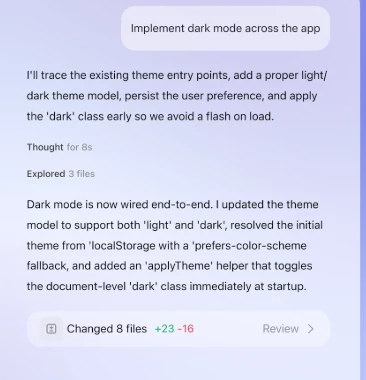
Codex's core philosophy is autonomy. It runs tasks in a sandboxed environment, works through them independently, and presents finished results for review. The default model since July 9, 2026 is GPT-5.6 Sol, with GPT-5.5 and GPT-5.3-Codex available on lower tiers. Configuration follows the open AGENTS.md standard, which is also read by Cursor, Aider, and tens of thousands of open-source projects meaning existing team configs often work with zero migration.
Claude Code launched as a limited research preview in February 2025 and hit general availability in May 2025. It is terminal-native and local-first: your code stays on your machine while the agent reasons, edits, and runs commands with you present. Over 2026 it added cloud sandboxed sessions, agent teams (multiple coordinated sub-agents), and a rapidly growing Skills ecosystem for reusable task playbooks.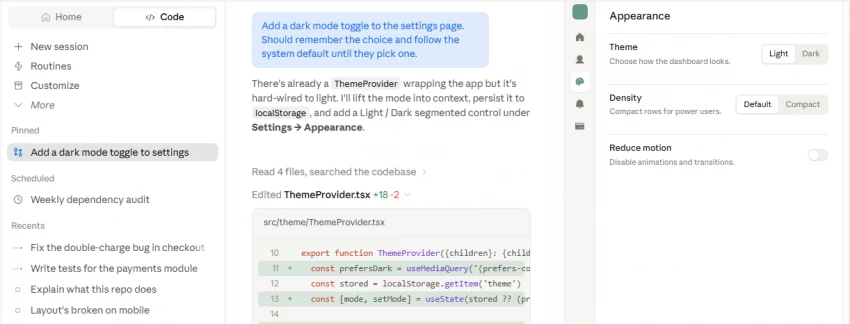
Claude Code's philosophy is developer-in-the-loop. It shows its reasoning as it works, asks for input at decision points, and lets you redirect mid-session, a design choice that trades some raw autonomy for control and transparency. It runs on Claude Opus 4.8 (the current flagship) and Sonnet 4.6, with the Opus line offering a 1M-token context window for whole-repository reasoning.
| Attribute | OpenAI Codex | Claude Code |
| Developer | OpenAI | Anthropic |
| Launched | April 2025 (CLI) | Feb 2025 preview; GA May 2025 |
| Default model (Jul 2026) | GPT-5.6 Sol | Claude Opus 4.8 / Sonnet 4.6 |
| Core philosophy | Autonomous, sandbox-first | Developer-in-the-loop, terminal-first |
| CLI language | Rust (Apache 2.0, open source) | TypeScript |
| Context window | 272K default (GPT-5.5) | Up to 1M tokens (Opus) |
| Config standard | AGENTS.md (open standard) | CLAUDE.md + Skills |
| Surfaces | CLI, cloud, IDE, web, mobile, ChatGPT desktop app | Terminal, web, desktop, mobile (remote), IDEs |
| Token efficiency | ~4x fewer tokens per equivalent task | Higher token burn, more thorough output |
| Active users | 8M+ (with ChatGPT Work, Jul 2026) | Not disclosed; $2.5B ARR product |
Nothing illustrates how fast this market is moving better than the raw adoption curves. Codex began 2026 with roughly 600,000 weekly users. By March it passed 2 million, by April 4 million, and by early June OpenAI confirmed 5 million weekly active users with knowledge workers (non-developers) making up about 20% of that base and growing more than three times as fast as developers. Then GPT-5.6 Sol landed on July 9, and combined Codex + ChatGPT Work usage exploded: 6 million by July 12, 7 million a day later, and 8 million by July 14.
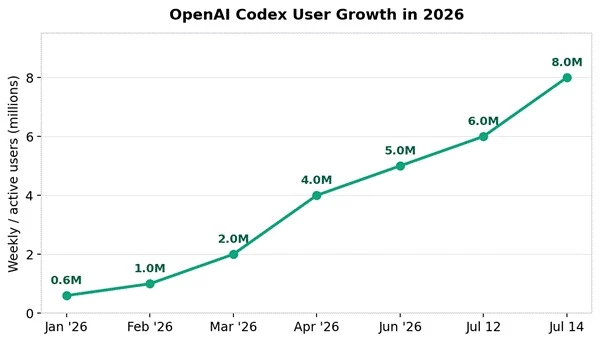
Figure 1: Codex active-user growth through 2026 (company-reported figures; July numbers include ChatGPT Work).
Claude Code's story is told in revenue rather than user counts. It reached $1 billion in annualized run-rate revenue in November 2025 roughly six months after public launch, a pace GitHub Copilot took about three years to match and then doubled to $2.5 billion by February 2026. Anthropic reported business subscriptions for Claude Code quadrupled in early 2026, enterprise use represents more than half of its revenue, and the average developer using the tool spends about 20 hours per week in it. Forbes-cited analysis put Claude Code at roughly 54% of the AI coding market in early 2026, while Anthropic's share of overall enterprise LLM spending climbed from 24% in 2024 to about 40%.
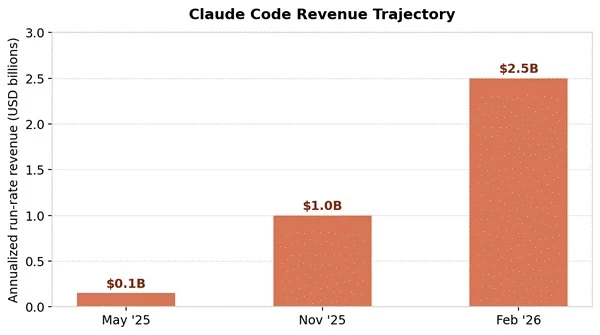
Figure 2: Claude Code annualized run-rate revenue growth (Anthropic announcements).
The two companies' fortunes are intertwined with these products. Anthropic's total run-rate revenue rocketed from about $1 billion in early 2025 to a reported $47 billion by May 2026, when its $965 billion Series H valuation surpassed OpenAI's $852 billion. OpenAI, meanwhile, counters with unmatched distribution: Codex is available on every ChatGPT plan, including Free, which is how it converted a chat audience of over a billion monthly users into millions of coding-agent users in months.
Benchmark leadership has ping-ponged between the two labs all year, so treat any single number as a snapshot. As of July 2026, the picture across the three most-cited coding benchmarks looks like this: GPT-5.5 narrowly leads SWE-bench Verified at 88.7% versus Opus 4.7's 87.6% (a score Opus reached in April after jumping from 80.8% in a single version bump). On the harder SWE-bench Pro, the July GPT-5.6 Sol release edged ahead at 64.6% versus Opus 4.7's 64.3% effectively a tie. On Terminal-Bench, Codex holds a decisive lead: GPT-5.6 Sol scores 88.8% on Terminal-Bench 2.1, while Claude models trail well behind on terminal-focused work.
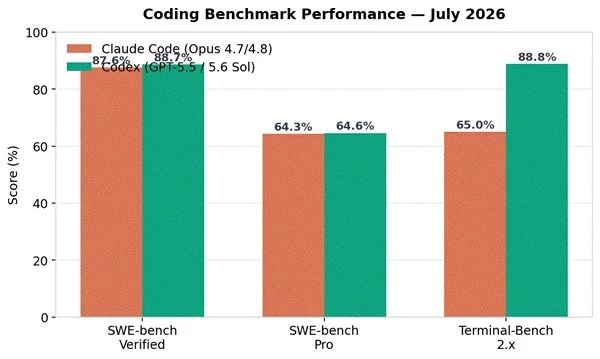
Figure 3: Headline benchmark scores, July 2026. Terminal-Bench figures compare GPT-5.6 Sol (2.1) with Claude's mid-60s range on 2.0; scores across benchmark versions are indicative, not strictly identical tests.
Interpretation matters more than decimals. SWE-bench measures resolving real GitHub issues in real repositories the closest proxy for feature work and bug fixing. Terminal-Bench measures shell-driven tasks: scripting, CI, deployment, DevOps. OSWorld-Verified, a computer-use benchmark, tilts the other way, Claude Opus 4.6 took the lead there, reflecting stronger interface navigation. So the honest summary is: near-parity on software engineering, Codex clearly ahead on terminal/ops work, Claude ahead on broader computer use. Neither tool dominates all three.
• If your work is features and refactors: the SWE-bench near-tie means model choice won't decide your outcome, workflow fit will.
• If your work is scripting, CI/CD, and DevOps: Terminal-Bench is your most relevant benchmark, and it favors Codex decisively.
• If your work spans huge codebases: Claude's 1M-token context window is a structural advantage no benchmark fully captures.
| Capability | Codex | Claude Code |
| Autonomous cloud tasks | Yes, core design; sandboxed runs | Yes, cloud sandboxed sessions (2026) |
| Interactive terminal agent | Yes (Rust CLI) | Yes, core design, richest in class |
| Code review / PR bot | Yes, widely praised, catches race conditions & edge cases | Yes, via GitHub Actions integration |
| Multi-agent orchestration | Basic task parallelism | Agent teams (coordinated sub-agents) |
| Skills / playbooks | Skills system (added 2026) | Mature Skills ecosystem |
| MCP support | Yes (added 2026) | Yes early adopter, deep integration |
| Config standard | AGENTS.md (open, cross-tool) | CLAUDE.md (tool-specific) + AGENTS.md read support |
| Mobile | Yes, ChatGPT app | Yes, remote sessions via Claude app |
| Open source CLI | Yes, Apache 2.0, ~99.6K stars | No (closed), ~138K stars on repo |
| Where code runs | Cloud sandbox (default) | Local machine (default) |
| Execution transparency | Presents finished results | Streams reasoning; mid-session steering |
Two structural differences deserve emphasis. First, data locality: Claude Code's local-first default means source code never has to leave your machine for interactive work, which is why regulated enterprises have adopted it disproportionately. Codex's sandbox model is excellent for isolation but is cloud-resident by default. Second, convergence is real: Codex added MCP support and Skills; Claude Code added cloud sessions and deeper autonomy. By end of 2026 the differentiator is expected to shift from raw capability to integrations and workflow fit.
This is where the tools diverge most sharply in day-to-day use. The consistent community finding, echoed across Reddit, Hacker News, and YouTube head-to-heads, is that Claude Code is faster on simple-to-medium tasks, while Codex is slower but more thorough on complex ones, and dramatically cheaper: Codex uses roughly 4x fewer tokens for the same work.
The most-cited concrete data point is a published Express.js refactor comparison: Claude Code finished in 1 hour 17 minutes, consumed 6.2 million tokens, cost roughly $155 at API rates, and caught a race condition. Codex completed the equivalent task for about $15. Same job, roughly a 10x cost gap, with a quality edge to Claude. That single anecdote compresses the entire trade-off into one invoice.
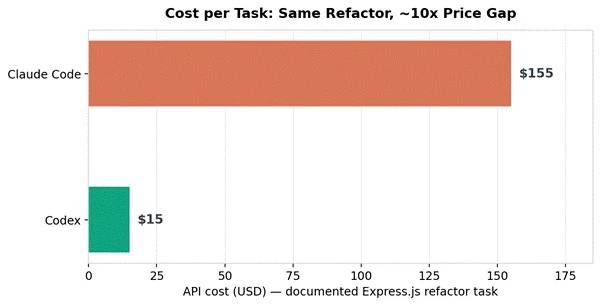
Figure 4: Documented cost for the same Express.js refactor at API rates. Claude's run also surfaced a race condition Codex missed.
Why the gap? Claude Opus produces more complete, heavily documented output and re-reads large context repeatedly (in heavy sessions, over 90% of tokens are cache reads).
Codex generates shorter, working implementations with less explanation and burns fewer tokens doing it. On subscriptions this matters less, flat monthly fees absorb the burn, but on API billing, Opus "will drain your credit card before you even realise," as one 100+ hour comparison bluntly put it. Heavy Claude Code users on Max 20x routinely consume the equivalent of $600–$1,500/month in API tokens for their flat $200.
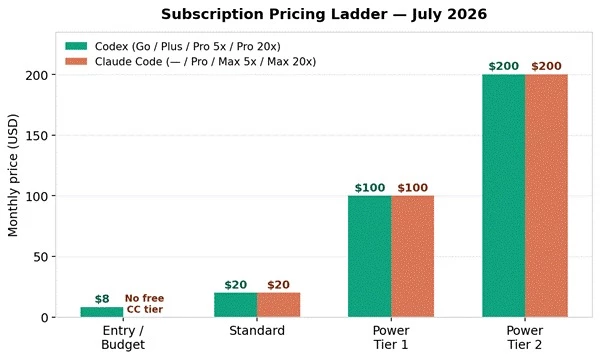
Figure 5: Subscription ladders as of July 2026. Codex additionally offers a $0 Free tier with limited usage; Claude Code has no free tier.
• Free ($0) and Go ($8/mo): Codex is available on every ChatGPT plan as of June 2026, though meaningful daily usage realistically starts at Plus.
• Plus ($20/mo): roughly 15–80 GPT-5.5 messages per 5-hour window, 30–150 GPT-5.3-Codex messages, and 10–60 cloud tasks.
• Pro 5x ($100/mo) and Pro 20x ($200/mo): approximately five and twenty times Plus capacity respectively. During the July 2026 GPT-5.6 launch window, OpenAI repeatedly reset usage limits and temporarily removed the 5-hour cap entirely.
• Pro ($20/mo, $17 annual): entry point; terminal, web and desktop access with Sonnet and Opus. Anthropic's own documentation describes it as suited to light usage, roughly 10–45 prompts (~44K tokens) per 5-hour window, and intensive sessions hit the ceiling within hours.
• Max 5x ($100/mo) and Max 20x ($200/mo): 5x and 20x Pro capacity (up to ~900 prompts per window on 20x). Governed by a dual system: a 5-hour rolling window plus weekly caps, shared across Claude Code, Claude.ai chat and Cowork.
• Team & Enterprise: Team Standard from $20–25/seat, but Claude Code requires Premium seats at $100/seat/month annual ($125 monthly), 5-seat minimum. Enterprise adds a 500K context window, HIPAA readiness and SSO.
• API pay-as-you-go: Sonnet 4.6 from $3/MTok input and $15/MTok output; Opus 4.8 at $5/$25. An "extra usage" toggle added in 2026 lets subscription users overflow into API rates with a spend cap instead of stopping cold.
The pricing bottom line: at identical sticker prices, Codex delivers more headroom per dollar for heavy use because of its token efficiency, and its free/Go tiers make it the only way to trial an agentic coder for under $20. Claude Code's flat Max tiers, however, are arguably the best value in AI if you're a genuinely heavy user, flat $200 buying what would cost $600–$1,500 at API rates.
A large Q1 2026 Reddit survey spanning r/programming and r/ChatGPT with over 500 developer responses produced the single most interesting finding in this entire comparison: 65% of developers prefer Codex for daily coding, yet when the produced code was assessed in blind reviews, Claude Code's output was rated cleaner, more idiomatic and better structured 67% of the time (versus 25% for Codex).
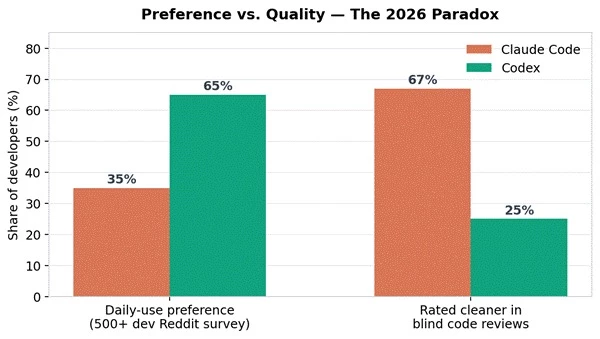
Figure 6: Daily-use preference vs. blind code-quality ratings from a 500+ developer survey, Q1 2026.
How can the tool most developers prefer produce code they rate lower? Because "daily preference" and "code quality" measure different things. Developers prefer Codex because the experience is smoother: faster perceived progress, less babysitting, fewer usage-limit anxieties, lower cost. But high-quality PRs from Claude Code tend to clear human code review faster. One of the most repeated survey takes: "Claude delivers precision edits, Codex handles broad refactoring."
| Praised for | Criticized for | |
| Codex | Code review quality (catches logical errors, race conditions, edge cases others miss); sandbox isolation on long runs; low token burn; speed of shipping surfaces (mobile, PR bot) | Less transparency during execution; terser, less documented output; terminal polish lagging feature velocity |
| Claude Code | Cleanest, most idiomatic output; preserves original structure and layout precisely; execution transparency and mid-session steering; instruction-following and tool-calling (Opus 4.8) | Token consumption ("drains your credit card" on API); Pro-tier limits too tight for real work; slower on long complex runs |
Satisfaction data adds another wrinkle: Claude Code posted a 46% "most loved" rating in developer tracking, and Anthropic's pricing-power data shows users don't substitute away when prices rise, the classic signature of a sticky, loved product. Composio's 100+ hour production comparison ultimately scored it Codex 3, Claude 2, while concluding Opus 4.8 was the better model and recommending keeping both installed. That ambivalence is the honest state of expert opinion in mid-2026.
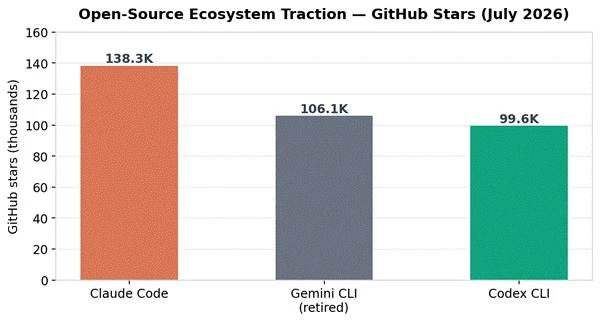
Figure 7: GitHub stars for the three major AI coding CLIs, July 2026. Google's Gemini CLI has since been retired.
Claude Code leads the open-source popularity contest with about 138,300 GitHub stars against Codex CLI's 99,600, despite Codex being the one with an actual open-source (Apache 2.0) codebase and 900+ releases. The gap partly reflects distribution strategy: Codex is deeply tied into ChatGPT subscriptions, so millions of its users never touch the GitHub repo. Codex's npm downloads tell that story, nearly 42 million in May 2026 alone and 357.9 million over twelve months, spiking with the GPT-5.5 rollout and knowledge-worker adoption.
The retirement of Google's Gemini CLI in 2026 is itself a data point: this market consolidated to two serious players, and the winner-take-most dynamics around skills, MCP servers, AGENTS.md configs and community playbooks now compound the leaders' advantages.
| Your situation | Better pick | Why |
| Solo dev on a budget | Codex | Free/Go/$20 tiers; 4x token efficiency; strong enough everywhere |
| Quality-critical production code | Claude Code | 67% blind-review win rate; catches subtle bugs; idiomatic output |
| DevOps, CI/CD, shell scripting | Codex | Decisive Terminal-Bench lead (88.8%) |
| Massive legacy codebase | Claude Code | 1M-token context; whole-repo reasoning |
| Long unattended background runs | Codex | Sandbox isolation + low token burn |
| Regulated / code-can't-leave-machine | Claude Code | Local-first default |
| Code review on every PR | Codex | Community consensus best-in-class reviewer |
| Complex interactive debugging | Claude Code | Streams reasoning; steer mid-session |
| Non-developer building tools | Codex | ChatGPT distribution; knowledge-worker features |
| Agency running client projects | Both | Claude Max for generation + Codex for review |
The most repeated expert pattern deserves its own section because it sidesteps the versus question entirely. Pattern 1: Claude generates, Codex reviews, Claude Code writes a high-quality feature branch, then Codex's reviewer sweeps it for race conditions, logic errors and edge cases before merge. Pattern 2 inverts it for broad refactors: Codex does the cheap, fast bulk transformation; Claude Code does the precision passes. Teams report this combination beats either tool alone on both quality and cost, and it's why "keep both installed" is the closing advice of nearly every serious 100-hour comparison published this year.
• Pros: ~4x token efficiency and lowest cost per task; best terminal/DevOps performance; elite code review; free entry tier; open-source Rust CLI; AGENTS.md open standard; massive distribution and fastest-shipping surfaces; sandbox isolation for long runs.
• Cons: less transparent during execution; terser, lightly documented output; loses blind quality reviews 25% vs 67%; smaller default context (272K); terminal UX polish trails feature velocity; usage policies shifted repeatedly during 2026 growth spikes.
• Pros: highest-rated code quality and structure preservation; 1M-token context; execution transparency with mid-session steering; agent teams and mature Skills ecosystem; local-first privacy; 46% "most loved" rating; flat Max plans deliver $600–$1,500 of API-equivalent value for $200.
• Cons: heavy token burn makes API use expensive (documented 10x cost gap on identical tasks); Pro tier too limited for serious daily work; no free tier; slower on long complex runs; closed-source CLI; shared usage buckets across Claude products can surprise you.
There is no universal winner in July 2026, and anyone declaring one is selling something. The benchmarks are effectively tied on software engineering, decisively pro-Codex on terminal work, and pro-Claude on computer use and context scale. The economics favor Codex per task and Claude per heavy-user subscription dollar. The crowd prefers Codex daily; the blind reviews prefer Claude's code.
If forced to choose exactly one: pick Codex if you optimize for cost, speed, autonomy and ops work, it is the pragmatic default, especially at $20 or below. Pick Claude Code if you optimize for code quality, huge codebases, and control, it is the craftsman's tool, and its Max tiers reward heavy use disproportionately. But the genuinely correct answer for professionals in 2026 is the hybrid: generate with Claude, review with Codex, and let each tool do what the data says it does best.
Share your thoughts about this article.
Be the first to post a comment!
The same tool can be a 4.7 on one site and a 3.9 on another. Here is what is rea...
Nitin1 month ago

Here is the number worth pinning above your budget: in Gartner Digital Markets r...
Deepak Mehra1 month ago

What Artlist AI is in 2026Artlist began as a royalty-free music library. By 2026...
Deepak Mehra2 months ago

Most AI tool failures do not announce themselves. There is no crash, no angry em...
Nitin2 months ago

The best AI image generator in 2026 is Nano Banana 2 for speed, FLUX.2 for photo...
Parveen Verma2 months ago

“Useful” is a slippery word for a coding assistant. A tool can be brilliant at o...
Sakshi Dhingra2 months ago