Every high-performing campaign follows a structured system:
Each stage directly impacts cost per click, conversion rate, and return on ad spend. Tools are not interchangeable. Each one solves a specific performance bottleneck.
| Stage of Workflow | Core Function | Tool | Pricing | Best For | Limitation |
| Keyword Research | Search intent, keyword data, competitor insights | Semrush | Starts~ $139.95/month | PPC keyword research, competitor data | Expensive for beginners |
| Keyword Research | Backlink + keyword database, SERP insights | Ahrefs | Starts ~$99/month | Deep keyword insights, competition analysis | Limited PPC-specific features |
| Ad Copy | Ad headlines, descriptions, variations | ChatGPT | Free, Plus $20/month | Fast copy generation and testing | No real performance validation |
| Campaign Execution | Bidding, targeting, ad delivery | Google Ads | Pay-per-click (variable) | Core campaign management | Requires manual strategy |
| Optimization | Bid automation, rule-based optimization | Optmyzr | Starts ~$249/month | Scaling and automation | High cost for small accounts |
Search intent determines whether a click converts or not. Targeting high-volume but low-intent keywords increases spend without results. The goal is not traffic, but conversion-aligned traffic.
Semrush provides keyword intent classification, CPC data, competition density, and competitor ad copy insights. This allows advertisers to identify keywords that are not only searched frequently but also have commercial intent. (semrush.com)
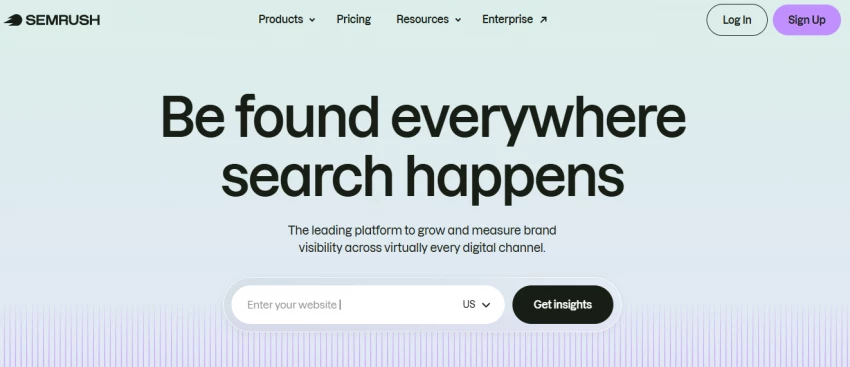
It also includes PPC-specific features such as ad history, keyword grouping, and competitor ad strategies. This is critical when building campaigns that align with proven market behavior rather than guessing.
Pricing: Starts at $139.95/month
Best for: PPC-focused keyword research, competitor ad insights
Limitations: High cost, steep learning curve
Ahrefs is stronger in organic data but still valuable for identifying keyword difficulty, traffic potential, and SERP composition. It helps in understanding how competitive a keyword is and whether ranking or bidding is realistic. (ahrefs.com)
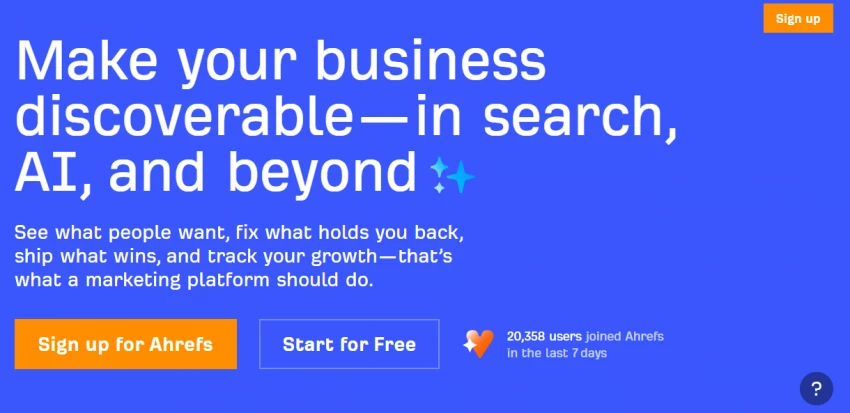
Its keyword explorer provides click metrics, which are useful because not all searches lead to clicks. This helps avoid targeting keywords with inflated search volume but low engagement.
Pricing: Starts at $99/month
Best for: Keyword validation, competition analysis
Limitations: Less focused on paid ads compared to Semrush
Ad performance is heavily influenced by click-through rate. Even with perfect targeting, weak copy reduces impressions into clicks and clicks into conversions.
ChatGPT is used to generate multiple variations of headlines and descriptions quickly. Google Ads rewards variation and testing, and this tool enables rapid A/B testing without manual copywriting effort. (chatgpt.com)
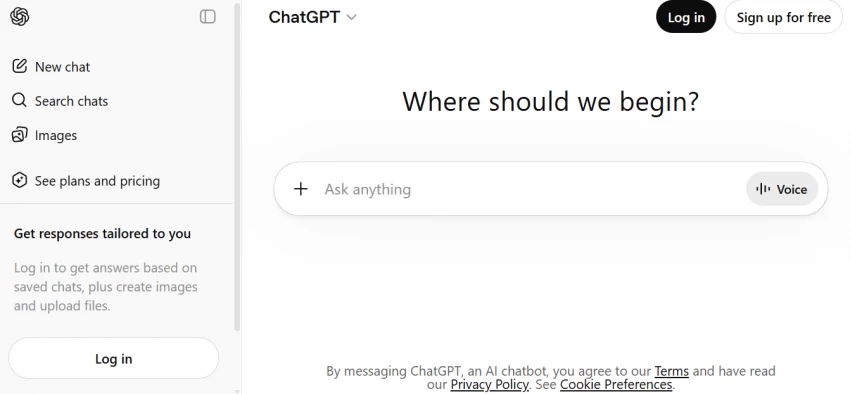
It can structure ads based on proven formats such as urgency-based copy, benefit-driven messaging, and problem-solution framing. It also helps align copy with keyword intent, ensuring consistency between search query and ad message.
Another key advantage is scale. Instead of writing 3 ads, advertisers can generate 20 variations and test them simultaneously, increasing the probability of finding high-performing combinations.
Pricing: Free tier, Plus at $20/month
Best for: Ad copy generation, variation testing
Limitations: Does not provide performance feedback or CTR prediction
Once campaigns are live, performance depends on continuous optimization. Bid adjustments, keyword pruning, and A/B testing directly affect cost efficiency.
Google Ads remains the execution engine. It provides targeting options, bidding strategies, audience segmentation, and performance data.
Its automation features such as Smart Bidding use machine learning to optimize for conversions. However, without proper inputs such as correct keywords and conversion tracking, automation can optimize in the wrong direction.
Pricing: Pay-per-click, varies by industry
Best for: Campaign execution, targeting, bidding
Limitations: Automation depends on data quality
Optmyzr sits on top of Google Ads and automates optimization tasks. It allows rule-based bidding, budget pacing, anomaly detection, and performance alerts. (Optmyzr.com)
For larger accounts, manual optimization becomes inefficient. Optmyzr reduces this overhead by automating repetitive tasks and highlighting performance issues such as wasted spend or underperforming keywords.
It also provides reporting dashboards that simplify decision-making across multiple campaigns.
Pricing: Starts at $249/month
Best for: Scaling campaigns, automation, efficiency
Limitations: Expensive for small advertisers
Without accurate tracking, optimization decisions are unreliable. Measuring conversions, attribution, and ROI is critical for long-term performance.
Google Ads provides built-in tracking for clicks, conversions, and cost metrics. When integrated with analytics platforms, it allows deeper insights into user behavior after the click.
Optmyzr enhances this by providing aggregated reporting and identifying trends that may not be visible in standard dashboards. It helps detect performance drops early and adjust campaigns before significant budget loss occurs.
Pricing: Included in Google Ads spend, Optmyzr separate subscription
Best for: ROI tracking, performance monitoring
Limitations: Requires proper setup of conversion tracking
| If your problem is | Tool to use | Stage | Why |
| Wrong audience targeting | Semrush | Keyword research | Provides intent-based keyword data and competitor insights |
| Targeting overly competitive keywords | Ahrefs | Keyword research | Shows keyword difficulty and realistic ranking potential |
| Low CTR on ads | ChatGPT | Ad copy | Generates multiple high-conversion copy variations |
| High cost per conversion | Google Ads | Optimization | Enables bid adjustments and targeting refinement |
| Scaling campaigns efficiently | Optmyzr | Optimization | Automates optimization and reduces manual workload |
| Poor visibility into performance | Optmyzr + Google Ads | Tracking | Provides detailed reporting and actionable insights |
Semrush starts at $139.95/month
Ahrefs starts at $99/month
ChatGPT Plus costs $20/month
Optmyzr starts at $249/month
Google Ads cost depends on CPC and budget
The real cost is not the tools. It is wasted ad spend from poor targeting and weak optimization.
Hidden costs include:
For beginners, Semrush combined with ChatGPT and Google Ads provides a strong foundation for targeting and execution.
For scaling campaigns, adding Optmyzr enables automation and efficiency at higher spend levels.
AI tools improve performance only when the underlying strategy is correct. If targeting is wrong or tracking is broken, no tool will fix the outcome.
Share your thoughts about this article.
Be the first to post a comment!
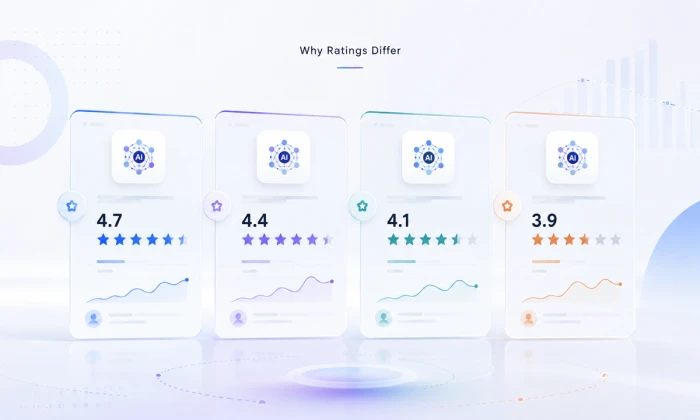
The same tool can be a 4.7 on one site and a 3.9 on another. Here is what is rea...
Nitin1 month ago
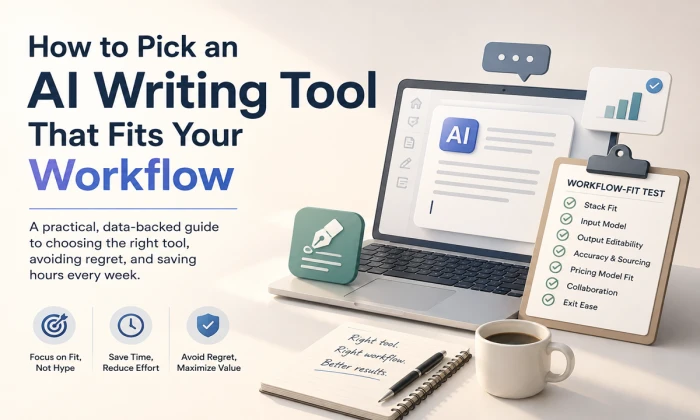
Here is the number worth pinning above your budget: in Gartner Digital Markets r...
Deepak Mehra1 month ago

What Artlist AI is in 2026Artlist began as a royalty-free music library. By 2026...
Deepak Mehra1 month ago
Most AI tool failures do not announce themselves. There is no crash, no angry em...
Nitin1 month ago

The best AI image generator in 2026 is Nano Banana 2 for speed, FLUX.2 for photo...
Parveen Verma1 month ago

“Useful” is a slippery word for a coding assistant. A tool can be brilliant at o...
Sakshi Dhingra1 month ago