A tool qualifies as a comparable GravityWrite alternative if it meets all of the following conditions:
Tools that require enterprise onboarding, custom quotes for standard access, or are priced above $100/month for individual use are excluded from this list.
| Tool | Best Use Case | Paid Pricing | Content Quality | Ease of Use | G2 Rating |
| GravityWrite | All-in-one content + image generation | $19/mo (Plus), $79/mo (Pro) | Moderate to Good | Very Easy | 4.5/5 |
| Copy.ai | Marketing copy and workflow automation | $49/mo (Starter), $249/mo (Advanced) | Good (short-form) | Easy | 4.4/5 |
| Writesonic | SEO articles and long-form blog content | $39/mo (Lite, billed annually) | Good to Very Good | Moderate | 4.4/5 |
| Rytr | Budget short-form content at scale | $9/mo (Saver), $29/mo (Unlimited) | Moderate | Very Easy | 4.2/5 |
| Simplified | Multi-channel content + design in one tool | $24/mo (Small Team), $40/mo (Business) | Moderate to Good | Very Easy | 4.6/5 |
| Anyword | Performance-optimized marketing copy | $39/mo (Starter, billed annually) | Good to Very Good | Moderate | 4.8/5 |
Pricing reflects monthly billing unless otherwise noted. Annual plans offer 20-30% discounts across all tools.
Where it matches GravityWrite
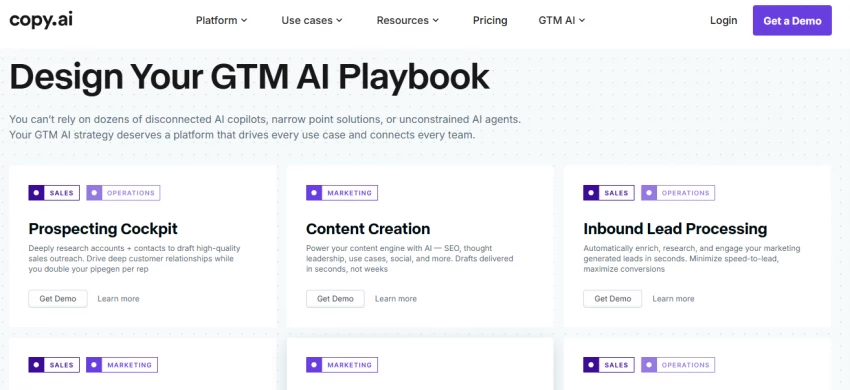
Both tools are template-driven, cover a wide range of content formats, including blog posts, ad copy, emails, and social media, and are accessible to non-technical users through clean, beginner-friendly interfaces. Both offer a free plan with limited output and a paid tier that unlocks more volume. Users moving from GravityWrite to Copy.ai will find the transition straightforward because the core workflow is similar: select a use case, provide brief context, generate output.
Where it performs better (copy.ai)
Copy.ai's workflow automation capability separates it from GravityWrite at the paid tier. The platform supports automated content pipelines where a single input, such as a new YouTube video, can automatically trigger blog summaries, email newsletters, and social posts. This is a genuine productivity gain for users managing cross-channel content consistently. Copy.ai also connects to over 1,000 platforms and supports multiple AI models, including GPT-4o and Claude 3.5 Sonnet, providing flexibility in output quality and style that GravityWrite does not offer in the same way.
Where it falls short
Copy.ai completed a pivot away from individual creators in 2024. It repositioned as a "Go-to-Market AI Platform" and dropped its original free writing tier. As of 2026, meaningful access requires a paid plan starting at $49/month for individual users. There is no functional free tier for solo creators. Long-form content above 500 words shows a notable quality drop, and the platform's interface is increasingly optimized for teams rather than freelancers. GravityWrite provides more value per dollar at lower tiers for solo users.
Key details
Pricing: Free (2,000 words/month, limited), Starter $49/month, Advanced $249/month (5 seats)
Annual discount: approximately 25-30%
G2 rating: 4.4/5
Best for: Small marketing teams (3-10 people) running automated, multi-channel content workflows
Where it matches GravityWrite
Writesonic and GravityWrite share a very similar positioning: both target freelancers, bloggers, and small businesses needing fast content generation for multiple formats. Both offer SEO-oriented blog writing, social content templates, and a mix of short and long-form tools. Writesonic also supports over 24 languages, similar to GravityWrite's multilingual offering, and its interface is structured to let users generate content without deep technical knowledge.
Where it performs better (writesonic.com)
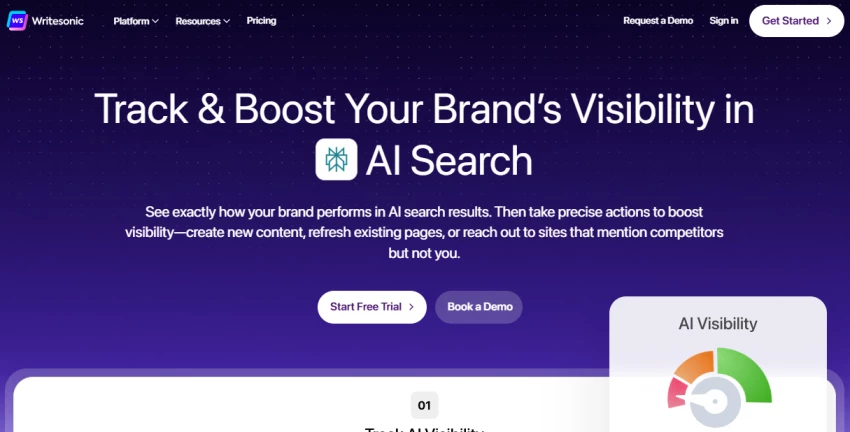
Writesonic's Article Writer 6.0, powered by GPT-4o and Claude models, is built specifically for long-form SEO content. It incorporates real-time data, competitor analysis, and keyword integration during the drafting process, not as an afterthought. The platform offers a built-in SEO Checker and Optimizer that scores content from 0 to 100 and suggests specific improvements. It also integrates directly with Google Search Console and Google Analytics on higher-tier plans, and connects natively with WordPress for one-click publishing. These are capabilities GravityWrite does not fully replicate. Writesonic's content quality for structured, research-adjacent blog content consistently outperforms GravityWrite's output in side-by-side testing reported by independent reviewers.
Where it falls short
Writesonic's pricing structure has become less straightforward. The Lite plan starts at $39/month when billed annually, but access to GEO tracking features, the Generative Engine Optimization tools aimed at AI search visibility, requires the Standard plan at $79/month annually or higher. Users expecting full access at the entry price will find key differentiators locked behind the next tier. The platform is also more complex to learn than GravityWrite, with more configuration required to produce optimal results.
Key details
Pricing: Free (limited access), Lite $39/month (billed annually), Standard $79/month (billed annually)
Annual discount: approximately 20%
G2 rating: 4.4/5
Best for: Bloggers, content marketers, and SEO-focused creators who need structured, long-form output
Where it matches GravityWrite
Rytr is a direct functional match for GravityWrite users who primarily create short-form content: social media captions, product descriptions, email subject lines, ad headlines, and brief blog introductions. Both platforms use a template-based system, both serve individual users without requiring team infrastructure, and both offer a free plan to get started. Rytr's interface is among the most straightforward in this category, with no meaningful learning curve.
Where it performs better (rytr.me)
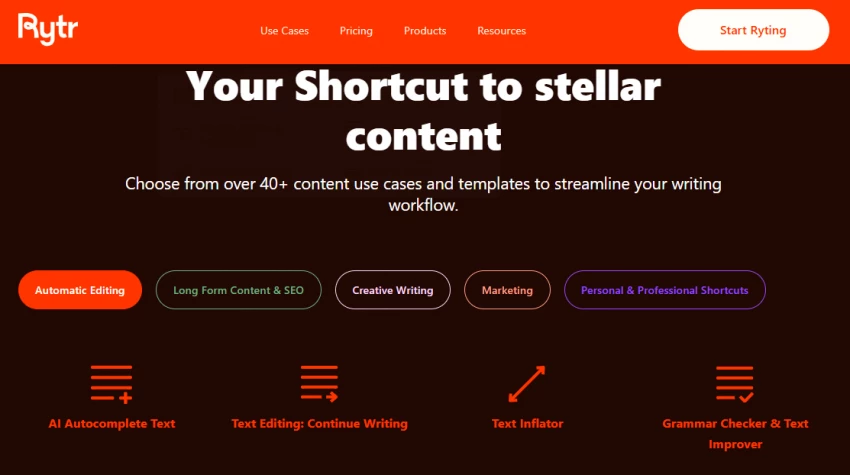
Rytr wins on price by a significant margin. The Saver plan at $9/month provides unlimited character generation, which removes the volume ceiling that frustrates GravityWrite Plus users on the credit system. For high-volume short-form content creators, this is a practical advantage. Rytr also includes a native plagiarism checker powered by Copyscape, which GravityWrite lacks as a built-in feature. Custom use cases allow users to define their own content templates, adding flexibility beyond the 40+ preset options.
Where it falls short
Rytr's content quality is the weakest of the five tools covered here. Independent reviewers and G2 user feedback consistently note repetitive outputs, generic phrasing, and limited depth in generated content. The platform does not appear to have received major model updates in recent cycles, and several users report that ChatGPT produces equivalent or better results for free. Rytr is also constrained to short-form content; it does not have a reliable long-form blog writer. For users who need more than 500-word drafts with genuine structure, Rytr is the wrong choice. It also lacks integrations with major platforms.
Key details
Pricing: Free (10,000 characters/month), Saver $9/month (unlimited characters), Unlimited $29/month (priority support, 100 AI images/month)
G2 rating: 4.2/5
Best for: Freelancers and bloggers needing high-volume, budget-priced short-form content generation
Where it matches GravityWrite
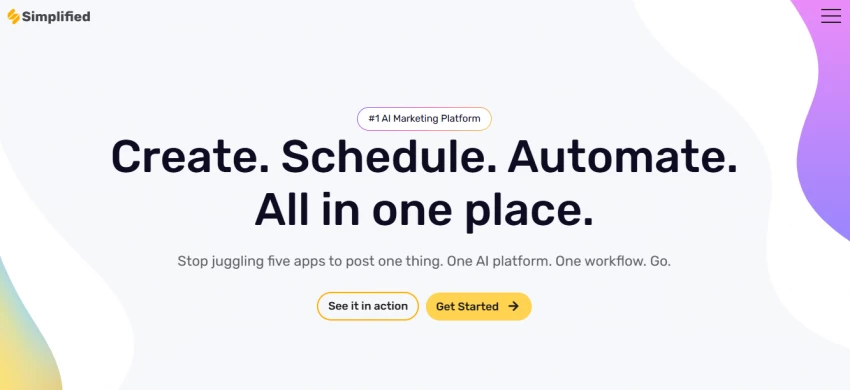
Simplified operates in the same all-in-one content creation space as GravityWrite. Both platforms combine AI writing with visual content tools, cover blog posts, social captions, and marketing copy, and target non-technical users through a template-driven approach. Both are used by individual creators and small marketing teams. Simplified's positioning as a single platform for writing, design, and publishing mirrors GravityWrite's own multi-tool approach.
Where it performs better (simplified.com)
Simplified's design integration is substantially stronger than GravityWrite's. The platform combines an AI writer, a no-code graphic design editor, a video editor, and a social media scheduler in a single interface. Over 10 million creators use the platform as of 2026, and its G2 rating of 4.6/5 across nearly 5,000 reviews reflects genuine user satisfaction with the depth of the toolset. Users can go from idea to designed post to scheduled publication without leaving the platform. GravityWrite's image generation is available but widely noted as not comparable to dedicated design tools. Simplified's design editor is far more capable for users who need to produce finished visual assets alongside written content.
Where it falls short
The AI writer within Simplified is not the platform's core differentiator. Long-form blog content typically requires manual refinement, and Simplified does not offer the same SEO-focused optimization tools as Writesonic or Anyword. Users looking for an advanced blog writing pipeline will find Simplified's writing tools functional but not specialized. The credit system on lower-tier plans draws complaints from users who expected more output volume before hitting limits. The Small Team plan at $24/month is priced reasonably, but access to the full design feature set requires the Business plan at $40/month.
Key details
Pricing: Free (limited), Small Team $24/month, Business $40/month, Enterprise (custom)
G2 rating: 4.6/5 (4,968+ reviews), Capterra 4.7/5 (300+ reviews)
Best for: Creators and small teams who need writing, design, and social publishing in one place
Where it matches GravityWrite
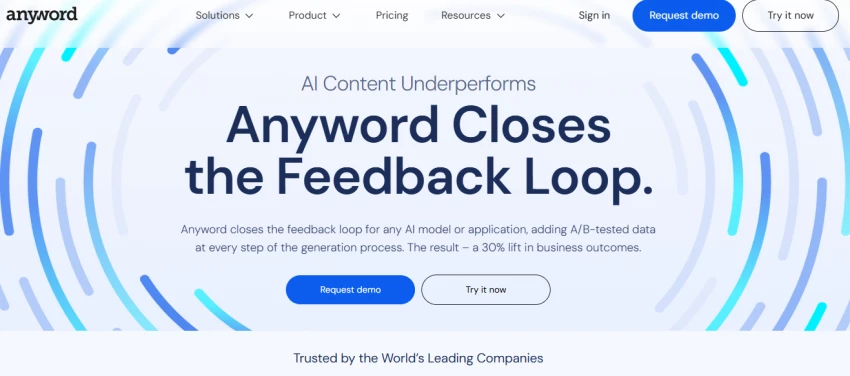
Anyword operates in the same pricing range and serves similar user types: solo marketers, freelancers, and small teams. Both tools cover ad copy, blog posts, emails, and social media content. Both offer multilingual support and are accessible through self-serve subscriptions. Users who need content across standard marketing formats will find the category overlap substantial.
Where it performs better (anyword.com)
Anyword's predictive performance scoring is a unique capability within this pricing tier. The platform is trained on billions of marketing data points and assigns predicted engagement and conversion scores to each piece of generated content before it is published. This allows users to compare variations and select the one most likely to perform, reducing the guesswork that comes with standard AI output. Over one million marketers use the platform, and independent testing consistently shows high copy quality for ads, landing pages, and CTAs. Anyword's brand voice training also allows users to upload high-performing existing content so the AI learns and replicates a specific style over time. G2 rates Anyword at 4.8/5, the highest among all tools in this comparison.
Where it falls short
Anyword's entry price is higher than most tools in this list. The Starter plan at $39/month when billed annually is more expensive than GravityWrite's Plus plan, Rytr, and Simplified's base tier. The advanced analytics dashboard has a learning curve that can feel overwhelming for users who only need straightforward content generation. The platform is also optimized for marketing copy rather than general content creation: users who primarily write informational blog posts or educational content will find the performance scoring system less directly useful.
Key details
Pricing: Free 7-day trial (no credit card required), Starter $39/month (billed annually), Data-Driven plan higher tiers for teams
Unlimited word generation on all paid plans
G2 rating: 4.8/5 (391 reviews), Capterra 4.8/5
Best for: Performance marketers, ad copywriters, and small teams focused on conversion-optimized content
| If you want | Best alternative | Why |
| Better marketing copy with performance data | Anyword | Predictive scoring and conversion-focused output at no additional complexity for solo marketers |
| The cheapest functional option | Rytr | $9/month with unlimited characters; acceptable for short-form content at volume |
| More features in one platform | Simplified | Writing, design, video, and social publishing under one subscription |
| Long-form blog and SEO content | Writesonic | Article Writer 6.0 with real-time data, SEO scoring, and WordPress integration |
| Marketing automation and team workflows | Copy.ai | Workflow pipelines connecting content creation to distribution across channels |
| A direct swap for GravityWrite at a similar price | Simplified | Comparable all-in-one scope, better design tools, similar pricing range |
| Higher output quality without enterprise pricing | Anyword | Highest rated tool in this comparison; strong for ads, email, and landing pages |
| A gradual upgrade without relearning everything | Writesonic | Similar template-based approach with a clear quality step up for blog content |
Best overall alternative: Anyword
At $39/month billed annually, Anyword delivers the highest verified content quality in this comparison, the only predictive performance scoring system at this price tier, and a G2 rating of 4.8/5 across over 390 reviews. It is not the cheapest option, but it is the one most likely to produce marketing copy that actually performs. Freelancers and solo marketers who produce ad copy, email campaigns, or landing pages will get more usable output per session than from any other tool on this list.
Best budget alternative: Rytr
At $9/month with unlimited character generation, Rytr is the most affordable functional option. The quality ceiling is lower than every other tool here, but for users who primarily produce social captions, product descriptions, or short email drafts, it is a defensible choice. It is not a long-form blog tool. It is not a content strategy platform. It is a fast, cheap generator for short-form output and nothing more.
Best for marketing-focused users: Anyword
Anyword is also the clear answer for users whose primary goal is conversion-optimized marketing content. The performance prediction system, brand voice training, and unlimited copy generation on paid plans make it the most purpose-built tool for performance marketing within the GravityWrite price range. Users running paid ad campaigns, managing email sequences, or optimizing landing pages will find more direct value here than in any other alternative on this list.
Share your thoughts about this article.
Be the first to post a comment!
The same tool can be a 4.7 on one site and a 3.9 on another. Here is what is rea...
Nitin1 month ago
Here is the number worth pinning above your budget: in Gartner Digital Markets r...
Deepak Mehra1 month ago

What Artlist AI is in 2026Artlist began as a royalty-free music library. By 2026...
Deepak Mehra1 month ago
Most AI tool failures do not announce themselves. There is no crash, no angry em...
Nitin1 month ago

The best AI image generator in 2026 is Nano Banana 2 for speed, FLUX.2 for photo...
Parveen Verma1 month ago

“Useful” is a slippery word for a coding assistant. A tool can be brilliant at o...
Sakshi Dhingra1 month ago