Quick answer Yes, Grok generates videos through Grok Imagine, xAI's image and video generation system built on its Aurora engine. As of 2026 it produces 720p clips of roughly 6–15 seconds with native synchronized audio, from either a text prompt or a still image, and its latest model (Video 1.5, May 2026) sits at #1 on the Image-to-Video Arena leaderboard. The catch: video generation now requires a paid plan, free X and Grok accounts no longer include it. |
If you typed this question because you saw an AI clip on X with suspiciously good audio and a "made with Grok" watermark, your instincts were right. Grok doesn't just chat anymore, it has quietly become one of the most-used video generators on the planet, cranking out over 1.2 billion videos in a single 30-day window by early 2026.
In this guide I'll walk through exactly what Grok's video generation can and can't do, what it really costs (the pricing changed significantly in March 2026), how it stacks up against Sora and Veo, what reviewers and everyday users actually think of it, and whether it's worth your money. All of it is grounded in current specs and published data, not launch-day hype.
Grok Imagine is xAI's creative generation system, covering both still images and video. It launched in August 2025 inside the Grok app, and by 2026 it had grown into a standalone product family accessible through the Grok web app, the iOS and Android apps, the X platform, and a developer API launched on January 28, 2026.
Under the hood it runs on Aurora, xAI's autoregressive engine, and that architecture matters more than it sounds. Where most video tools animate visuals first and bolt sound on afterward, Aurora generates video and audio together in a single pass. Dialogue, ambient sound, and effects come out synchronized by default, which is why Grok clips on your feed sound weirdly finished compared to the silent outputs of older generators.
One clarification worth making early, because the naming genuinely confuses people: Grok the chatbot and Grok Imagine the generator share a brand and an engine but serve different jobs. Asking the chatbot a question doesn't cost video credits, and generating a video doesn't require a chat. Think of Imagine as a creative mode layered on top of the same model family.
| Date | Milestone | What changed |
| Aug 2025 | Grok Imagine launches | First image + short video generation inside the Grok app, on an early Aurora build |
| Late 2025 | Aurora iterations | Better temporal consistency (less flicker), native audio generation added |
| Jan 28, 2026 | Imagine API launches | grok-imagine-image and grok-imagine-video models opened to developers |
| Feb 2, 2026 | Grok Imagine 1.0 | 10-second clips, 720p, dramatically better audio; 1.245 billion videos generated in 30 days |
| Mar 19–25, 2026 | Pricing overhaul | Free tier loses video generation; SuperGrok Lite ($10/mo) launches as the new entry point |
| May 31, 2026 | Video 1.5 ships | Jumps 52 Elo points to claim #1 on the Image-to-Video Arena, passing Seedance 2.0 and Google Veo |
That last row is the headline. Arena leaderboards work on blind human votes, people compare outputs without knowing which model produced them, so a 52-point Elo jump into first place for image-to-video is about as legitimate as bragging rights get in this space. Grok went from punchline to podium in under a year.
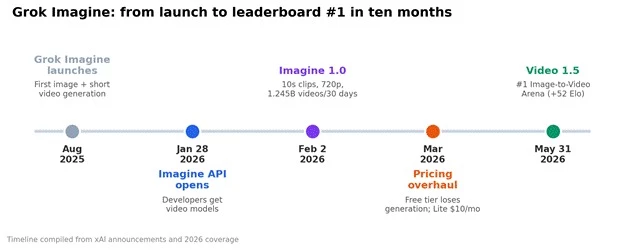
Figure 1: Ten months from launch to leaderboard leader — with one pricing overhaul along the way that most older guides haven't caught up with.
Describe a scene in plain language and Grok Imagine generates a clip from scratch, audio included. This is the fastest route from idea to output, best suited to social clips, product teasers, mood pieces, and game-trailer-style shots where you care more about vibe than pixel-exact control.
Upload a still image, describe the motion, and the model animates it while preserving the composition, subject identity, and style of the source, the input image acts as the literal first frame rather than a loose reference. This is the workflow serious creators reach for, because it removes the randomness of pure text generation. Generate or upload the exact frame you want, then set it in motion. Reviewers consistently rank Grok's subject anchoring and camera-instruction handling among the best available in 2026.
Every clip renders with synchronized sound, dialogue, effects, ambience, in the same generation pass. A video extension workflow lets you chain clips into longer sequences for basic narrative work, and the API adds scene restyling, object manipulation, and motion control on top. The honest caveat: as of mid-2026, the most powerful editing features live in the API rather than the consumer app, and users report the built-in background music can get repetitive.
| Spec | Current state |
| Resolution | 720p at 24fps (competitors like Veo 3.1 and Runway support 1080p+) |
| Clip length | 6–15 seconds per generation (about 10 seconds typical on the web app); extension workflow chains clips |
| Audio | Native, synchronized, generated in the same pass as the video |
| Generation time | Roughly 17–30 seconds per clip, versus minutes for most rivals |
| Input modes | Text-to-video, image-to-video, plus API-side editing and restyling |
| Content modes | Normal, Fun, and an 18+ "Spicy" mode restricted to paid, age-verified accounts |
| Access | Grok web/iOS/Android apps, X platform, and the Imagine API (also via partners like fal.ai) |
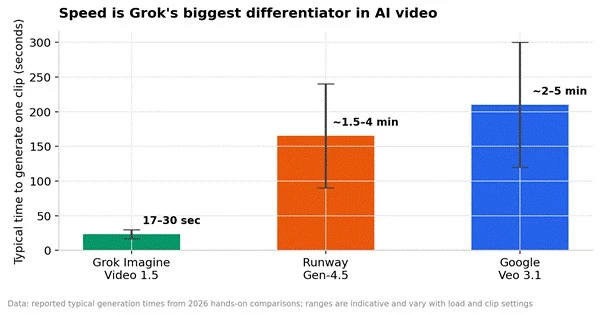
Figure 2: Typical generation times reported in 2026 comparisons. Grok trades resolution for iteration speed, and for social content, speed usually wins.
Here's the update that catches most people out: video generation used to be available to free users in limited form, but as of March 19, 2026, the free tier no longer includes any image or video generation. If a guide tells you to "just use the free X app," it's outdated. The current lineup:
| Plan | Price | What you get for video |
| Grok Free | $0 | No video or image generation (chat only, ~10 prompts per 2 hours) |
| SuperGrok Lite | $10/mo | Basic Imagine access, entry-level image and video generation |
| SuperGrok | $30/mo ($300/yr) | The real plan: full Imagine access; reported daily video caps range from ~10 clips to 100+ renders depending on source and load |
| SuperGrok Heavy | $300/mo | Highest limits (one source reports 500+ daily renders), top models, early previews |
| X Premium+ | $40/mo | Bundles Grok with X platform perks; some creative features more restricted than the standalone app |
| Imagine API | Pay-per-use | $4.20 per minute of generated video with audio |
Two notes on that table. First, the daily caps are the murkiest numbers in the whole Grok ecosystem, xAI applies a "fair use" throttle that flexes with demand, published figures conflict, and reset windows reportedly range from 2 to 24 hours. Budget for the lower bound. Second, that API price is quietly the biggest story here: at $4.20 per minute of video with audio, Grok undercuts Google Veo 3.1 Preview (about $12/minute) by roughly 3x and OpenAI's Sora 2 Pro (about $30/minute) by roughly 7x, making it the cheapest serious video model available by API in mid-2026.
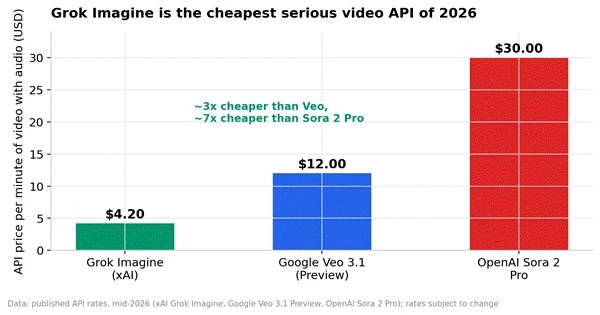
Figure 3: API pricing per minute of generated video with audio. For developers building video features into products, this gap is decisive.
| Grok Imagine 1.5 | OpenAI Sora 2 | Google Veo 3.1 | Runway Gen-4.5 | |
| Max resolution | 720p | 1080p+ | 1080p+ | 1080p+ |
| Native audio | Yes, same pass | Yes | Yes | Limited |
| Typical speed | 17–30 seconds | Minutes | Minutes | Minutes |
| API price/min | ~$4.20 | ~$30 (Pro) | ~$12 (Preview) | Credit-based |
| Best at | Speed, iteration, image-to-video, price | Cinematic realism | Prompt fidelity, physics | Pro editing controls |
The honest positioning: Grok is not trying to out-Hollywood Sora. It wins on iteration speed, native audio, image-to-video anchoring, and price, the things that matter for social content, product teasers, and app integrations. It loses on resolution ceilings, clip length, and fine cinematic control. If you're producing a polished 60-second brand film, you'll still reach for Veo or Runway. If you need twenty variations of a 10-second clip before lunch, nothing touches Grok.
This is where the picture gets genuinely two-sided, and pretending otherwise would be dishonest. On the technology itself, sentiment is strong. Video 1.5's #1 arena position comes from blind human votes, hands-on reviewers describe it as "the fastest and most affordable way to go from text prompt to video-with-audio right now," and aggregated user feedback consistently praises two things: the output speed (clips in well under a minute) and the pricing relative to competitors. Typical user quotes run along the lines of "super easy to use, works way faster than other video generators."
The subscription experience is a different story. On community review platforms, the SuperGrok subscription scores far below the editorial consensus, one 2026 aggregator shows an editorial rating of 3.5/5 sitting next to a community average of just 1.8/5. The complaints are rarely about video quality; they're about opaque rate limits, the fair-use throttling kicking in unpredictably, features shifting between tiers, and the March 2026 removal of free-tier generation that moved goalposts on existing users. The fair summary: the model earns its praise, the packaging earns its criticism.
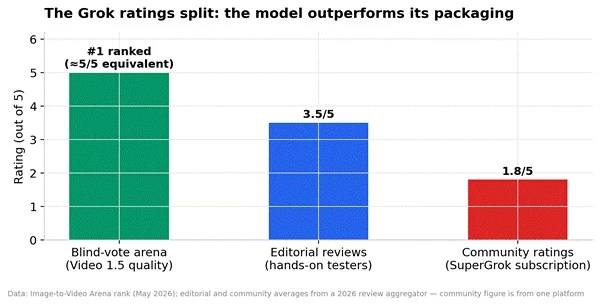
Figure 4: The same product, three very different verdicts — blind voters rank the model first, while subscribers rate the buying experience harshly.
| Source type | Verdict | Recurring themes |
| Blind-vote arenas | #1 image-to-video (May 2026) | Quality confirmed by 52-Elo jump past Seedance 2.0 and Veo |
| Editorial reviews | Positive (~3.5–4/5 typical) | Speed, native audio, and price praised; 720p cap and short clips flagged |
| Community ratings | Harsh (as low as 1.8/5 on some platforms) | Rate-limit opacity, throttling, tier changes, free-tier removal |
| Developer sentiment | Strongly positive | Cheapest serious video API; fast enough for real-time product features |
A complete answer to "does Grok generate videos" has to mention this: Grok Imagine ships an 18+ "Spicy" mode on paid tiers, and xAI's comparatively permissive content policy has made it the most controversial mainstream video generator of 2025–2026. Critics and safety researchers have raised sustained concerns about deepfake potential and inadequate guardrails relative to competitors, and the feature has drawn regulatory attention in several markets. If you're using Grok for business or client work, two practical implications follow: check whether your brand-safety policies permit tools with adult modes at all, and note that Grok's terms, watermarking, and moderation rules are evolving fast, verify the current policy before you build a workflow on it. For most commercial use cases, the Normal mode with standard filtering is where you'll live anyway.
| Great fit | Look elsewhere |
| Social creators who need fast, cheap clips with sound | Anyone producing polished 1080p+ brand films |
| Marketers iterating on short product teasers | Narrative work needing clips beyond ~15 seconds |
| Developers adding video generation to apps (the API price is unbeatable) | Teams needing timeline editing, color, and audio mixing built in |
| X-heavy brands already paying for Premium+ | Brand-safety-sensitive organizations uncomfortable with the platform's content policies |
| Image-first workflows (lock the frame, then animate) | Anyone expecting free access, that ended in March 2026 |
Yes, Grok generates videos, and in 2026 it does so better than its reputation suggests. Grok Imagine produces short 720p clips with genuinely synchronized audio in under 30 seconds, holds the #1 blind-vote position for image-to-video, and undercuts every serious competitor on price by a wide margin. Its weaknesses are equally clear: 720p ceilings, 15-second clips, opaque rate limits, a subscription experience users rate far below the technology itself, and a content-policy controversy that brand-conscious teams can't ignore.
The practical advice: if you make short social content or you're a developer pricing out video APIs, take the 3-day SuperGrok trial and judge the output against your actual use case at these speeds you'll know within an hour. If you need long-form, high-resolution, or tightly governed output, keep Veo and Runway on the shortlist and let Grok mature for another cycle.
Share your thoughts about this article.
Be the first to post a comment!
The same tool can be a 4.7 on one site and a 3.9 on another. Here is what is rea...
Nitin2 weeks ago

Here is the number worth pinning above your budget: in Gartner Digital Markets r...
Deepak Mehra2 weeks ago
What Artlist AI is in 2026Artlist began as a royalty-free music library. By 2026...
Deepak Mehra3 weeks ago
Most AI tool failures do not announce themselves. There is no crash, no angry em...
Nitin3 weeks ago

“Useful” is a slippery word for a coding assistant. A tool can be brilliant at o...
Sakshi Dhingra3 weeks ago
How this comparison was builtEvery price, limit, credit rule and feature stateme...
Sakshi Dhingra1 month ago