Job hunting in 2026 feels like a part-time job you never applied for. You refresh LinkedIn, retype the same work history into the fiftieth Workday form of the week, and wonder if a single human ever reads any of it. Two tools promise to take that pain away, and they go about it in completely opposite ways.
Leeco AI is a job search autopilot that hunts, optimizes, and even asks for referrals on your behalf while you sleep. Simplify Copilot is the veteran autofill assistant that a million-plus job seekers use to blitz through application forms in one click. I spent time digging through both products, their Chrome Web Store data, user reviews, pricing pages, and independent third-party tests to figure out which one deserves a spot in your job search. Here is everything I found.
If you want a free, reliable tool that fills out applications you found yourself, Simplify Copilot is the safer and more proven pick. If you want an agent that does the searching, resume tailoring, and referral outreach for you, and you are job hunting in India or targeting tech roles, Leeco AI is the more ambitious bet. The two tools barely overlap, which makes this comparison more interesting than most.
| Factor | Leeco AI | Simplify Copilot |
| Core idea | Autonomous job search agent that sources jobs, optimizes resumes, and requests referrals for you | One-click autofill assistant for applications you find and submit yourself |
| Made by | Preplaced (Bangalore, India) | Simplify Jobs (San Francisco, YC W21) |
| Launched | Extension first published November 2024 | Company founded in 2020 |
| Chrome rating | 4.55 out of 5 (677 ratings, ~40,000 users) | 4.9 out of 5 (~3,700 ratings, 1,000,000+ users) |
| Free tier | First month free, then paid | Core autofill, tracker, and job matches free forever |
| Paid pricing | Around $5.75/month on the annual plan (reviewer-reported) | Simplify+ at $19.99/week, $39.99/month, or $89.99 per 3 months |
| Job boards | LinkedIn, Naukri, Indeed, Glassdoor | 100+ ATS platforms including Workday, Greenhouse, Lever, iCIMS, Taleo |
| Best for | Indian tech candidates, students, and busy professionals who want automation | Anyone applying at volume in the US and global markets who wants free, hands-on speed |
Table 1: A quick side-by-side snapshot of both tools before we go deeper.

Leeco AI comes from Preplaced, a Bangalore-based career mentorship platform. The Chrome Web Store listing names Keshav Dilip Patil as the publisher, with a registered address in Bangalore, Karnataka, and the leeco.ai website itself links back to Preplaced for its terms and refund policy. That lineage matters. Preplaced built its business connecting Indian tech candidates with mentors, so Leeco was designed from day one around the realities of the Indian job market, which explains why Naukri sits next to LinkedIn in its scanning list and why approvals happen over WhatsApp rather than email.
The product had an unusual evolution. According to version history tracked on Chrome-Stats, the extension first appeared on November 7, 2024 as a LeetCode and YouTube learning companion, an AI mentor that sat inside your browser and helped you debug code or ask questions about whatever you were reading. Over 2025 it steadily expanded into auto-applying for LinkedIn jobs, mock interviews, and DSA progress tracking, and the standalone leeco.ai platform grew into a full job search agent. So today Leeco is really two products wearing one name: a browser-based AI mentor for interview prep, and a background agent that runs your job search.
The pitch on the homepage is blunt: put your job hunting on autopilot. Once you set your preferences, the system claims to work in four stages.
• The agent scans LinkedIn, Naukri, Indeed, and Glassdoor around the clock, verifies that listings are still active, filters out noise, and pings you on WhatsApp when it finds a strong match.
• Before applying, it rewrites your resume for the specific role. Leeco's own demo shows a generic resume scoring 47% on ATS checks jumping to 95% after optimization, a claim worth treating as marketing rather than a guarantee.
• For every application, it hunts down employees at the target company and sends personalized referral requests on your behalf. Leeco cites the widely repeated statistic that cold applications convert at under 1% while referrals lift success rates by around 70%.
• Everything lands in a kanban-style dashboard with columns for sourced jobs, submitted applications, pending referrals, and scheduled interviews, so you approve or reject moves with one tap.
Independent reviewers have broadly confirmed this flow works as described. A six-week hands-on test published at websites2know.com reported that setup took under three minutes and the first WhatsApp job match with a salary estimate and one-tap approve button arrived within two days. Reviews at TechSuggest and GeniusFirms reached similar conclusions: the automation is real, though a human should still review every AI-generated resume and outreach message before it goes out.
The Chrome extension holds a 4.55 out of 5 rating across 677 reviews with roughly 40,000 users as of early 2026, per Chrome-Stats. Users consistently praise the LeetCode help, calling the hints mentor-like and better than pasting problems into a general chatbot. The recurring complaints are just as consistent: occasional lag with many tabs open, answers that sometimes miss the mark, slow customer support, and friction when cancelling subscriptions. A security review by Koi Security found the extension's code consistent with its stated purpose with no malicious indicators, though it does send analytics data to its backend, which is standard for this category.
Leeco does not publish a public pricing page, but hands-on reviewers report a first month free with no card required, followed by roughly $5.75 per month billed annually. There is a published refund policy, but no refunds once a paid cycle begins, so the free month is your real trial window. At that price it undercuts nearly every serious competitor in the auto-apply category, where $30 to $50 per month is normal.
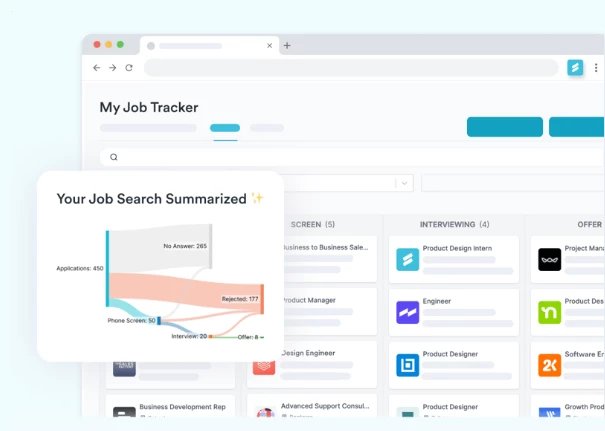
Simplify has one of the better founding stories in this space. Michael Yan dropped out of Stanford, left his software engineering job at Meta, and founded Simplify in 2020 with co-founders Rushil Srivastava and Ethan Horoschak. The company went through Y Combinator's Winter 2021 batch and is based in San Francisco. Yan landed on the Forbes 30 Under 30 list, and Forbes reported the company raised $1.2 million in early venture funding, with over 2 million applications submitted through the platform in 2022 alone by students from more than 1,200 universities. The scale has exploded since: the Chrome listing now says the tool has been used by over 1,000,000 job seekers to submit more than 100 million applications.
Simplify is deliberately not an auto-apply bot, and the company is upfront about it. You stay in the driver's seat the whole way.
• You build a profile once with your work history, education, and preferences, then install the browser extension for Chrome or Firefox.
• When you open a supported job application, the Copilot popup appears and fills the form in one click, mapping every field to your saved profile data.
• It works across more than 100 applicant tracking systems including Workday, Greenhouse, Lever, iCIMS, Taleo, and SmartRecruiters, and third-party data from Scale.jobs puts coverage at over 20,000 career pages.
• Answers you type manually for unusual questions get saved, so the next application that asks the same thing fills itself.
• Every application is logged automatically in a built-in tracker, and the extension also scores your resume against job descriptions on LinkedIn and Indeed to flag missing keywords.
How well does the autofill actually work? Independent testing published by HirePilot and jobhire.ai found field accuracy of roughly 85 to 90% on Greenhouse, Lever, and Ashby, dropping to around 70% on Workday, with custom company portals being the most common failure point. The consensus estimate is that Simplify cuts a 15 to 25 minute application down to 1 or 2 minutes, which compounds fast if you are applying to dozens of roles a week.
Simplify's numbers are hard to argue with. The extension holds a 4.9 out of 5 rating on the Chrome Web Store with a Featured badge and around 3,700 ratings, and its Firefox reviews tell the same story: students and career switchers calling it a game changer for repetitive forms. The negative reviews cluster around two issues. Some users report the extension slowing their browser, particularly on older Macs, and dropdown fields occasionally fail when an exact option like a specific degree is missing. The other criticism targets the paid tier, which we will get to next, and shows up on Trustpilot where a small sample of mostly paying customers rate the company far lower than the free extension's fanbase does.
The core product, autofill plus tracker plus job matches, is free forever with no application limit, and Simplify has publicly committed to keeping it that way. The paid upgrade, Simplify+, adds one-click tailored resumes, AI cover letters, stronger AI answers to open-ended questions, and networking tools. Per Simplify's own help center, it costs $19.99 for a week, $39.99 for a month, or $89.99 for three months. There is no free trial, and as of May 2026 the published policy is that all payments are non-refundable, with dissatisfaction with AI output explicitly excluded as refund grounds. Multiple reviewers report the AI-generated resumes and cover letters need meaningful editing before they are usable at senior levels, so think carefully before paying for the writing features specifically.
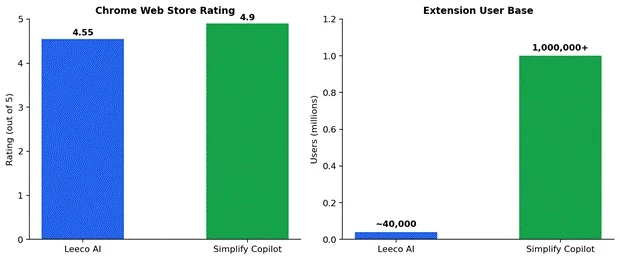
Figure 1: Simplify Copilot leads decisively on both Chrome Web Store rating (4.9 vs 4.55) and install base (over a million users vs roughly 40,000), reflecting its five-year head start and free core product.
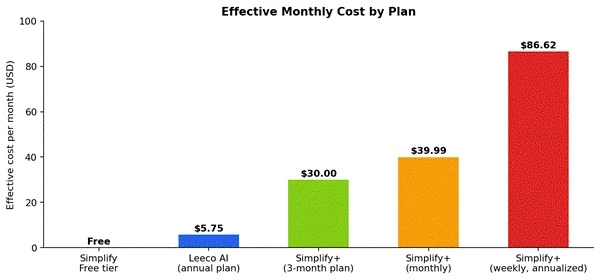
Figure 2: Effective monthly cost across plans. Simplify's free tier and Leeco's $5.75 annual rate are the value picks, while Simplify+ billed weekly works out to over $86 a month if sustained.
| Capability | Leeco AI | Simplify Copilot |
| Finds jobs for you | Yes, 24/7 background scanning with WhatsApp alerts | Partially, via a job matches board you browse yourself |
| Fills application forms | Auto-applies to LinkedIn jobs on your behalf | Yes, one-click autofill across 100+ ATS platforms |
| Resume tailoring | Automatic per-role optimization before each application | Keyword scoring free; one-click AI tailoring in Simplify+ |
| Referral outreach | Automated, finds employees and messages them for you | Manual networking tools in the paid tier |
| Interview prep | LeetCode debugging, mock interviews, AI learning mentor | Not offered |
| Application tracker | Unified dashboard with auto-updating statuses | Automatic logging of every Copilot application |
| You press submit | Often no, the agent acts after your WhatsApp approval | Always yes, nothing sends without you |
Table 2: The tools solve different problems. Leeco automates decisions; Simplify accelerates execution.
• You are job hunting in India, because Naukri coverage, WhatsApp-first approvals, and pricing tuned for the Indian market are things no US competitor matches.
• You genuinely lack time to search, since the background agent keeps sourcing and applying while you focus on your current job or your studies.
• You are a developer preparing for tech interviews, because the LeetCode mentor, mock interviews, and DSA tracking come bundled in the same subscription.
• Referrals matter to your strategy, and Leeco is the only one of the two that systematizes referral outreach instead of leaving it to you.
• Budget is tight, since roughly $5.75 a month with a free first month is a fraction of what most automation tools charge.
• You want to pay nothing, because the free tier covers unlimited autofill, tracking, and job matches with no card required.
• You apply to US and global roles across many ATS platforms, where Simplify's coverage of Workday, Greenhouse, Lever, and over 20,000 career pages is unmatched.
• You want control over every submission, since nothing ever goes out without you reviewing the form and clicking submit yourself.
• Track record matters to you, because a 4.9 rating from a million-plus users, a YC pedigree, and five years of iteration add up to a very low-risk install.
• You are a student or new grad, given Simplify was literally built around internship and early-career recruiting seasons.
No honest comparison skips the rough edges, and both tools have them. Leeco's user base is small, the company is young, and reviews mention laggy performance, occasional inaccurate AI answers, unresponsive support, and cancellation friction. Its boldest claims, like the 47% to 95% ATS jump and the 70% referral lift, come from its own marketing and have not been independently verified. Auto-applying and mass referral outreach also carry a reputational risk if the AI's messages read as spammy, so review what goes out under your name.
Simplify's problems concentrate almost entirely in the paid tier. A 4.9 free-extension rating sitting next to a 3.0 Trustpilot score is really two verdicts on two products: the free autofill is excellent, while Simplify+ draws fire for generic AI writing, no trial, and a strict no-refund policy. On the technical side, some users report browser slowdowns, and autofill accuracy drops on custom company portals. None of this stops the free tier from being one of the best deals in job search software.
For most job seekers, Simplify Copilot is the better tool today. It is free, proven at massive scale, works across the widest range of application systems, and keeps you in control of everything that gets submitted. The 4.9 rating from over a million users is not an accident. Just skip the paid tier unless you have tested the AI output against your own standards, because the no-refund policy leaves no room for buyer's remorse.
Leeco AI is the more exciting product, and for a specific person it is the better one: an Indian tech candidate or student who wants the search, tailoring, and referral grind handled automatically for less than the price of a coffee a month. It is younger, rougher, and its claims deserve healthy skepticism, but the free first month makes trying it essentially risk-free. Honestly, the smartest move might be running both, letting Leeco source and refer in the background while you use Simplify to speed through the applications you find yourself. They are different enough that they do not even get in each other's way.
Share your thoughts about this article.
Be the first to post a comment!
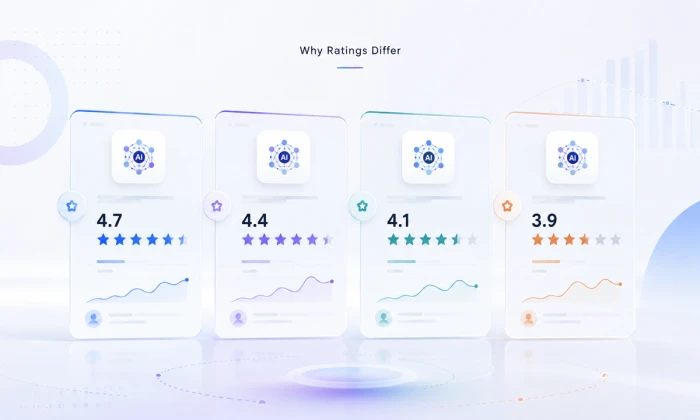
The same tool can be a 4.7 on one site and a 3.9 on another. Here is what is rea...
Nitin1 month ago

Here is the number worth pinning above your budget: in Gartner Digital Markets r...
Deepak Mehra1 month ago

What Artlist AI is in 2026Artlist began as a royalty-free music library. By 2026...
Deepak Mehra2 months ago

Most AI tool failures do not announce themselves. There is no crash, no angry em...
Nitin2 months ago

The best AI image generator in 2026 is Nano Banana 2 for speed, FLUX.2 for photo...
Parveen Verma2 months ago

“Useful” is a slippery word for a coding assistant. A tool can be brilliant at o...
Sakshi Dhingra2 months ago