Businesses are rapidly adopting AI chatbots to streamline customer support. These tools reduce response time, handle repetitive queries, and improve customer satisfaction. But which platforms lead the market in 2025? Let’s dive into the best AI chatbot platforms you can use today.
1. Intercom
Intercom is one of the most popular customer support chatbots. Its AI-powered automation helps businesses resolve up to 50% of queries without human intervention. It also integrates seamlessly with CRM tools, making it easier to track conversations. Intercom’s Resolution Bot is trained on your FAQs and delivers accurate answers instantly.
Zendesk’s Answer Bot uses natural language processing (NLP) to suggest relevant help articles. It reduces ticket volume by automatically handling repetitive requests. Businesses using Zendesk report a 20-30% decrease in first-response time. For companies already using Zendesk’s support suite, this bot is a natural extension.
3. Drift
Drift focuses on conversational marketing and customer support. Its AI chatbot qualifies leads, books meetings, and routes chats to the right agents. Drift’s platform integrates with Salesforce, HubSpot, and Slack, making it a powerful tool for B2B businesses. A key benefit is its ability to deliver personalized experiences based on visitor behavior.
4. Ada
Ada is a no-code AI chatbot designed for enterprise-level customer support. It allows businesses to automate 80% of customer interactions while maintaining personalization. Ada’s platform supports multiple languages, making it a strong choice for global brands. Companies like Zoom and Shopify rely on Ada to scale support operations.
5. Tidio
Tidio is ideal for small and medium-sized businesses. Its chatbot combines AI automation with live chat features, ensuring smooth handoffs between bots and humans. Tidio also integrates with Shopify, WordPress, and WooCommerce. Many SMBs use Tidio because it’s affordable and easy to set up.
6. LivePerson
LivePerson is known for its Conversational Cloud, which connects customers with AI chatbots across web, SMS, and social media. Its AI models are trained for industries like banking, retail, and telecom. Reports show LivePerson reduces operational costs by up to 30% for its clients. Its scalability makes it a top choice for large enterprises.
7. Freshchat by Freshworks
Freshchat combines AI automation with human support. Its Freddy AI suggests responses, resolves FAQs, and improves agent productivity. Freshchat also integrates with WhatsApp, Messenger, and other social channels. For businesses already using Freshworks’ ecosystem, Freshchat is a seamless option.
8. HubSpot Chatbot Builder
HubSpot’s chatbot is part of its CRM platform. It helps businesses qualify leads, book meetings, and answer support questions. HubSpot’s biggest strength is its tight integration with its marketing, sales, and service hubs. This ensures a unified customer experience.
9. Genesys DX
Genesys DX uses AI and predictive engagement to improve customer journeys. Its chatbot can detect intent and provide contextual answers. Genesys also supports voice bots, making it suitable for omnichannel support. Many enterprises use it to enhance both customer service and employee support.
10. ManyChat
ManyChat is popular among e-commerce businesses for its Messenger and Instagram automation. It enables automated order updates, FAQs, and promotional campaigns. ManyChat integrates with Shopify and Mailchimp, making it a favorite for online retailers. Over 1 million businesses use ManyChat to engage customers.
11. CoSupport AI
CoSupport AI is designed to automate repetitive customer support tasks using real company data such as past tickets, knowledge base content, and internal documentation. Unlike traditional chatbots, it focuses on resolving inquiries end-to-end rather than just assisting agents. The platform combines an AI agent that can handle a large share of incoming requests with tools that help teams respond faster and maintain consistency. It integrates with systems like Zendesk and Freshdesk, making it a practical option for SaaS and service-based businesses looking to reduce support workload and improve response times.
When comparing platforms, it’s not just about features and pricing—it’s about fit. Start by asking a few key questions:
By answering these questions, you can align platform capabilities with your actual support needs—and avoid paying for features you’ll never use.
| Platform | Pricing (starting) | AI Add-ons / Model | Key Features |
| Intercom | $29/seat/mo (Essential) | Fin: $0.99/resolution Copilot: $29/agent/mo | Resolution bot, CRM integrations, no-code automation, multilingual |
| Zendesk | $55/agent/mo (Suite Team) $19/agent (Support Plan) | Native AI chatbot Outcome-based: ~$1.50/resolution | Flow Builder, omnichannel support, knowledge graph, predictive AI |
| Ada | Custom enterprise pricing | No-code AI automation | Automates 80% of support, multilingual, enterprise-grade integrations |
| Tidio | Free plan Paid from $29/mo | Lyro AI chatbot | Live chat + AI hybrid, Shopify/WordPress/WooCommerce integrations |
| HubSpot | Free chatbot included CRM Starter $20/mo | Part of CRM suite | Lead qualification, meeting booking, sales + service integration |
| CoSupport AI | $0.04/response $0.19/resolution $99/mo (server-based) | AI Agent + AI Assistant Outcome-based automation CoSupport BI | End-to-end ticket resolution, unlimited AI responses, Zendesk/Freshdesk integration, multilingual support, analytics |
AI chatbots are no longer just an add-on—they’re a necessity. From startups to Fortune 500 companies, businesses are leveraging chatbots to cut costs and enhance customer experience. When choosing a platform, consider scalability, integrations, and ease of use. The right chatbot can transform your customer support into a 24/7 powerhouse.
Share your thoughts about this article.
Be the first to post a comment!
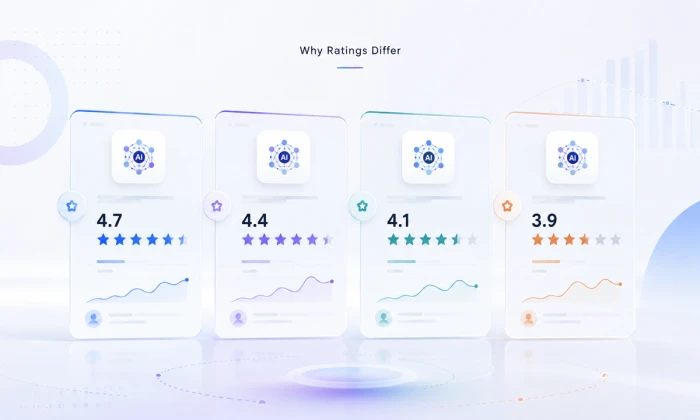
The same tool can be a 4.7 on one site and a 3.9 on another. Here is what is rea...
Nitin1 month ago
Here is the number worth pinning above your budget: in Gartner Digital Markets r...
Deepak Mehra1 month ago

What Artlist AI is in 2026Artlist began as a royalty-free music library. By 2026...
Deepak Mehra1 month ago
Most AI tool failures do not announce themselves. There is no crash, no angry em...
Nitin1 month ago

The best AI image generator in 2026 is Nano Banana 2 for speed, FLUX.2 for photo...
Parveen Verma1 month ago
“Useful” is a slippery word for a coding assistant. A tool can be brilliant at o...
Sakshi Dhingra1 month ago